AI estimate as of August 11, 2025 · verify with a professional before acting
AI-Generated · Verify before acting
Everything on this page is generated by AI for informational purposes only. AI can make mistakes — the AI may misidentify items or misattribute them (artist, maker, brand, designer, origin, era). This is not an official valuation and should not be used for insurance, sale, tax, estate, legal, or lending purposes — or any decision requiring a certified appraisal. It is not an authoritative claim about any person, brand, or rights holder — do not share or rely on it as a factual statement about a third party. Always consult qualified professionals before making financial decisions.
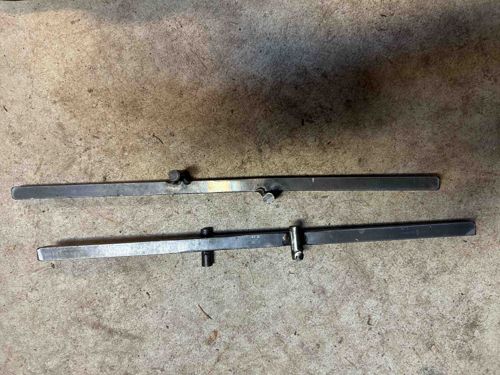
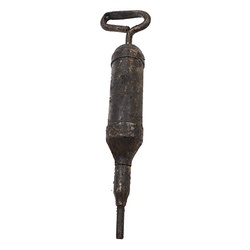
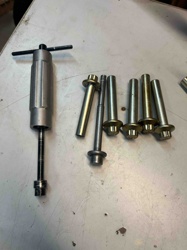
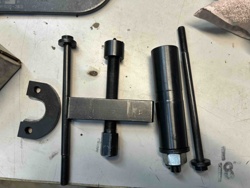
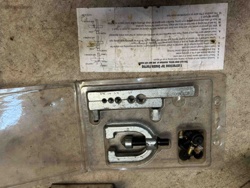
The image displays two metal bars, likely a pair of specialized adjustment tools, possibly for automotive or machinery alignment. Each bar appears to be made of a sturdy, possibly heat-treated, steel or similar alloy, exhibiting a metallic gray to dark gray coloration. The top bar is a single piece of flat stock, approximately 1-2 inches in width and around 18-24 inches in length, featuring a slight taper or shaping at one end. Attached to it is a small, dark-colored knob or screw mechanism, suggesting a clamping or adjustment function. The surface shows some wear, minor scratches, and perhaps slight discoloration, consistent with use. The bottom bar is similar in overall dimensions and material, but it features a different attachment point, a cylindrical metal collar with a set screw, which appears to be a sliding or adjustable guide. One end of this bar also exhibits some shaping, possibly for engaging with a specific component. Both bars show signs of industrial use, including surface abrasions, minor nicks, and some loss of original finish, indicating a patina consistent with age and regular operation. There are no readily visible manufacturer's marks, stamps, or significant engravings that would identify a specific brand or model. The construction appears robust and functional, suggesting they are precision instruments or parts of a larger tooling system. Their design implies a purpose requiring leverage or precise displacement, typical in mechanical adjustments. Given their appearance and common applications for similar tools, they likely date from the mid to late 20th century.
AI Appraisal Report
Upon examining the provided image, these adjustable metal bars appear to be specialized alignment tools, likely for automotive or industrial machinery. Condition-wise, they exhibit significant signs of use, including abrasions, minor nicks, and surface discoloration, consistent with their function as working tools. This wear creates a desirable patina for collectors of antique or vintage tools, suggesting authenticity through honest use rather than artificial aging. However, the absence of manufacturer's marks or stamps prevents definitive authenticity verification from images alone. An in-person examination would allow for closer inspection of material composition, manufacturing techniques, and potential hidden markings.Provenance documentation detailing their prior use or origin would also significantly aid in authentication and value assessment.
From a market perspective, these tools fall into a niche category. While not universally recognized, similar specialized alignment tools, particularly those for vintage or classic vehicles, can command reasonable prices among enthusiasts and professional restorers. Demand is moderate, driven by collectors of specific automotive brands or those performing period-correct restorations. Rarity is difficult to assess without knowing their exact application; if they are for a very specific, low-production vehicle or machine, their rarity could increase.
Factors significantly impacting value include their precise function (which is unclear from the image), their compatibility with specific desirable classic vehicles, and the ability to definitively identify their origin. Without these details, their value is speculative. For a full authentication, physical inspection is critical to evaluate tool steel quality and craftsmanship. Scientific testing, such as material analysis, could confirm the alloy composition, further aiding in dating and authentication.