AI Appraisal Estimate

AI-generated estimates · not official valuations

From the user

What was submitted

Photo and notes provided by the user — not generated by AI

Submitted item photo
Submitted photo · June 21, 2026

User's notes

Unknown artist, untitled sculpture

AI analysis below

AI appraisal

AI analysis & estimate

AI-Generated · Verify before acting

Everything below is generated by AI for informational purposes only. AI can make mistakes — the AI may misidentify items or misattribute them (artist, maker, brand, designer, origin, era). This is not an official valuation and should not be used for insurance, sale, tax, estate, legal, or lending purposes — or any decision requiring a certified appraisal. It is not an authoritative claim about any person, brand, or rights holder — do not share or rely on it as a factual statement about a third party. Always consult qualified professionals before making financial decisions.

Note

This analysis also relies on unverified notes provided by the user, which may be incomplete or inaccurate and could affect the result.

Read the full disclaimer

AI Identification

·Not independently authenticated·Verify before acting

Dogon High-Relief Osmasy Figure or Finial

African Tribal Art & Sculpture

AI Estimated Value

·Not an official valuation·Verify before acting

$400 - $800

As of June 21, 2026

AI Item Analysis

·AI can make mistakes·Verify before acting
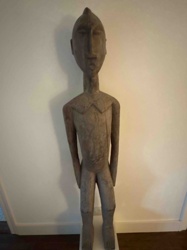
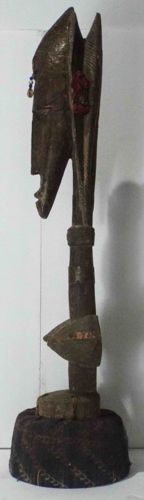
This is a hand-carved wooden sculpture, likely of Dogon or related West African origin, standing on a circular weighted base covered in patterned textile. The figure features a characteristically elongated, vertical profile with a highly stylized, narrow head. The facial features are sharp and geometric, with a protruding brow and a pointed chin/beard. The wood exhibits a dark, aged patina with significant organic encrustation, suggesting ritual use or sacrificial offerings (libations). A notable decorative element is a small bead-and-brass earring or charm hanging from the temple area. The back of the head piece is split into two upright vertical structures with ridged, linear carvings. Further down the staff-like body, there is a shield-shaped protrusion. The condition shows visible signs of age including surface cracking, desiccation of the wood grain, and fraying on the textile base. There are no visible maker's marks, which is typical for traditional ritual objects. The craftsmanship reflects a sophisticated mastery of subtractive carving, utilizing verticality to evoke spiritual presence. The estimated age is mid-20th century, though the style adheres to centuries-old traditional iconography.

AI Appraisal Report

·AI can make mistakes·Verify before acting
Based on the visual examination of this carving, I identify it as a Dogon-style sculptural element, likely a staff finial or 'Osmasy' figure. The elongation of the form, the cubist facial geometry, and the deep, crusty patina are consistent with the classic aesthetic of the Dogon people of Mali. The dark, encrusted surface suggests the application of ritual libations (millet porridge, animal blood, or oil), a hallmark of active altarpiece use. The presence of the small brass/bead adornment adds a layer of authentic cultural context. However, the condition presents challenges; distinct desiccation cracks and the fraying textile base indicate age but also fragility. While the patina appears convincing in photographs, the market is saturated with high-quality reproductions artificially aged to mimic ritual use. Without provenance documentation (e.g., gallery receipts, collection history prior to 1970) or radiometric dating, it is difficult to distinguish this as a genuine ritual object versus a vintage trade piece made for the mid-century export market. Genuine, verifiable ritual pieces command thousands, but based on the likely mid-20th-century origins and lack of attribution, I am placing this in the decorative tribal art tier. To upgrade this valuation to the investment tier ($2,000+), physical inspection would be required to test the depth of oxidation in the wood pores and verify the 'sweat' or organic nature of the patina, ensuring it is not merely pigmented wax.

Get your items appraised

Instant estimates of your treasures with AI-powered appraisals

Browse More Appraisals