Lower Paleolithic Acheulean Chert Biface Hand Axe
Archeological Artifacts - Lithic Tools

Lower Paleolithic Acheulean Chert Biface Hand Axe

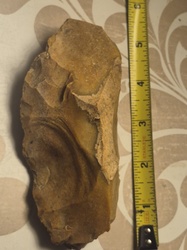
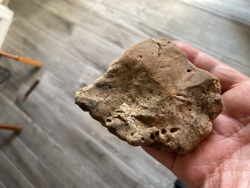
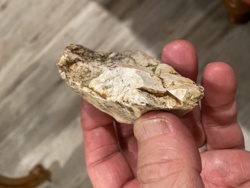
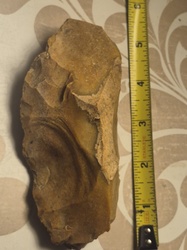
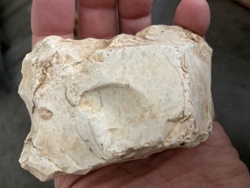
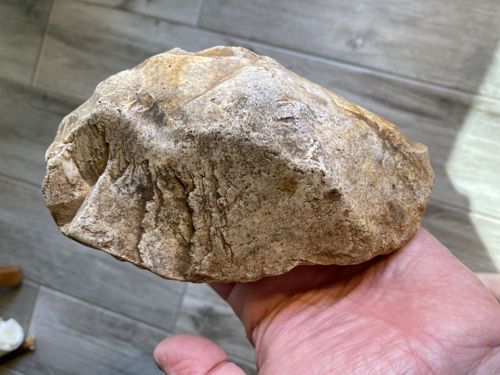
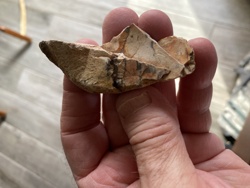
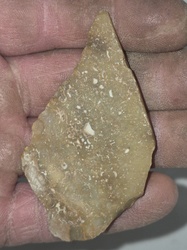
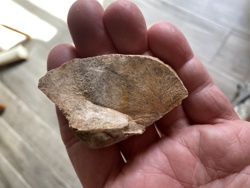
This instance of a Lower Paleolithic Acheulean-style bifacial tool is crafted from chert, demonstrating the percussion flaking techniques characteristic of early hominid toolmaking. Measuring approximately 6.5 x 4.5 inches, the artifact displays a robust, teardrop-shaped geometry designed for heavy-duty tasks such as butchering, digging, or wood processing. The color palette consists of earthy tans, ochres, and light grays, often with a weathered patina that suggests long-term burial or exposure in Oklahoma clay-rich soils. The surface features visible flake scars where material was intentionally removed to create a sharp edge around the perimeter, which converges at a pointed tip. A thick, unworked 'butt' or base provides a ergonomic grip for the palm. Condition-wise, the tool shows significant mineral encrustation and weathering, which is expected for an object of this extreme antiquity. There is a lack of recent fractures, indicating the edges have been dulled naturally over millennia. The craftsmanship is utilitarian yet sophisticated for the era, showcasing the transition to complex symmetrical tool production. This piece represents a significant find for the Guthrie, OK region, reflecting ancient human activity and lithic technology from the Pleistocene epoch.
Estimated Value

$400 - $650

Basic Information

Category

Archeological Artifacts - Lithic Tools

Appraised On

February 19, 2026

Estimated Value

$400 - $650

Additional Details Provided By Owner

User Provided Information

Lower Paleolithic Acheulean chert bi face hand axe scraper tool found in Guthrie, OK measuring 6.5 x 4.5"

Item Description

This instance of a Lower Paleolithic Acheulean-style bifacial tool is crafted from chert, demonstrating the percussion flaking techniques characteristic of early hominid toolmaking. Measuring approximately 6.5 x 4.5 inches, the artifact displays a robust, teardrop-shaped geometry designed for heavy-duty tasks such as butchering, digging, or wood processing. The color palette consists of earthy tans, ochres, and light grays, often with a weathered patina that suggests long-term burial or exposure in Oklahoma clay-rich soils. The surface features visible flake scars where material was intentionally removed to create a sharp edge around the perimeter, which converges at a pointed tip. A thick, unworked 'butt' or base provides a ergonomic grip for the palm. Condition-wise, the tool shows significant mineral encrustation and weathering, which is expected for an object of this extreme antiquity. There is a lack of recent fractures, indicating the edges have been dulled naturally over millennia. The craftsmanship is utilitarian yet sophisticated for the era, showcasing the transition to complex symmetrical tool production. This piece represents a significant find for the Guthrie, OK region, reflecting ancient human activity and lithic technology from the Pleistocene epoch.
Get Your Items Appraised

Instant estimates of your treasures with AI-powered instant appraisals

Browse More Appraisals