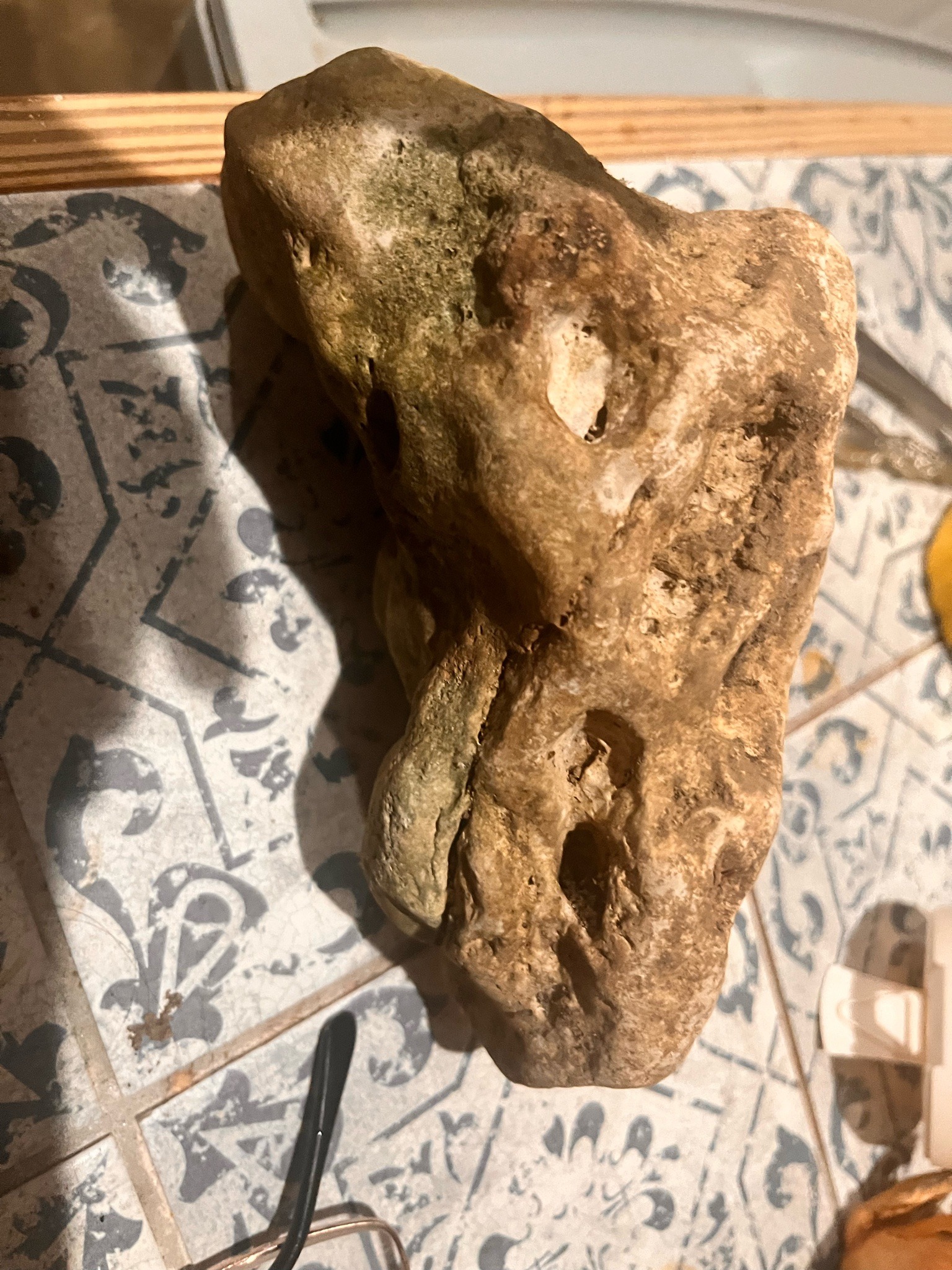
Karstified Limestone Rock with Fossil Inclusions
Geological Specimens / Natural History

Karstified Limestone Rock with Fossil Inclusions

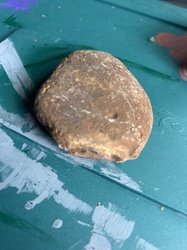
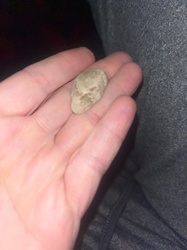
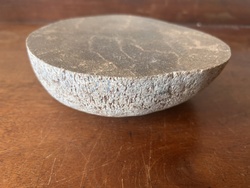
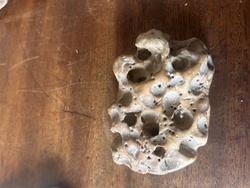
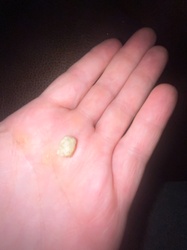
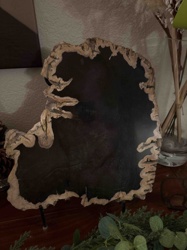
This specimen is a naturally occurring rock, likely limestone or a similar sedimentary carbonate, exhibiting significant karstification or chemical weathering. The item features a rugged, irregular morphology with distinct pits, vugs, and deep erosional channels typical of long-term exposure to acidic moisture. Its coloration is primarily tan to light brown, with noticeable greenish-gray lichen or algae growth on several of the upper surfaces, suggesting it was sourced from an outdoor environment. Patches of lighter, calcified deposits are visible within the internal cavities. The texture is coarse and granular, indicating a dense mineral composition. Several indentations appear to be possible fossilized impressions or casts of marine organisms, which is common in sedimentary rock of the Paleozoic or Mesozoic eras. There are no man-made markings, signatures, or manufacturer stamps as it is a geological object. Condition features include natural fragmentation, significant surface abrasion from weathering, and biological staining. The item is characterized by its high degree of natural 'sculpting,' providing multiple viewing angles and internal voids that suggest it was part of a larger rock formation or riverbed deposit.
Estimated Value

$150 - $350

Basic Information

Category

Geological Specimens / Natural History

Appraised On

April 30, 2026

Estimated Value

$150 - $350

Item Description

This specimen is a naturally occurring rock, likely limestone or a similar sedimentary carbonate, exhibiting significant karstification or chemical weathering. The item features a rugged, irregular morphology with distinct pits, vugs, and deep erosional channels typical of long-term exposure to acidic moisture. Its coloration is primarily tan to light brown, with noticeable greenish-gray lichen or algae growth on several of the upper surfaces, suggesting it was sourced from an outdoor environment. Patches of lighter, calcified deposits are visible within the internal cavities. The texture is coarse and granular, indicating a dense mineral composition. Several indentations appear to be possible fossilized impressions or casts of marine organisms, which is common in sedimentary rock of the Paleozoic or Mesozoic eras. There are no man-made markings, signatures, or manufacturer stamps as it is a geological object. Condition features include natural fragmentation, significant surface abrasion from weathering, and biological staining. The item is characterized by its high degree of natural 'sculpting,' providing multiple viewing angles and internal voids that suggest it was part of a larger rock formation or riverbed deposit.
Get Your Items Appraised

Instant estimates of your treasures with AI-powered instant appraisals

Browse More Appraisals