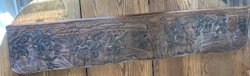
Hand-Carved Philippine Kamagong Wood Dolphin Statuette
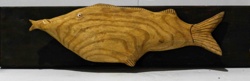
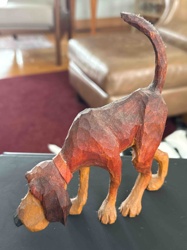
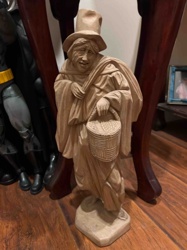
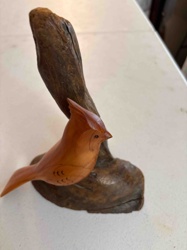
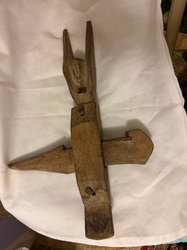
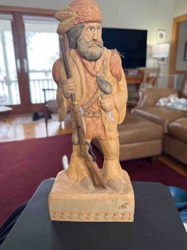
This is a hand-carved decorative statuette of a dolphin, portrayed in an upright, leaping pose. The piece is crafted from a dense, dark tropical hardwood, likely Kamagong (Diospyros blancoi), also known as 'Philippine Ironwood' or 'mabolo wood,' which is indigenous to the Philippines. The wood possesses a deep dark brown to near-black hue with a fine, closed grain and a semi-gloss polished finish. The dolphin stands approximately 8 to 10 inches tall, featuring a distinctive rounded snout, carved circular eyes, and smooth pectoral fins. It is mounted on an integral, carved wooden base that simulates a rock or wave, providing stability. The craftsmanship suggests a mid-to-late 20th-century origin, likely produced for the artisan export market. The condition appears fair to good; there is visible surface wear, including some light scuffing and dust accumulation in the crevices of the mouth and eyes. A notable characteristic of Kamagong wood is its extreme density and weight, which serves as a primary quality indicator for authentic Philippine carvings of this style. Despite minor age-related drying, the wood retains a rich patina typical of high-quality Philippine handicraft.
AI-Generated Appraisal Disclaimer
Estimated Value
$45.00 - $75.00
Basic Information
Category
Folk Art / Wooden Sculptures
Appraised On
January 27, 2026
Estimated Value
$45.00 - $75.00
Additional Details Provided By Owner
User Provided Information
Made in Philippines
Item Description
This is a hand-carved decorative statuette of a dolphin, portrayed in an upright, leaping pose. The piece is crafted from a dense, dark tropical hardwood, likely Kamagong (Diospyros blancoi), also known as 'Philippine Ironwood' or 'mabolo wood,' which is indigenous to the Philippines. The wood possesses a deep dark brown to near-black hue with a fine, closed grain and a semi-gloss polished finish. The dolphin stands approximately 8 to 10 inches tall, featuring a distinctive rounded snout, carved circular eyes, and smooth pectoral fins. It is mounted on an integral, carved wooden base that simulates a rock or wave, providing stability. The craftsmanship suggests a mid-to-late 20th-century origin, likely produced for the artisan export market. The condition appears fair to good; there is visible surface wear, including some light scuffing and dust accumulation in the crevices of the mouth and eyes. A notable characteristic of Kamagong wood is its extreme density and weight, which serves as a primary quality indicator for authentic Philippine carvings of this style. Despite minor age-related drying, the wood retains a rich patina typical of high-quality Philippine handicraft.
Related Tags
Explore similar items and categories:
Get Your Items Appraised
Instant estimates of your treasures with AI-powered instant appraisals