Blue and White Hand-Painted Reticulated Ceramic Plate
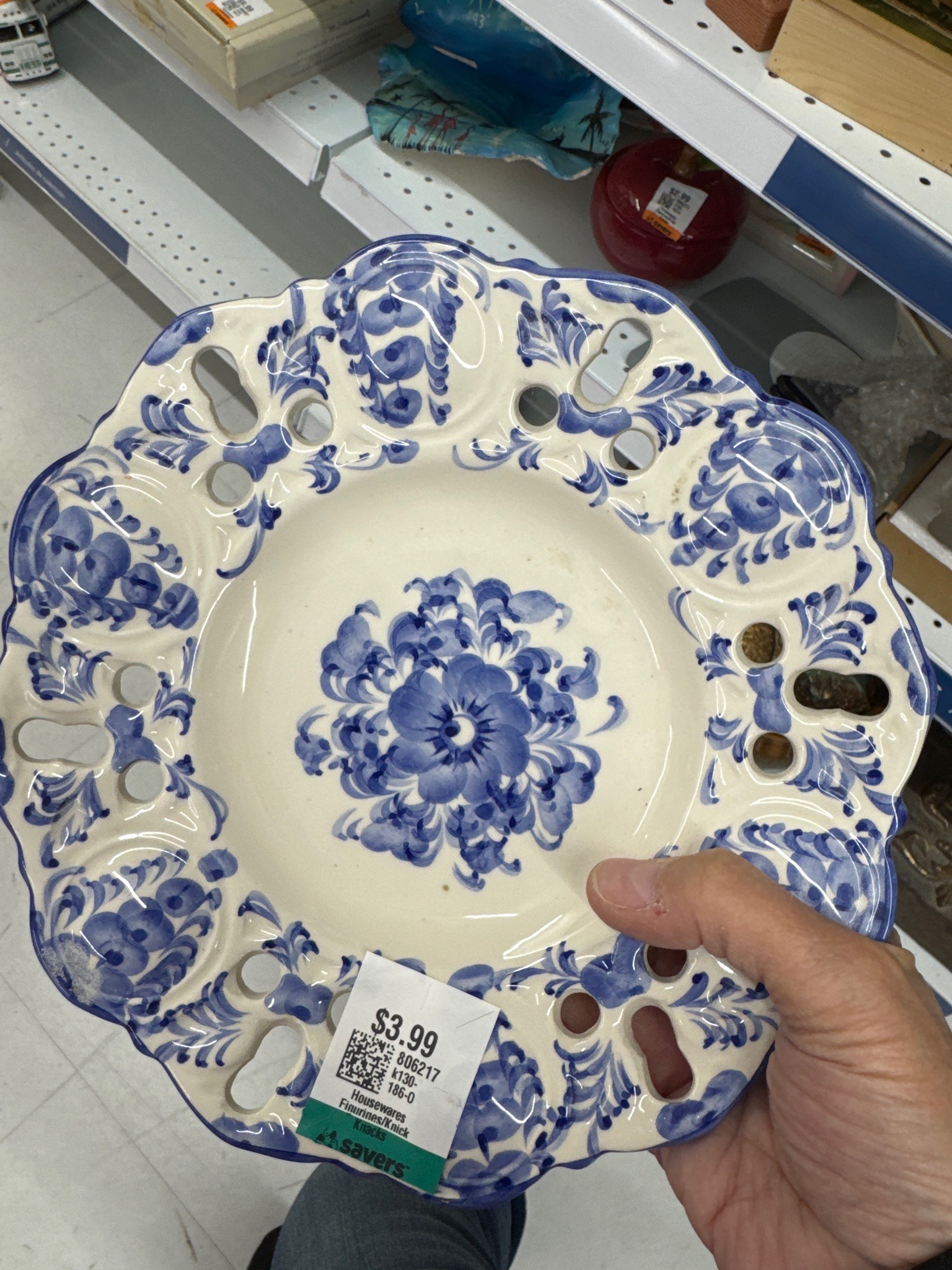
This is a decorative ceramic plate, likely earthenware or porcelain, featuring a classic blue and white hand-painted design reminiscent of Delftware or similar European tin-glazed pottery styles. The plate is approximately 8 to 10 inches in diameter with a scalloped edge and complex reticulated (openwork) cutouts along the rim. The central well features a large, stylized floral medallion with expressive brushwork, while the rim panels are decorated with smaller foliate and floral motifs. The glaze has a creamy white base with cobalt blue pigments showing varying depths of color. Notable features include the uneven spacing of the hand-cut piercings, indicating artisanal production rather than mass factory mold-casting. The condition appears fair to good with some visible surface grime and minor brown spots (foxing or iron deposits) in the glaze. There are no major cracks visible on the front, but typical manufacturing imperfections like glaze pops are present. The style suggests a mid-20th-century revival of 18th-century European floral ceramics, and while no maker's mark is visible on the front, the quality indicates a decorative souvenir or giftware piece rather than fine museum-grade antique porcelain.
AI-Generated Appraisal Disclaimer
Estimated Value
$45 - $75
Basic Information
Category
Decorative Arts & Ceramics
Appraised On
May 11, 2026
Estimated Value
$45 - $75
Item Description
This is a decorative ceramic plate, likely earthenware or porcelain, featuring a classic blue and white hand-painted design reminiscent of Delftware or similar European tin-glazed pottery styles. The plate is approximately 8 to 10 inches in diameter with a scalloped edge and complex reticulated (openwork) cutouts along the rim. The central well features a large, stylized floral medallion with expressive brushwork, while the rim panels are decorated with smaller foliate and floral motifs. The glaze has a creamy white base with cobalt blue pigments showing varying depths of color. Notable features include the uneven spacing of the hand-cut piercings, indicating artisanal production rather than mass factory mold-casting. The condition appears fair to good with some visible surface grime and minor brown spots (foxing or iron deposits) in the glaze. There are no major cracks visible on the front, but typical manufacturing imperfections like glaze pops are present. The style suggests a mid-20th-century revival of 18th-century European floral ceramics, and while no maker's mark is visible on the front, the quality indicates a decorative souvenir or giftware piece rather than fine museum-grade antique porcelain.
Get Your Items Appraised
Instant estimates of your treasures with AI-powered instant appraisals