Phra Luang Phor Tuad Clay Amulet
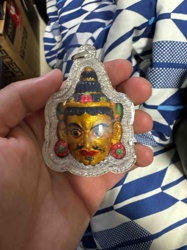
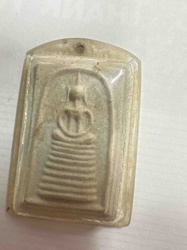
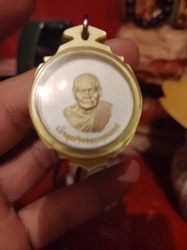
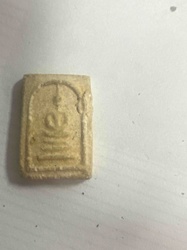
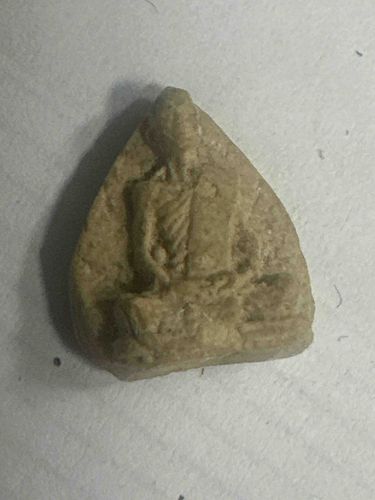
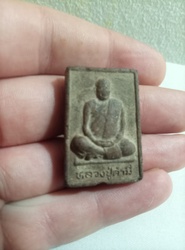
This is a small, traditional Thai Buddhist votive tablet, commonly referred to as a Phra Luang Phor Tuad amulet. The item is teardrop or lotus-petal shaped with a pointed top and a flat base. It features a relief carving of a revered monk, likely Luang Phor Tuad, seated in a meditative posture. The piece is constructed from compressed clay, herbs, and holy powders (Waan), which gives it a characteristic earthy, beige-to-tan color with a grainy, porous texture. The front depicts the monk with a high-relief torso and a visible robes pattern (Sanghati). The condition shows significant softening of the features due to age and handling, often called 'wear' or 'patina' in the context of sacred objects. The surface displays minor pitting and irregular calcification consistent with baked clay artifacts from the mid-20th century. There are no clearly visible maker's marks on the front, as is standard for these cast-mold spiritual items. The craftsmanship reflects traditional Thai folk-art styles, where the spiritual essence of the material used is considered as important as the fine detail of the carving. Such amulets are often produced by temples like Wat Chang Hai to provide protection to the wearer.
AI-Generated Appraisal Disclaimer
Estimated Value
$450 - $800
Basic Information
Category
Religious Artifacts / Thai Amulets
Appraised On
January 12, 2026
Estimated Value
$450 - $800
Item Description
This is a small, traditional Thai Buddhist votive tablet, commonly referred to as a Phra Luang Phor Tuad amulet. The item is teardrop or lotus-petal shaped with a pointed top and a flat base. It features a relief carving of a revered monk, likely Luang Phor Tuad, seated in a meditative posture. The piece is constructed from compressed clay, herbs, and holy powders (Waan), which gives it a characteristic earthy, beige-to-tan color with a grainy, porous texture. The front depicts the monk with a high-relief torso and a visible robes pattern (Sanghati). The condition shows significant softening of the features due to age and handling, often called 'wear' or 'patina' in the context of sacred objects. The surface displays minor pitting and irregular calcification consistent with baked clay artifacts from the mid-20th century. There are no clearly visible maker's marks on the front, as is standard for these cast-mold spiritual items. The craftsmanship reflects traditional Thai folk-art styles, where the spiritual essence of the material used is considered as important as the fine detail of the carving. Such amulets are often produced by temples like Wat Chang Hai to provide protection to the wearer.
Get Your Items Appraised
Instant estimates of your treasures with AI-powered instant appraisals