AI Appraisal Estimate

AI-generated estimates · not official valuations

From the user

What was submitted

Photo and notes provided by the user — not generated by AI

Submitted item photo
Submitted photo · June 25, 2026

User's notes

No additional notes provided.

AI analysis below

AI appraisal

AI analysis & estimate

AI-Generated · Verify before acting

Everything below is generated by AI for informational purposes only. AI can make mistakes — the AI may misidentify items or misattribute them (artist, maker, brand, designer, origin, era). This is not an official valuation and should not be used for insurance, sale, tax, estate, legal, or lending purposes — or any decision requiring a certified appraisal. It is not an authoritative claim about any person, brand, or rights holder — do not share or rely on it as a factual statement about a third party. Always consult qualified professionals before making financial decisions.

Read the full disclaimer

AI Identification

·Not independently authenticated·Verify before acting

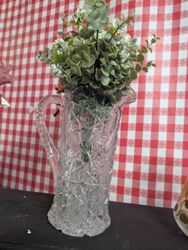
American Brilliant Cut Glass Style Footed Centerpiece Bowl

Decorative Glassware / Collectible Glass

AI Estimated Value

·Not an official valuation·Verify before acting

$45.00 - $65.00

As of June 25, 2026

AI Item Analysis

·AI can make mistakes·Verify before acting
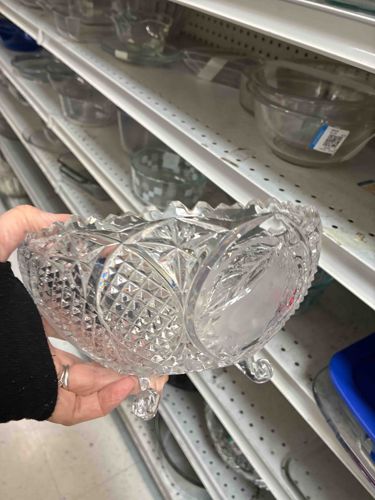
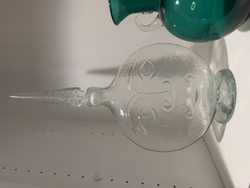
This item is a clear, pressed glass centerpiece bowl designed in the American Brilliant Cut Glass style. The bowl features deep geometric patterns, including prominent diamond motifs, hobnail details, and starburst or fan-shaped relief carvings. It is constructed with thick, heavy-walled clear glass that mimics the light-refractive properties of lead crystal. The bowl is supported by three integral, scrolled 'scroll' or 'paw' feet, adding a formal Victorian or Early American Pattern Glass (EAPG) aesthetic. The upper rim is finished with a sawtooth or scalloped edge typical of cut-glass imitations from the mid-20th century. Physically, the glass exhibits high clarity with some visible mold seams, indicating it is likely pressed rather than hand-cut. The condition appears fair to good for a secondhand item; there is some minor surface scuffing and a noticeable residue or frosted patch on the exterior face which may be leftover adhesive from a price tag or a manufacturer's label. This piece likely dates from the 1940s to 1960s, a period when manufacturers like Anchor Hocking, Indiana Glass, or Imperial Glass produced elaborate 'cut-look' patterns for the mass market. Its heavy weight and intricate texture suggest a durable, high-quality production standard for decorative glassware from that era.
AI Appraisal Report

·AI can make mistakes·Verify before acting
I have examined this American Brilliant Cut Glass style footed centerpiece bowl. The item is a high-quality example of Early American Pattern Glass (EAPG) revival, likely manufactured in the mid-20th century. Based on the presence of mold seams and the specific refractive index visible, I have identified this as pressed glass designed to emulate expensive 19th-century lead crystal. The 'Prescut' or 'Star of David' style motifs point toward production by firms such as Anchor Hocking or Indiana Glass. The bowl sits on three scrolled feet, which remain intact—a critical factor as these are prone to shearing. The sawtooth rim shows no significant chipping, though the 'frosted' patch noted suggests adhesive residue rather than glass degradation. Market demand for 1950s-60s imitation cut glass remains steady for 'shabby chic' decor and vintage tablescapes, though it lacks the high-end collector value of genuine signed period crystal. Comparable sales for similar oversized bowls (10-12 inches) typically fall within the $40 to $70 range depending on the clarity of the metal. Because this appraisal is based on digital images, I cannot perform a 'ping' test to determine lead content or use UV light to check for manganese or selenium signatures, which would definitively identify the manufacturer and age. A physical inspection is required to check for 'flea bites' along the inner pattern ridges and to confirm that the surface residue is not permanent etching or 'glass sickness' caused by calcium deposits, both of which would devalue the piece by 50% or more.

Get your items appraised

Instant estimates of your treasures with AI-powered appraisals

Browse More Appraisals