Paleolithic Biface Flint Hand Axe Scraper Tool
Archeological Artifacts

Paleolithic Biface Flint Hand Axe Scraper Tool

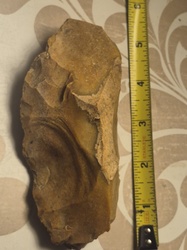
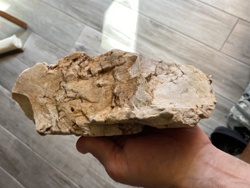
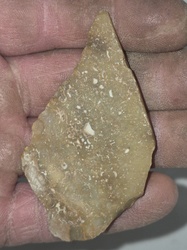
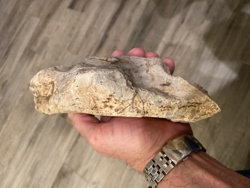
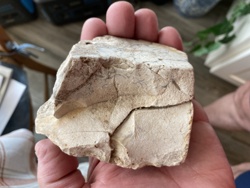
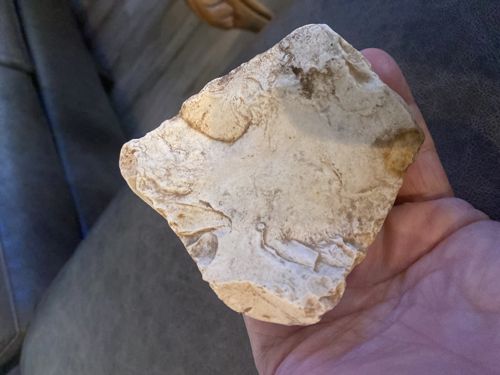
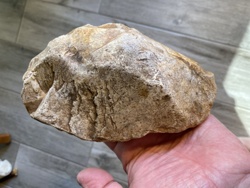
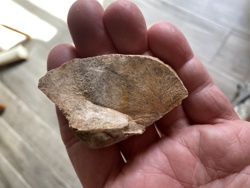
This artifact is a biface lithic tool, measuring approximately 4 inches by 3.75 inches, crafted from a light-colored flint or chert material, typical of indigenous stones found in the Oklahoma region. The tool exhibits a sub-triangular or cordiform shape with significant percussion flaking along its edges, indicating it was intended for heavy-duty scraping or chopping tasks. The color is a weathered cream to light beige, showing a distinct matte patina and mineral staining suggests long-term burial in soil. The surface displays several large concave flake scars where material was removed to thin the core and create a working edge. While one side shows more deliberate retouching, both faces (bifacial) demonstrate intentional shaping. There are blunt areas along the thicker 'butt' end, likely designed to fit comfortably in the palm of a hand for better leverage. Condition-wise, the edges show minor modern nicks that contrast with the darker, aged patina of the ancient flake scars. No modern diagnostic maker marks are present, signifying its origin as a prehistoric stone tool. The craftsmanship reflects a utilitarian approach to tool-making, focusing on durability and edge functionality over aesthetic symmetry.
Estimated Value

$150 - $250

Basic Information

Category

Archeological Artifacts

Appraised On

February 19, 2026

Estimated Value

$150 - $250

Additional Details Provided By Owner

User Provided Information

Paleolithic Flint bi face hand axe scraper tool found in Guthrie OK measuring 4" x 3.75"

Item Description

This artifact is a biface lithic tool, measuring approximately 4 inches by 3.75 inches, crafted from a light-colored flint or chert material, typical of indigenous stones found in the Oklahoma region. The tool exhibits a sub-triangular or cordiform shape with significant percussion flaking along its edges, indicating it was intended for heavy-duty scraping or chopping tasks. The color is a weathered cream to light beige, showing a distinct matte patina and mineral staining suggests long-term burial in soil. The surface displays several large concave flake scars where material was removed to thin the core and create a working edge. While one side shows more deliberate retouching, both faces (bifacial) demonstrate intentional shaping. There are blunt areas along the thicker 'butt' end, likely designed to fit comfortably in the palm of a hand for better leverage. Condition-wise, the edges show minor modern nicks that contrast with the darker, aged patina of the ancient flake scars. No modern diagnostic maker marks are present, signifying its origin as a prehistoric stone tool. The craftsmanship reflects a utilitarian approach to tool-making, focusing on durability and edge functionality over aesthetic symmetry.
Get Your Items Appraised

Instant estimates of your treasures with AI-powered instant appraisals

Browse More Appraisals