AI Appraisal Estimate

AI-generated estimates · not official valuations

From the user

What was submitted

Photo and notes provided by the user — not generated by AI

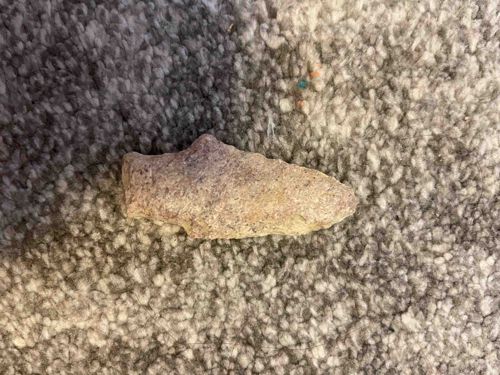
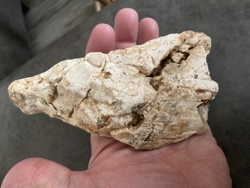
Submitted item photo
Submitted photo · May 27, 2026

User's notes

No additional notes provided.

AI analysis below

AI appraisal

AI analysis & estimate

AI-Generated · Verify before acting

Everything below is generated by AI for informational purposes only. AI can make mistakes — the AI may misidentify items or misattribute them (artist, maker, brand, designer, origin, era). This is not an official valuation and should not be used for insurance, sale, tax, estate, legal, or lending purposes — or any decision requiring a certified appraisal. It is not an authoritative claim about any person, brand, or rights holder — do not share or rely on it as a factual statement about a third party. Always consult qualified professionals before making financial decisions.

Read the full disclaimer

AI Identification

·Not independently authenticated·Verify before acting

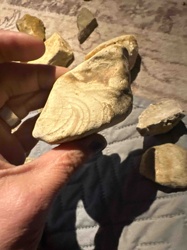
Naturally Formed "Sneaker" Stone

Fossil/Geological Anomaly

AI Estimated Value

·Not an official valuation·Verify before acting

$75 - $150

As of May 27, 2026

AI Item Analysis

·AI can make mistakes·Verify before acting
The item appears to be a stone or fossilized object, approximately 3-4 inches in length. Its general shape bears a striking resemblance to a stylized, low-top sneaker or shoe, with a prominent 'toe' and a more blocky 'heel' area. The coloration is predominantly a mottled light brown and beige, with subtle hints of purple or reddish-brown tones, particularly noticeable on the upper 'body' of the 'shoe' form. The texture appears rough and granular, consistent with a sedimentary rock or fossilized material, rather than a polished or worked stone. There are no discernible markings, inscriptions, or maker's marks visible on its surface. The overall condition suggests significant natural wear and erosion, with rounded edges and no sharp features, implying it has been subject to natural forces over an extended period. This 'shoe-shaped' stone is likely a geological curiosity, an example of pareidolia where natural formations resemble familiar objects. Its age would correspond to the geological period in which the material was formed, potentially millions of years.
AI Appraisal Report

·AI can make mistakes·Verify before acting
After a thorough visual examination of the provided image, I can offer an appraisal of this Naturally Formed 'Sneaker' Stone. Based purely on the visual information, the item appears to be a geological formation exhibiting a remarkable resemblance to a sneaker, a classic example of pareidolia. Its condition seems consistent with natural weathering and erosion, showing no signs of artificial shaping or manipulation. The color variations and rough granular texture further support its natural origin. Authenticity, in this context, refers to whether it is a genuine natural formation rather than a carved or altered piece. From the image, it strongly appears to be naturally formed. However, definitive verification of its geological authenticity (e.g., confirming it's not a sculpted piece of concrete or composite) would require a physical examination to assess density, specific gravity, and perhaps microscopic analysis of its mineral composition. Provenance documentation, though unlikely for a natural curiosity, would ideally confirm its discovery location. Market conditions for such 'geological curiosities' are niche. Comparables would include other naturally occurring shapes resembling everyday objects. Demand is primarily driven by novelty and collector interest in quirky natural phenomena. Rarity is difficult to quantify; while uniquely shaped stones aren't globally rare, finding one with such a distinct and recognizable form is less common. The primary factor impacting value is its striking visual resemblance and the 'wow' factor it generates. Its value is not in its material composition or historical significance, but in its artistic and conversational appeal as a natural oddity. Limitations: Without physical inspection, I cannot confirm the exact material (e.g., sandstone, conglomerate) or rule out subtle artificial alteration, though unlikely given its appearance. A tactile examination would also confirm texture and weight. Scientific testing (e.g., petrographic analysis) would provide definitive geological identification.

Get your items appraised

Instant estimates of your treasures with AI-powered appraisals

Browse More Appraisals