Japanese Kutani Eggshell Porcelain Teacup
Antique Asian Ceramics

Japanese Kutani Eggshell Porcelain Teacup

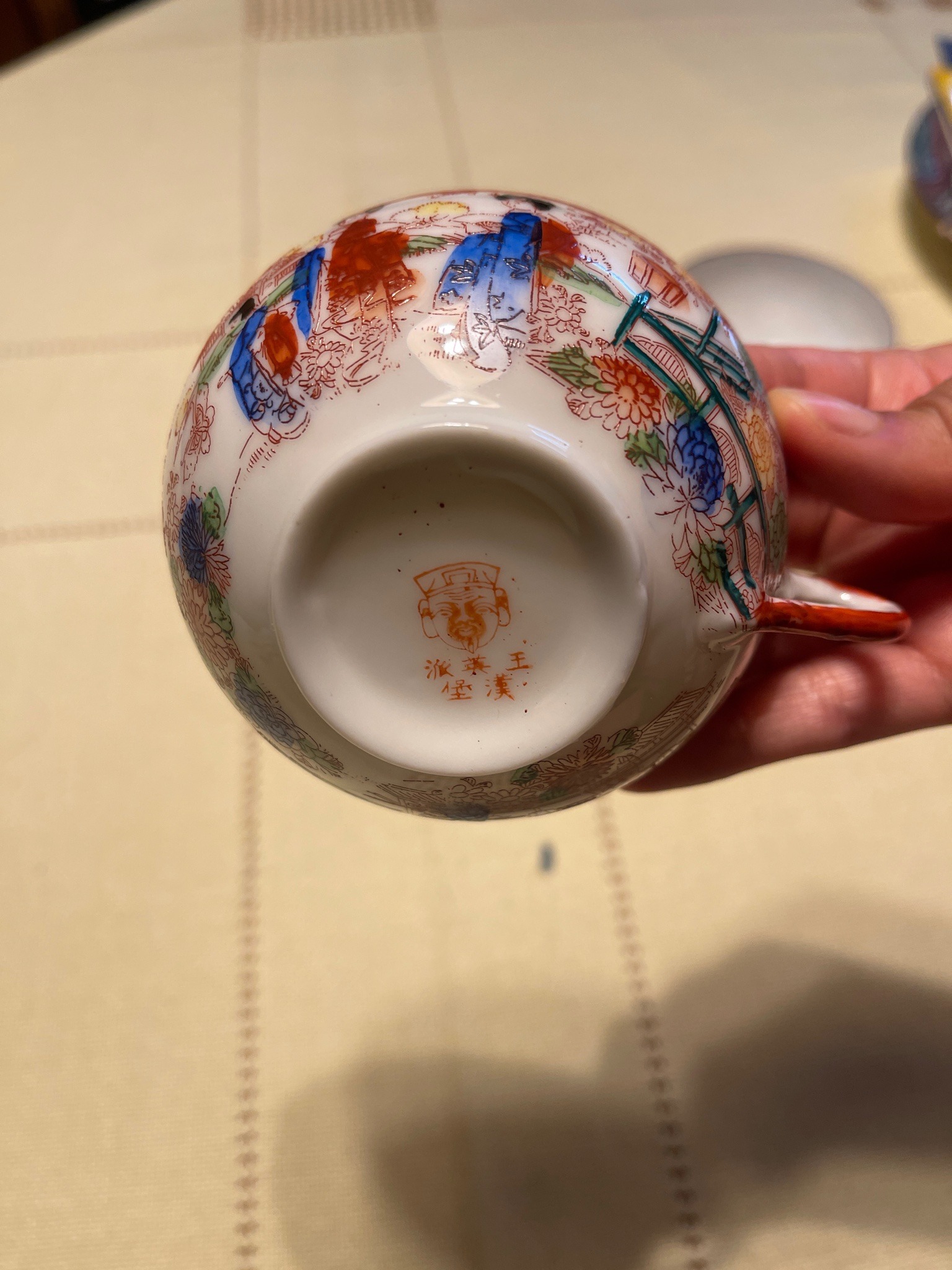
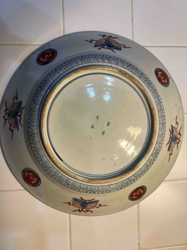
This is a fine example of a Japanese 'eggshell' porcelain teacup, likely dating from the early to mid-20th century (late Meiji to early Showa era). The term 'eggshell' refers to its extremely thin and delicate ceramic body, which is translucent when held to the light. The exterior is ornately decorated in the Kutani style, featuring hand-painted enamels in a vibrant palette of ferruginous red, cobalt blue, and forest green, accented with gilded outlines. The scene depicts traditional figures and floral motifs amongst a garden fence, rendered with fine, thread-like calligraphic brushwork. Notably, the base features a distinct red iron-oxide maker's mark consisting of a stylized face—likely depicting a 'Fortune God' or a specific artisan—accompanied by kanji script indicating the manufacturer or kiln. The teacup displays a small, integrated loop handle painted in red. Regarding condition, it appears well-preserved with no visible cracks or significant chips, though there is minor surface wear and faint loss to the gold leaf detailing consistent with age. The craftsmanship is high, evidenced by the uniformity of the porcelain body and the precision of the hand-painted enamel overlays.
Estimated Value

$150 - $250

Basic Information

Category

Antique Asian Ceramics

Appraised On

May 7, 2026

Estimated Value

$150 - $250

Item Description

This is a fine example of a Japanese 'eggshell' porcelain teacup, likely dating from the early to mid-20th century (late Meiji to early Showa era). The term 'eggshell' refers to its extremely thin and delicate ceramic body, which is translucent when held to the light. The exterior is ornately decorated in the Kutani style, featuring hand-painted enamels in a vibrant palette of ferruginous red, cobalt blue, and forest green, accented with gilded outlines. The scene depicts traditional figures and floral motifs amongst a garden fence, rendered with fine, thread-like calligraphic brushwork. Notably, the base features a distinct red iron-oxide maker's mark consisting of a stylized face—likely depicting a 'Fortune God' or a specific artisan—accompanied by kanji script indicating the manufacturer or kiln. The teacup displays a small, integrated loop handle painted in red. Regarding condition, it appears well-preserved with no visible cracks or significant chips, though there is minor surface wear and faint loss to the gold leaf detailing consistent with age. The craftsmanship is high, evidenced by the uniformity of the porcelain body and the precision of the hand-painted enamel overlays.
Get Your Items Appraised

Instant estimates of your treasures with AI-powered instant appraisals

Browse More Appraisals