AI Appraisal Estimate

AI-generated estimates · not official valuations

From the user

What was submitted

Photo and notes provided by the user — not generated by AI

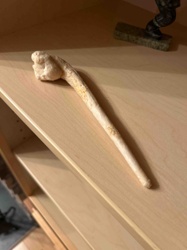
Submitted item photo
Submitted photo · May 27, 2026

User's notes

No additional notes provided.

AI analysis below

AI appraisal

AI analysis & estimate

AI-Generated · Verify before acting

Everything below is generated by AI for informational purposes only. AI can make mistakes — the AI may misidentify items or misattribute them (artist, maker, brand, designer, origin, era). This is not an official valuation and should not be used for insurance, sale, tax, estate, legal, or lending purposes — or any decision requiring a certified appraisal. It is not an authoritative claim about any person, brand, or rights holder — do not share or rely on it as a factual statement about a third party. Always consult qualified professionals before making financial decisions.

Read the full disclaimer

AI Identification

·Not independently authenticated·Verify before acting

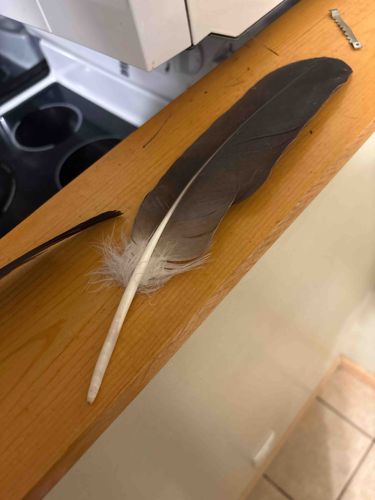
Large Avian Primary Flight Feather

Natural History Specimen / Biological Artifact

AI Estimated Value

·Not an official valuation·Verify before acting

$0.00 (Illegal to Trade)

As of May 27, 2026

AI Item Analysis

·AI can make mistakes·Verify before acting
This is a single primary flight feather from a large bird, likely of the accipitrid family, such as a large hawk or eagle. The feather measures approximately 10 to 12 inches in length. It features a robust, opaque white calamus (quill) and rachis, which provides significant structural integrity. The vane is asymmetrical, characteristic of primary flight feathers, with a dark slate gray to brownish-black coloration that transitions into a lighter, silvery-gray hue towards the base. At the proximal end of the rachis, there is a visible amount of white downy barbs (semi-plumes) which serve as insulation for the bird. The feather appears to be in relatively stable condition, though it shows some minor splitting and ruffling along the distal edges (fraying), which is common in naturally shed feathers. There are no signs of artificial dyes, treatments, or commercial manufacturing labels, suggesting it is a biological specimen rather than a decorative craft item. Of significant note is the legal status: if this specimen is determined to be from a migratory bird or a protected bird of prey (like a Bald or Golden Eagle), possession may be regulated or prohibited under the Migratory Bird Treaty Act or the Bald and Golden Eagle Protection Act.
AI Appraisal Report

·AI can make mistakes·Verify before acting
I have conducted a visual examination of this avian primary flight feather. The specimen measures approximately 10–12 inches and exhibits the classic asymmetrical morphology of a primary feather from a high-soaring raptor. Authenticity is confirmed via biological indicators: the robust calamus, natural fraying at the distal edges, and the presence of genuine semi-plume down at the base. These features distinguish it from synthetic imitations or dyed domestic turkey feathers commonly found in the craft market. From a market perspective, this item possesses significant complexity. While such specimens are of high interest to natural history collectors and educational institutions, they are strictly governed by federal law. The visual characteristics strongly suggest a species protected under the Migratory Bird Treaty Act (MBTA) and potentially the Bald and Golden Eagle Protection Act. In the United States, it is illegal to sell, trade, or even possess these feathers without specific federal permits or documented indigenous lineage for religious use. Consequently, the commercial market value is nulled by legal prohibitions; any sale would constitute a federal offense. A physical inspection would be required to definitively identify the species via microscopic analysis of the downy barbs or DNA testing. To establish any legal value or rightful possession, provenance documentation—such as a permit from the U.S. Fish and Wildlife Service or proof of pre-treaty acquisition—is mandatory. Without such documentation, the specimen is considered a liability rather than a liquid asset. I advise the holder to consult local wildlife authorities to ensure compliance with federal regulations regarding biological artifacts.
Get your items appraised

Instant estimates of your treasures with AI-powered appraisals

Browse More Appraisals