Chert Lithic Artifact/Possible Scraper Tool
Archeological Artifacts / Prehistoric Stone Tools

Chert Lithic Artifact/Possible Scraper Tool

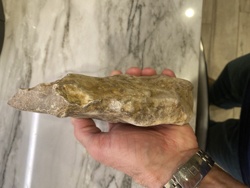
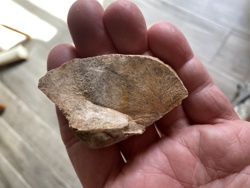
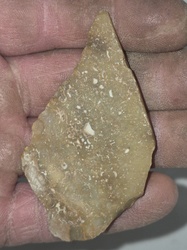
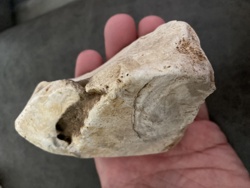
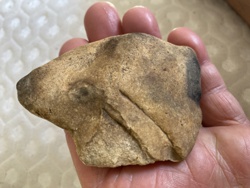
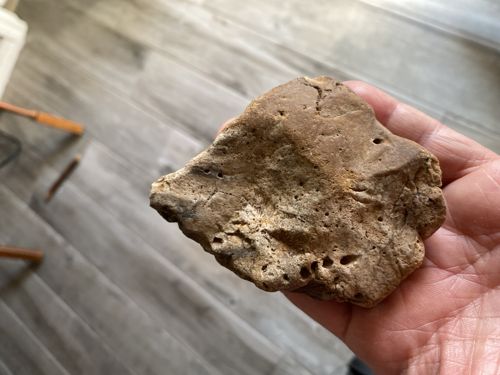
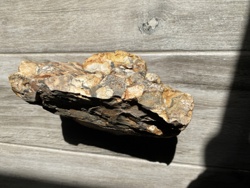
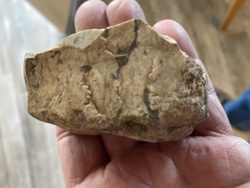
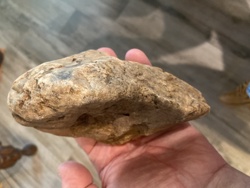
This item is a stone specimen identified as a chert lithic artifact, measuring approximately 3 inches by 2.5 inches. It displays a triangular to sub-rectangular shape with a robust, thick cross-section. The material is a cryptocrystalline silicate, typically referred to as chert or flint, showing an earthy tan to light brown coloration consistent with high iron content or mineral staining from local soil in Oklahoma. The surface texture is notably rugose and porous, featuring several small pits and vugs that may be natural inclusions or a result of geological weathering. While much of the surface is cortex (the original outer skin of the raw stone), there are visible concavities and fractured edges that suggest intentional percussion or opportunistic use as a scraper or hand-held cutting tool. The edges show signs of step fracturing and uneven wear, which can indicate prehistoric utilitarian use. However, the heavy patina and lack of clear, uniform pressure flaking make it difficult to distinguish between anthropogenic modification and natural river-tumble damage without a tactile microscopic analysis. The item possesses a significant weight for its size, suggesting high density. No maker's marks are present as this is a prehistoric tool. Its condition is weathered with aged, rounded edges, consistent with being a surface find or a stream-rolled artifact. It represents a piece of Paleolithic or Archaic period lithic technology common to the North American Great Plains regions.
Estimated Value

$40 - $75

Basic Information

Category

Archeological Artifacts / Prehistoric Stone Tools

Appraised On

February 21, 2026

Estimated Value

$40 - $75

Additional Details Provided By Owner

User Provided Information

Paleolithic chert multi tool such as a scraper hand axe found in Guthrie OK 3" x 2.5

Item Description

This item is a stone specimen identified as a chert lithic artifact, measuring approximately 3 inches by 2.5 inches. It displays a triangular to sub-rectangular shape with a robust, thick cross-section. The material is a cryptocrystalline silicate, typically referred to as chert or flint, showing an earthy tan to light brown coloration consistent with high iron content or mineral staining from local soil in Oklahoma. The surface texture is notably rugose and porous, featuring several small pits and vugs that may be natural inclusions or a result of geological weathering. While much of the surface is cortex (the original outer skin of the raw stone), there are visible concavities and fractured edges that suggest intentional percussion or opportunistic use as a scraper or hand-held cutting tool. The edges show signs of step fracturing and uneven wear, which can indicate prehistoric utilitarian use. However, the heavy patina and lack of clear, uniform pressure flaking make it difficult to distinguish between anthropogenic modification and natural river-tumble damage without a tactile microscopic analysis. The item possesses a significant weight for its size, suggesting high density. No maker's marks are present as this is a prehistoric tool. Its condition is weathered with aged, rounded edges, consistent with being a surface find or a stream-rolled artifact. It represents a piece of Paleolithic or Archaic period lithic technology common to the North American Great Plains regions.
Get Your Items Appraised

Instant estimates of your treasures with AI-powered instant appraisals

Browse More Appraisals