Wilton Armetale 'Our Daily Bread' Pewter-Alternative Tray
Kitchen & Dining / Metalware

Wilton Armetale 'Our Daily Bread' Pewter-Alternative Tray

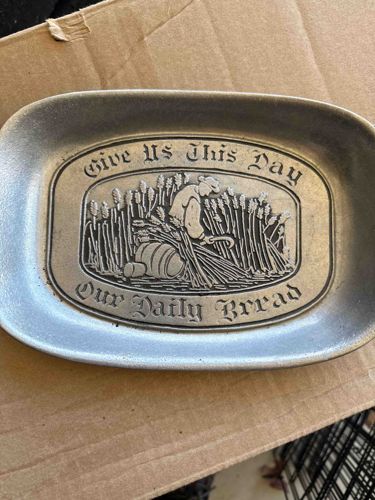
This is a rectangular bread tray or platter with rounded corners, likely manufactured by Wilton Armetale. It is crafted from 'Armetale' metal, a non-toxic aluminum-based alloy designed to mimic the appearance of antique pewter with a sand-cast texture. The tray features a central high-relief bas-relief scene depicting a farm laborer harvesting wheat with a sickle next to a woven basket. Bordering this scene in a Gothic script font is the phrase 'Give Us This Day Our Daily Bread,' a reference to the Lord's Prayer. The metal has a matte, silver-gray 'Satin' finish typical of mid-to-late 20th-century American casual dining ware. Based on its design and material, it likely dates from the 1970s or 1980s. The tray shows evidence of minor surface oxidation, small pits, and light scratches consistent with domestic use. The casting is crisp, highlighting the individual stalks of grain and the texture of the laborer's clothing. This piece represents the 'Country' or 'Early American' revival style that was popular in home decor during that era.
Estimated Value

$15 - $25

Basic Information

Category

Kitchen & Dining / Metalware

Appraised On

January 15, 2026

Estimated Value

$15 - $25

Item Description

This is a rectangular bread tray or platter with rounded corners, likely manufactured by Wilton Armetale. It is crafted from 'Armetale' metal, a non-toxic aluminum-based alloy designed to mimic the appearance of antique pewter with a sand-cast texture. The tray features a central high-relief bas-relief scene depicting a farm laborer harvesting wheat with a sickle next to a woven basket. Bordering this scene in a Gothic script font is the phrase 'Give Us This Day Our Daily Bread,' a reference to the Lord's Prayer. The metal has a matte, silver-gray 'Satin' finish typical of mid-to-late 20th-century American casual dining ware. Based on its design and material, it likely dates from the 1970s or 1980s. The tray shows evidence of minor surface oxidation, small pits, and light scratches consistent with domestic use. The casting is crisp, highlighting the individual stalks of grain and the texture of the laborer's clothing. This piece represents the 'Country' or 'Early American' revival style that was popular in home decor during that era.
Get Your Items Appraised

Instant estimates of your treasures with AI-powered instant appraisals

Browse More Appraisals