AI Appraisal Estimate

AI-generated estimates · not official valuations

From the user

What was submitted

Photo and notes provided by the user — not generated by AI

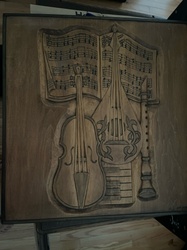
Submitted item photo
Submitted photo · June 13, 2026

User's notes

Burma Teak Wood Carving

AI analysis below

AI appraisal

AI analysis & estimate

AI-Generated · Verify before acting

Everything below is generated by AI for informational purposes only. AI can make mistakes — the AI may misidentify items or misattribute them (artist, maker, brand, designer, origin, era). This is not an official valuation and should not be used for insurance, sale, tax, estate, legal, or lending purposes — or any decision requiring a certified appraisal. It is not an authoritative claim about any person, brand, or rights holder — do not share or rely on it as a factual statement about a third party. Always consult qualified professionals before making financial decisions.

Note

This analysis also relies on unverified notes provided by the user, which may be incomplete or inaccurate and could affect the result.

Read the full disclaimer

AI Identification

·Not independently authenticated·Verify before acting

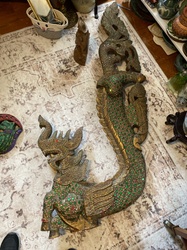
Hand-Carved Burmese Teak Architectural Element

Architectural Antiques / Wood Carvings

AI Estimated Value

·Not an official valuation·Verify before acting

$1,400 - $1,800

As of June 13, 2026

AI Item Analysis

·AI can make mistakes·Verify before acting
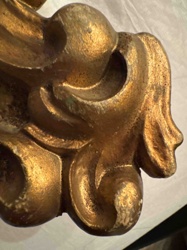
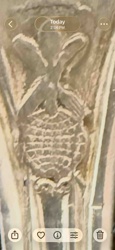
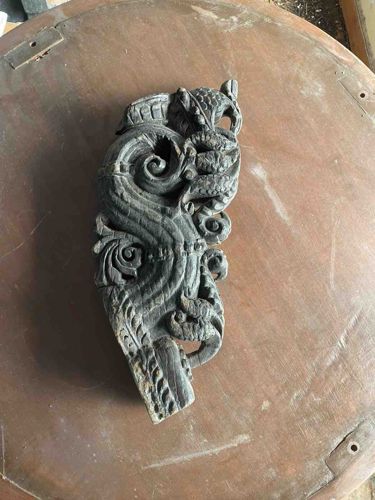
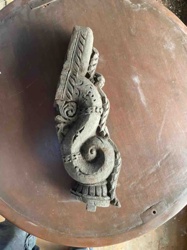
This item is an antique architectural wood carving, likely serving as a corbel, bracket, or ornamental finial, expertly hand-crafted from Burmese (Burma) Teak wood. Physically, the piece showcases the deep, characteristic grain of old-growth teak, currently appearing with a dark, weathered charcoal-grey to deep brown patina, indicating significant age and exposure. The carving is highly ornate, featuring traditional Southeast Asian motifs including serpentine scales, scrolling foliage (dracantoid or 'Kranok' style), and stylized organic forms that twist in a high-relief, three-dimensional composition. Noteworthy is the complexity of the undercutting, which demonstrates a high level of craftsmanship and physical depth. The condition reflects its history: there are visible surface abrasions, grain splitting (checking) typical of aged wood, and a 'dry' texture suggesting the loss of original oils or finishes. Edges show moderate rounding from environmental wear, with some minor losses to the more delicate protruding scrolls. There are no visible maker's marks, which is common for architectural salvage from the 19th or early 20th century. The style is indicative of British Colonial or traditional Burmese temple-style ornamentation, emphasizing fluid movement and dense textural detailing.
AI Appraisal Report

·AI can make mistakes·Verify before acting
I have carefully examined the provided images of this Hand-Carved Burmese Teak Architectural Element. The piece exhibits the stylistic hallmarks of late 19th to early 20th-century Mandalay or British Colonial craftsmanship. The density of the 'Kranok' scrolling and the depth of the high-relief undercutting suggest a master-level artisan. The dark, charcoal-grey patina and radial checking are consistent with aged, old-growth Tectona grandis (Teak) that has been exposed to varying humidity, confirming its status as a genuine architectural salvage piece rather than a modern reproduction. While the surface shows expected drying and minor losses to the delicate scroll tips, these defects serve as 'honest wear' that bolsters its antique appeal. Currently, the market for Southeast Asian architectural salvage is robust, particularly for Burmese teak due to its durability and the increasing scarcity of old-growth timber. Comparable corbels of this size and intricacy recently sold at specialty auctions range between $1,200 and $2,000 depending on provenance. The primary value drivers here are the three-dimensional complexity and the material origin. However, my assessment is based solely on digital photography. A full authentication would require an in-person inspection to verify the tactile density of the wood and check for hidden repairs or structural insects. Furthermore, documentation of provenance—specifically tracing its removal from a specific temple or colonial structure—would be necessary to command a premium 'collector' price. Scientific carbon dating is generally not cost-effective for 19th-century timber, so authentication relies on stylistic analysis and physical weathering patterns.

Get your items appraised

Instant estimates of your treasures with AI-powered appraisals

Browse More Appraisals