Lithic Core or Preform - Native American Artifact
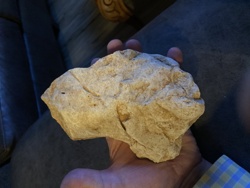
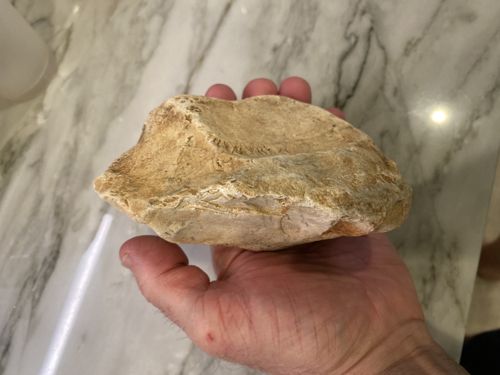
This item is a lithic specimen of chert or flint, likely serving as a core or a discarded preform. It measures approximately 4 to 5 inches in length, fitting within a human palm. The material displays an earthy, buff tan to beige coloration with visible limestone cortex remaining on several surfaces. The construction shows evidence of percussion flaking, characterized by large, concave scars and 'hinge' fractures where flakes were removed to shape the piece. While it has the general teardrop or ovate silhouette of an Acheulean-style hand axe, it lacks the fine pressure flaking usually associated with finished bifacial tools. The edges appear dull and crushed rather than sharpened, suggesting it was either a source of raw material for smaller tools or was abandoned during the reduction process due to material flaws. Found in Guthrie, Oklahoma, this piece likely dates to the Archaic or Woodland periods of North American indigenous history. The surface exhibits a heavy patina and mineral staining consistent with long-term burial in red clay or riverine environments. There are no modern tool marks or signatures, and its value lies in its archaeological context rather than refined craftsmanship.
AI-Generated Appraisal Disclaimer
Estimated Value
$45 - $75
Basic Information
Category
Archaeological Artifact / Stone Tool
Appraised On
February 18, 2026
Estimated Value
$45 - $75
Additional Details Provided By Owner
User Provided Information
Found this prospect stone age hand axe on our Guthrie, OK property
Item Description
This item is a lithic specimen of chert or flint, likely serving as a core or a discarded preform. It measures approximately 4 to 5 inches in length, fitting within a human palm. The material displays an earthy, buff tan to beige coloration with visible limestone cortex remaining on several surfaces. The construction shows evidence of percussion flaking, characterized by large, concave scars and 'hinge' fractures where flakes were removed to shape the piece. While it has the general teardrop or ovate silhouette of an Acheulean-style hand axe, it lacks the fine pressure flaking usually associated with finished bifacial tools. The edges appear dull and crushed rather than sharpened, suggesting it was either a source of raw material for smaller tools or was abandoned during the reduction process due to material flaws. Found in Guthrie, Oklahoma, this piece likely dates to the Archaic or Woodland periods of North American indigenous history. The surface exhibits a heavy patina and mineral staining consistent with long-term burial in red clay or riverine environments. There are no modern tool marks or signatures, and its value lies in its archaeological context rather than refined craftsmanship.
Related Tags
Explore similar items and categories:
Get Your Items Appraised
Instant estimates of your treasures with AI-powered instant appraisals