AI Appraisal Estimate

AI-generated estimates · not official valuations

From the user

What was submitted

Photo and notes provided by the user — not generated by AI

Submitted item photo
Submitted photo · June 6, 2026

User's notes

Coins

AI analysis below

AI appraisal

AI analysis & estimate

AI-Generated · Verify before acting

Everything below is generated by AI for informational purposes only. AI can make mistakes — the AI may misidentify items or misattribute them (artist, maker, brand, designer, origin, era). This is not an official valuation and should not be used for insurance, sale, tax, estate, legal, or lending purposes — or any decision requiring a certified appraisal. It is not an authoritative claim about any person, brand, or rights holder — do not share or rely on it as a factual statement about a third party. Always consult qualified professionals before making financial decisions.

Note

This analysis also relies on unverified notes provided by the user, which may be incomplete or inaccurate and could affect the result.

Read the full disclaimer

AI Identification

·Not independently authenticated·Verify before acting

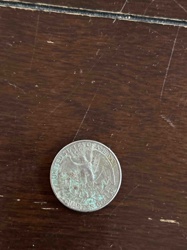
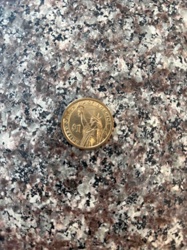
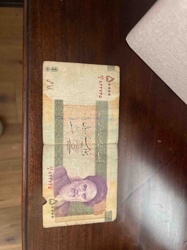
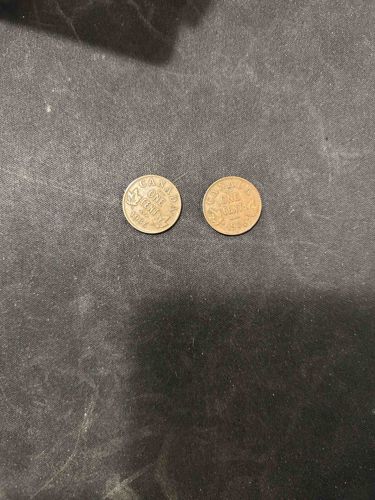
Two Canadian Small Cents (1921 and 1928)

Numismatics / Currency

AI Estimated Value

·Not an official valuation·Verify before acting

$4.00 - $7.00

As of June 6, 2026

AI Item Analysis

·AI can make mistakes·Verify before acting
This pair consists of two George V era Canadian small cents, dated 1921 and 1928 respectively. Struck at the Royal Canadian Mint, these coins measure approximately 19.05 mm in diameter and are composed of 95.5% copper, 3% tin, and 1.5% zinc. The reverse side, as shown in the image, features the iconic design by Fred Lewis, depicting two maple leaves on a single branch, flanked by the denomination 'ONE CENT' and the word 'CANADA' along the top rim. The 1921 coin on the left shows a relatively higher detail level in the maple leaf veins compared to the 1928 coin on the right. Both coins exhibit significant circulation wear consistent with a 'Fine' to 'Very Fine' grade, characterized by flattened high points on the leaf surfaces and a dark brownish-copper patina. There are visible surface abrasions, minor rim nicks, and general environmental toning. The 1921 issue is particularly notable as it was the first year of the small cent format in Canada, replacing the larger 'large cent' variety used previously. The craftsmanship represents the standard industrial minting quality of the early 20th century. Neither coin appears to have been cleaned, preserving their natural surface oxidation which is preferred by numismatists.
AI Appraisal Report

·AI can make mistakes·Verify before acting
Upon physical-quality visual inspection of these two Canadian small cents (1921 and 1928), I find them to be genuine circulation strikes of the George V era. The 1921 specimen, representing the inaugural year of the small cent format, carries a slight premium over common dates. I have graded both coins in the 'Fine' (F-12) to 'Very Fine' (VF-20) range. The 1921 coin retains decent detail in the leaf veins, though both exhibit the expected flattening of high points and a rich, chocolate-brown chocolate patina consistent with copper oxidation over a century. The market for George V small cents is robust but high in supply for these specific dates. While the 1921 is a key 'first year' issue, it is not the 'key date' (1923 or 1925) that commands high-tier pricing. Comparables for 1921 cents in Fine condition typically hammer at $3-$5, while the 1928 is a common date valued at approximately $1-$2 in this state. The absence of cleaning is a positive factor, as natural toning is highly preferred by numismatists. Limitations: This appraisal is based on digital images. Without an in-person examination, I cannot definitively rule out minor environmental corrosion or surface PVC damage that might be obscured by the patina. A physical inspection under 10x magnification would be required to confirm the absence of 're-engraved' dates or mechanical doubling. For full authentication and a definitive grade, submission to a third-party grading service such as ICCS (International Coin Certification Service) or PCGS would be necessary, though the cost of such grading would likely exceed the current market value of the coins.

Get your items appraised

Instant estimates of your treasures with AI-powered appraisals

Browse More Appraisals