Western Electric Model 302 Rotary Telephone
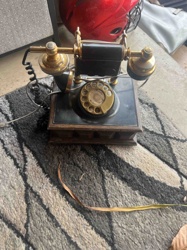
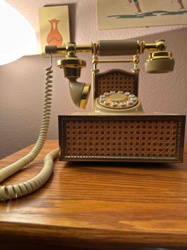
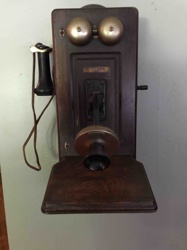
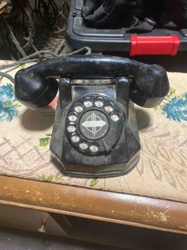
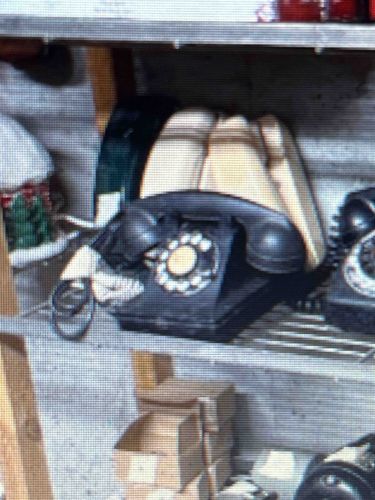
This is a vintage Western Electric Model 302 rotary dial desk telephone, a design classic originally created by Henry Dreyfuss. The unit features a sleek, streamlined black housing made of either injection-molded thermoplastic or cast zinc alloy (based on its matte appearance and date of manufacture). The phone is equipped with a matching black handset resting across a cradle and a traditional circular rotary dial in the center. The dial face exhibits a weathered white or cream center card, which typically displays the exchange numbers. A coiled or straight black handset cord is visible, though it appears somewhat tangled and worn. This specific model was the standard for American households from the late 1930s through the 1950s. Regarding condition, the surface shows significant dust accumulation, grime, and environmental patina indicative of long-term storage in an unfinished space. There are signs of minor scuffing and dulling of the original luster. No major structural cracks are immediately visible, but the finish lacks the high polish of a restored piece. The craftsmanship reflects the industrial durability of the Bell System era, designed for decades of use.
AI-Generated Appraisal Disclaimer
Estimated Value
$65.00 - $95.00
Basic Information
Category
Vintage Telecommunications / Antiques
Appraised On
January 30, 2026
Estimated Value
$65.00 - $95.00
Item Description
This is a vintage Western Electric Model 302 rotary dial desk telephone, a design classic originally created by Henry Dreyfuss. The unit features a sleek, streamlined black housing made of either injection-molded thermoplastic or cast zinc alloy (based on its matte appearance and date of manufacture). The phone is equipped with a matching black handset resting across a cradle and a traditional circular rotary dial in the center. The dial face exhibits a weathered white or cream center card, which typically displays the exchange numbers. A coiled or straight black handset cord is visible, though it appears somewhat tangled and worn. This specific model was the standard for American households from the late 1930s through the 1950s. Regarding condition, the surface shows significant dust accumulation, grime, and environmental patina indicative of long-term storage in an unfinished space. There are signs of minor scuffing and dulling of the original luster. No major structural cracks are immediately visible, but the finish lacks the high polish of a restored piece. The craftsmanship reflects the industrial durability of the Bell System era, designed for decades of use.
Related Tags
Get Your Items Appraised
Instant estimates of your treasures with AI-powered instant appraisals