Prehistoric Lithic Core Side Scraper Tool
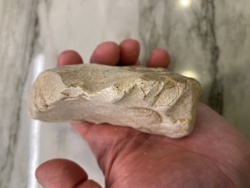
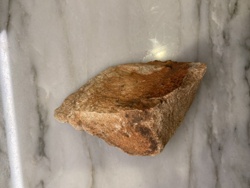
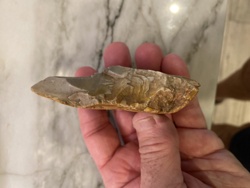
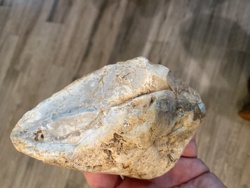
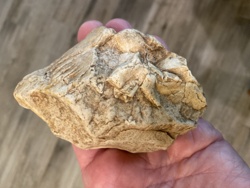
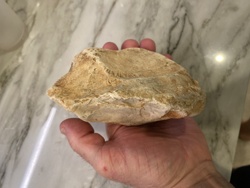
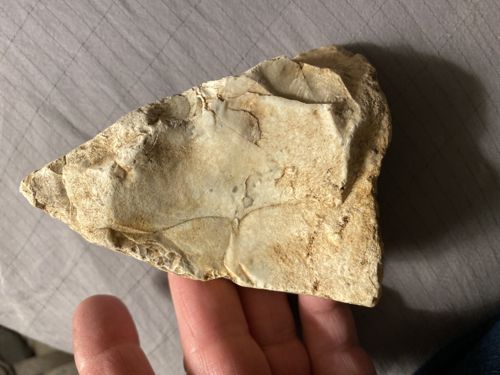
This item is a prehistoric lithic artifact, specifically a multipurpose stone tool that likely functioned as both a side scraper and a core for flaking. Measuring approximately 4 inches in length by 3 inches in width, the piece is fashioned from a high-quality, fine-grained chert or flint, consistent with lithic materials found in the Oklahoma region. The stone exhibits a variety of earthy tones, ranging from cream and pale beige to light tan, with a noticeable matte patina developed over millennia of exposure and burial. The construction is characterized by percussion flaking, with clear evidence of shell-like (conchoidal) fractures where flakes were intentionally removed to shape the edge and reduce the mass. The edges show secondary retouching, which creates a sharp, beveled ridge suitable for scraping hides or processing plant materials. One end tapers to a semi-pointed shape, suggesting its use as a handheld wedge or axe-like implement. The condition is excellent for an archaeological find, showing expected ancient wear and minor edge nibbling, but no modern damage or signs of restoration. Such tools are typical of North American nomadic cultures and can date from several hundred to several thousand years old, reflecting skilled lithic craftsmanship and survival technology.
AI-Generated Appraisal Disclaimer
Estimated Value
$65 - $110
Basic Information
Category
Native American Artifacts / Archaeological Lithics
Appraised On
February 18, 2026
Estimated Value
$65 - $110
Additional Details Provided By Owner
User Provided Information
prospect prehistoric stone hand axe side scraper core tool found in Guthrie OK measuring 4" x 3"
Item Description
This item is a prehistoric lithic artifact, specifically a multipurpose stone tool that likely functioned as both a side scraper and a core for flaking. Measuring approximately 4 inches in length by 3 inches in width, the piece is fashioned from a high-quality, fine-grained chert or flint, consistent with lithic materials found in the Oklahoma region. The stone exhibits a variety of earthy tones, ranging from cream and pale beige to light tan, with a noticeable matte patina developed over millennia of exposure and burial. The construction is characterized by percussion flaking, with clear evidence of shell-like (conchoidal) fractures where flakes were intentionally removed to shape the edge and reduce the mass. The edges show secondary retouching, which creates a sharp, beveled ridge suitable for scraping hides or processing plant materials. One end tapers to a semi-pointed shape, suggesting its use as a handheld wedge or axe-like implement. The condition is excellent for an archaeological find, showing expected ancient wear and minor edge nibbling, but no modern damage or signs of restoration. Such tools are typical of North American nomadic cultures and can date from several hundred to several thousand years old, reflecting skilled lithic craftsmanship and survival technology.
Related Tags
Get Your Items Appraised
Instant estimates of your treasures with AI-powered instant appraisals