Paleolithic-Style Stone Scraping Tool / Handaxe
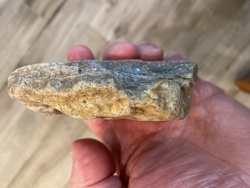
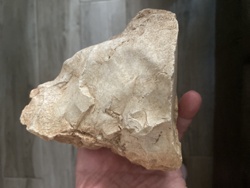
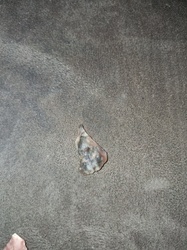
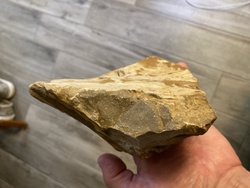
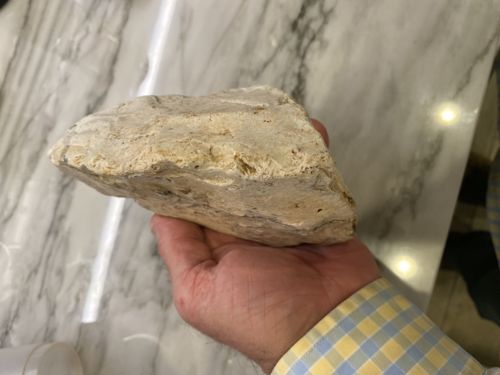
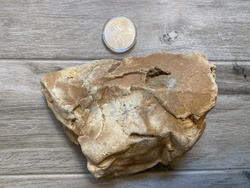
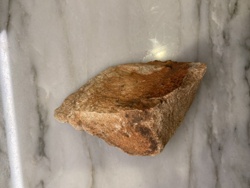
This artifact is a substantial stone tool, likely a handaxe or heavy scraper, measuring approximately 6 inches by 4.5 inches. The item is constructed from a cryptocrystalline silicate material, possibly a local chert or flint variant indigenous to the Oklahoma region. It displays a distinct cream to light-tan coloration with subtle iron oxide staining appearing as yellowish-orange accents across the surface. The tool exhibits bifacial flaking along its primary working edge, resulting in a series of conchoidal fractures and step-scars characteristic of percussion flaking. One side features a rounded, bulbous 'cortex' surface that fits ergonomically into the palm, suggesting it was designed as a handheld tool rather than being hafted to a handle. The opposite edge is tapered and shows evidence of intentional retouching to create a sharp, durable edge suitable for butchery, hide scraping, or woodworking tasks. Regarding condition, the piece shows significant weathered patina and mineral accretion typical of long-term subterranean or surface exposure. There is no modern crushing or fresh fracturing visible, indicating the flake scars are of ancient origin. While there are no maker's marks, as is typical for prehistoric lithics, the symmetry and deliberate flake patterns indicate skilled craftsmanship. Its age likely traces back to the Paleo-Indian or Archaic period, representing an essential piece of early North American tool-making technology.
AI-Generated Appraisal Disclaimer
Estimated Value
$150 - $350
Basic Information
Category
Prehistoric Artifacts / Lithic Archaeology
Appraised On
February 18, 2026
Estimated Value
$150 - $350
Additional Details Provided By Owner
User Provided Information
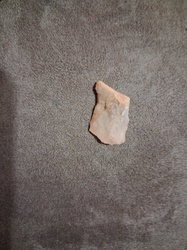
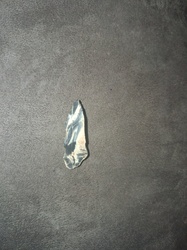
prospect Paleolithic stone handaxe scraper lithic tool found in Guthrie, OK measuring 6" x 4.5"
Item Description
This artifact is a substantial stone tool, likely a handaxe or heavy scraper, measuring approximately 6 inches by 4.5 inches. The item is constructed from a cryptocrystalline silicate material, possibly a local chert or flint variant indigenous to the Oklahoma region. It displays a distinct cream to light-tan coloration with subtle iron oxide staining appearing as yellowish-orange accents across the surface. The tool exhibits bifacial flaking along its primary working edge, resulting in a series of conchoidal fractures and step-scars characteristic of percussion flaking. One side features a rounded, bulbous 'cortex' surface that fits ergonomically into the palm, suggesting it was designed as a handheld tool rather than being hafted to a handle. The opposite edge is tapered and shows evidence of intentional retouching to create a sharp, durable edge suitable for butchery, hide scraping, or woodworking tasks. Regarding condition, the piece shows significant weathered patina and mineral accretion typical of long-term subterranean or surface exposure. There is no modern crushing or fresh fracturing visible, indicating the flake scars are of ancient origin. While there are no maker's marks, as is typical for prehistoric lithics, the symmetry and deliberate flake patterns indicate skilled craftsmanship. Its age likely traces back to the Paleo-Indian or Archaic period, representing an essential piece of early North American tool-making technology.
Related Tags
Get Your Items Appraised
Instant estimates of your treasures with AI-powered instant appraisals