Japanese Art of Chokin Decorative Plate
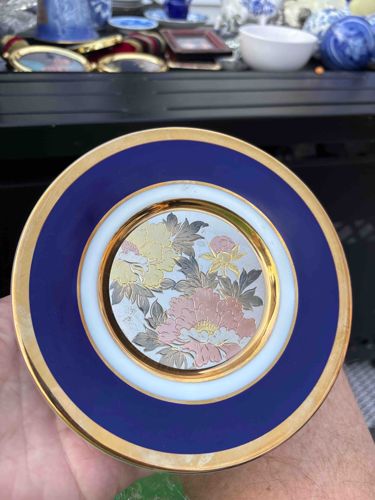
This is a circular porcelain decorative plate featuring a central metallic medallion created in the traditional Japanese 'Chokin' style. The artwork showcases intricate engravings of peony blossoms and foliage, highlighted with real 24K gold and silver gilding. The center medallion is framed by multiple decorative bands: first a thin gold trim, then a white porcelain ring, followed by a wide, vibrant cobalt blue border, and finally finished with a heavy gold-dipped rim. The Chokin technique originated as an ancient art form used to decorate the armor and weapons of Samurai warriors. The plate appears to be in excellent vintage condition with no visible cracks or chips, though minor shelf wear on the reverse and light surface dust are present. The craftsmanship reflects typical high-quality souvenir production from the late 20th century (circa 1970s-1980s). Based on the user context '30/1415', this likely refers to a limited edition numbering or a specific production series catalog identifier found on the reverse maker's mark.
AI-Generated Appraisal Disclaimer
Estimated Value
$35.00 - $55.00
Basic Information
Category
Collectible Ceramics & Decorative Arts
Appraised On
February 11, 2026
Estimated Value
$35.00 - $55.00
Additional Details Provided By Owner
User Provided Information
The art of chokin 30/1415
Item Description
This is a circular porcelain decorative plate featuring a central metallic medallion created in the traditional Japanese 'Chokin' style. The artwork showcases intricate engravings of peony blossoms and foliage, highlighted with real 24K gold and silver gilding. The center medallion is framed by multiple decorative bands: first a thin gold trim, then a white porcelain ring, followed by a wide, vibrant cobalt blue border, and finally finished with a heavy gold-dipped rim. The Chokin technique originated as an ancient art form used to decorate the armor and weapons of Samurai warriors. The plate appears to be in excellent vintage condition with no visible cracks or chips, though minor shelf wear on the reverse and light surface dust are present. The craftsmanship reflects typical high-quality souvenir production from the late 20th century (circa 1970s-1980s). Based on the user context '30/1415', this likely refers to a limited edition numbering or a specific production series catalog identifier found on the reverse maker's mark.
Related Tags
Get Your Items Appraised
Instant estimates of your treasures with AI-powered instant appraisals