Late Victorian Flow Blue Scalloped Transferware Plate
Antique Ceramics and Pottery

Late Victorian Flow Blue Scalloped Transferware Plate

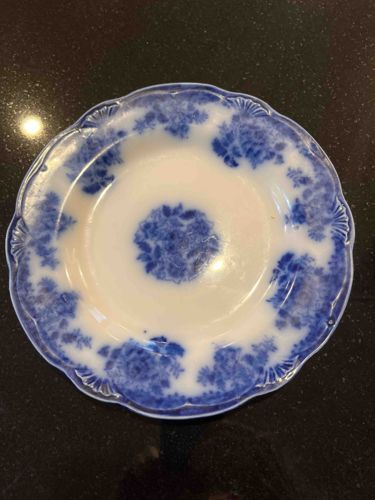
This is a fine example of a circular ceramic plate featuring the distinctive 'Flow Blue' glazing technique, which reached peak popularity during the late 19th and early 20th centuries. The plate is constructed from an earthenware or ironstone body with a creamy white base glaze. The decoration consists of a central floral medallion and a wide border of repeating floral clusters, rendered in a rich cobalt blue that has intentionally blurred or 'flowed' into the surrounding glaze during firing. A notable feature is the molded scalloped rim, which includes embossed shell or fan motifs at intervals, adding a tactile texture to the piece. The craftsmanship reflects the mass production yet high-aesthetic standards of Victorian-era potteries, likely of English origin (Staffordshire). Regarding condition, the plate shows a lustrous surface under light, suggesting the glaze remains largely intact. However, there are visible signs of age including minor surface scratches and small dark specks (kiln grit or localized crazing) typical of antique ironstone. No major chips or cracks are immediately apparent from the top view, and the flow of the blue pigment is well-distributed, which is a desirable quality indicator for collectors of monochromatic transferware.
Estimated Value

$65.00-$95.00

Basic Information

Category

Antique Ceramics and Pottery

Appraised On

December 27, 2025

Estimated Value

$65.00-$95.00

Item Description

This is a fine example of a circular ceramic plate featuring the distinctive 'Flow Blue' glazing technique, which reached peak popularity during the late 19th and early 20th centuries. The plate is constructed from an earthenware or ironstone body with a creamy white base glaze. The decoration consists of a central floral medallion and a wide border of repeating floral clusters, rendered in a rich cobalt blue that has intentionally blurred or 'flowed' into the surrounding glaze during firing. A notable feature is the molded scalloped rim, which includes embossed shell or fan motifs at intervals, adding a tactile texture to the piece. The craftsmanship reflects the mass production yet high-aesthetic standards of Victorian-era potteries, likely of English origin (Staffordshire). Regarding condition, the plate shows a lustrous surface under light, suggesting the glaze remains largely intact. However, there are visible signs of age including minor surface scratches and small dark specks (kiln grit or localized crazing) typical of antique ironstone. No major chips or cracks are immediately apparent from the top view, and the flow of the blue pigment is well-distributed, which is a desirable quality indicator for collectors of monochromatic transferware.
Get Your Items Appraised

Instant estimates of your treasures with AI-powered instant appraisals

Browse More Appraisals