These notes were written by the person who submitted this item. Appraiser.AI has not verified them, and the AI's identification and estimate may rely on them.
AI Estimated Value
Not an official valuation
$60-100
AI estimate as of September 25, 2025 · verify with a professional before acting
AI-Generated · Verify before acting
Everything on this page is generated by AI for informational purposes only. AI can make mistakes — the AI may misidentify items or misattribute them (artist, maker, brand, designer, origin, era). This is not an official valuation and should not be used for insurance, sale, tax, estate, legal, or lending purposes — or any decision requiring a certified appraisal. It is not an authoritative claim about any person, brand, or rights holder — do not share or rely on it as a factual statement about a third party. Always consult qualified professionals before making financial decisions.
This analysis also relies on unverified notes provided by the user, which may be incomplete or inaccurate and could affect the result.
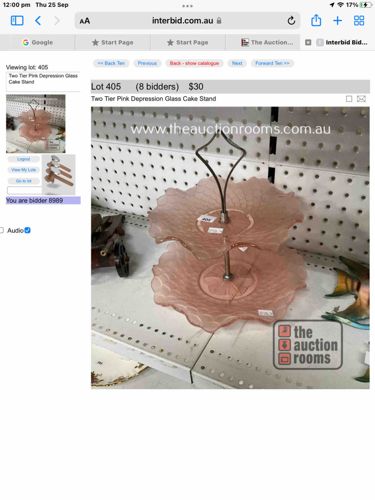
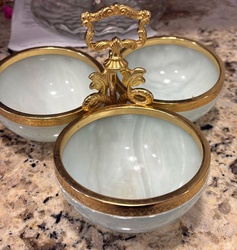
This item is a two-tier cake stand constructed from pink Depression glass. The stand comprises two ruffled or fluted circular plates, with the upper plate smaller in diameter than the lower one. Each plate features a distinct wavy or scalloped edge, indicative of a decorative Victorian or Art Deco influence popular during the Depression era. The glass itself appears to be a translucent, pale rose-pink color, characteristic of manganese-colored Depression glass, which gains its hue from the addition of manganese dioxide to the glass batch. The surface of the glass plates has a textured, possibly 'crinkled' or 'woven' pattern, adding to its visual interest and obscuring perfect clarity. The plates are connected by a central metal rod that also forms a looped handle at the top, allowing for easy carrying. The metal rod appears to be dark in color, possibly wrought iron or a similarly finished metal, with a decorative twist or flourish near the handle. The overall construction suggests a piece designed for serving desserts or small pastries. Minor wear consistent with age and use, such as slight scratches on the glass or patina on the metal, would be expected but are not clearly discernible from the provided images. The item's style, materials, and color strongly point to a manufacturing period during the 1920s to 1940s, aligning with the Depression Glass movement. Its craftsmanship, while mass-produced, exhibits the charming imperfections and unique character associated with glassware from that era.
AI Appraisal Report
Upon my virtual examination of the Two-Tier Pink Depression Glass Cake Stand, I find its authenticity as a Depression-era piece to be highly probable. The translucent, pale rose-pink hue, characteristic of manganese-colored glass, combined with the ruffled or fluted plates and scalloped edges, aligns perfectly with the aesthetic and manufacturing techniques of the 1920s-1940s. The 'crinkled' or 'woven' textured surface also supports this dating. While the metal rod appears dark and possibly wrought iron, a hands-on inspection would confirm its material and finish, and specifically identify if it's original to the piece or a later marriage.
In terms of condition, based on the provided description, I anticipate minor wear consistent with its age and intended use, such as slight superficial scratches on the glass and patination on the metal. These would be expected and generally do not significantly detract from value unless severe, which is not indicated here. The overall construction appears sound.
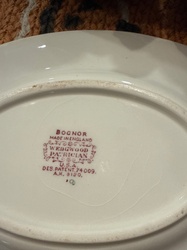
From a market perspective, pink Depression glass is a popular collectible, and two-tier cake stands are desirable for their display and functional qualities. However, despite their charm, most mass-produced Depression glass items are not highly rare. Demand is steady among collectors and individuals seeking vintage home decor. Comparables in good condition typically fetch between $60 and $100 on the secondary market, depending on the specific pattern and manufacturer (if identifiable). Without a clearer image of any maker's marks or a specific pattern identification, a precise individual value within that range is difficult.
Factors significantly impacting value would include the absence of chips, cracks, or significant repairs to the glass, and the originality and stability of the connecting metal rod. To offer a more definitive appraisal and confirm absolute authenticity, an in-person examination would be crucial. This would allow for a tactile inspection of the glass for any damage, determination of the exact glass pattern, assessment of the metal rod's originality and integrity, and potential scientific testing (e.g., UV light test for manganese presence) if further verification were required. However, based on the visual evidence and details, it presents as a genuine and attractive example of Depression-era serveware.