AI Appraisal Estimate

AI-generated estimates · not official valuations

From the user

What was submitted

Photo and notes provided by the user — not generated by AI

Submitted item photo
Submitted photo · June 19, 2026

User's notes

No additional notes provided.

AI analysis below

AI appraisal

AI analysis & estimate

AI-Generated · Verify before acting

Everything below is generated by AI for informational purposes only. AI can make mistakes — the AI may misidentify items or misattribute them (artist, maker, brand, designer, origin, era). This is not an official valuation and should not be used for insurance, sale, tax, estate, legal, or lending purposes — or any decision requiring a certified appraisal. It is not an authoritative claim about any person, brand, or rights holder — do not share or rely on it as a factual statement about a third party. Always consult qualified professionals before making financial decisions.

Read the full disclaimer

AI Identification

·Not independently authenticated·Verify before acting

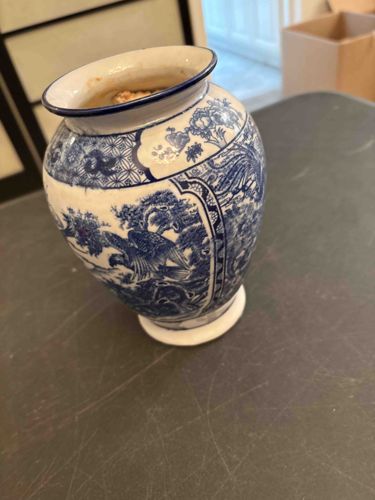
Blue and White Chinoiserie Porcelain Ovoid Vase

Antique Ceramics and Porcelain

AI Estimated Value

·Not an official valuation·Verify before acting

$40 - $80

As of June 19, 2026

AI Item Analysis

·AI can make mistakes·Verify before acting
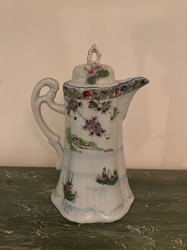
This is a medium-sized ovoid-shaped porcelain vase featuring a classic underglaze blue and white decorative scheme. The vessel is constructed with a flared rim decorated with a solid blue line, a short neck, a swelling shoulder, and a tapered body resting on a slightly flared foot ring. The surface is divided into multiple decorative registers and cartouches containing traditional Chinoiserie motifs. One prominent panel depicts a bird of prey, likely a hawk or eagle, perched among gnarled pine branches, while upper lobed panels contain various floral sprays and geometric diaper patterns. The glaze exhibits a bright white base with cobalt blue pigments that vary in intensity, suggesting a transfer-print or stencil application common in late 19th to early 20th-century mass-produced export wares. Condition-wise, the vase shows visible oxidation and brownish staining around the interior and rim, which may indicate long-term water exposure or use as a planter. There is fine surface crazing and minor peppering in the glaze (kiln soot), which are typical results of the firing process for this grade of porcelain. While no maker's mark is visible from this angle, the style is consistent with Japanese or Chinese export ceramics intended for the Western market during the late Victorian or early Edwardian periods. The craftsmanship is decent for a commercial piece, though the slight blurring of the blue patterns indicates it was likely intended as a decorative household object rather than a fine arts commission.
AI Appraisal Report

·AI can make mistakes·Verify before acting
Based on a review of the images provided, I have evaluated this Blue and White Chinoiserie Porcelain Ovoid Vase. The piece appears to be a late 19th or early 20th-century export ware, likely of Japanese origin given the specific transfer-print quality and classic 'bird among pine' motifs often associated with Meiji-period mass production for Western markets. The application of the cobalt blue suggests stenciling or transfer printing rather than hand-painting, which places this firmly in the category of decorative commercial ware rather than fine art porcelain. Condition is a significant limiting factor here. The visible brownish oxidation and staining around the rim and interior strongly suggest previous use as a flower vase or planter, resulting in water damage that has permeated the crazing in the glaze. While the structural integrity seems intact (pending a check for hairline cracks), the surface staining detracts from its display value. The 'peppering' or kiln soot is a manufacturing flaw common to this grade of export ceramic. In the current market, demand for standard transfer-ware export porcelain is soft, as these items are relatively abundant. Comparables for similar unmarked or mass-produced export vases with condition issues typically sell in the lower double digits at estate auctions or antique malls. To refine this appraisal, I would need to physically handle the vase to check the weight (porcelain density), examine the foot ring for specific clay characteristics, and use a UV light to detect any hidden repairs or touch-ups near the rim.

Get your items appraised

Instant estimates of your treasures with AI-powered appraisals

Browse More Appraisals