Early 19th-Century English Mahogany Tall Case Clock
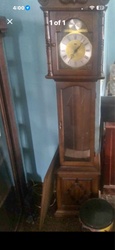
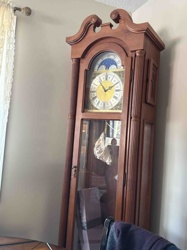
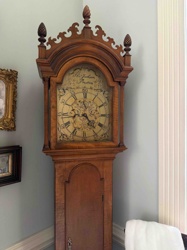
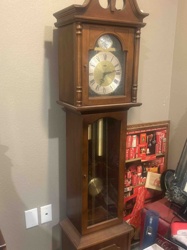
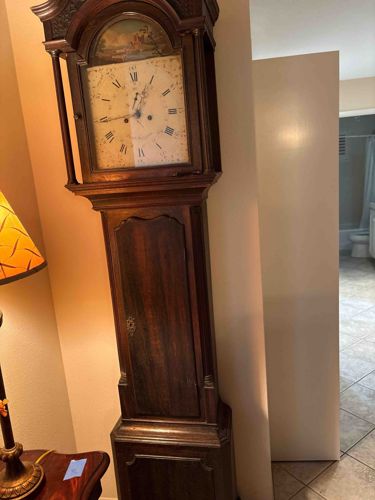
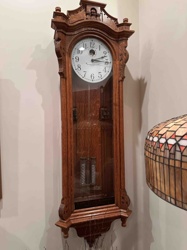
This is a Federal or Georgian period tall case clock, commonly known as a grandfather clock, crafted primarily from mahogany with a rich, dark patina. The piece features a traditional swan-neck pediment hood adorned with decorative fretwork and supported by slender fluted colonnettes. The dial is a hand-painted white iron face featuring Roman numerals, delicate steel hands, and a secondary date dial. A notable feature is the arched painted lunette above the dial, depicting a pastoral or figurative scene consistent with early 19th-century English manufacturing. The waist of the clock includes a long, rectangular door with a shaped top and a brass escutcheon, while the base sits on a stepped plinth. The wood shows visible signs of age including surface crazing in the finish, minor scuffs along the base, and some fading on the painted dial consistent with its estimated age from approximately 1810-1840. The construction displays high-quality joinery characteristic of bespoke provincial cabinetmaking. While the internal movement is not fully visible, the dual winding arbors on the face indicate an eight-day striking movement. The name 'Battaglia' associated with the item may refer to a specific family provenance or a secondary retailer mark.
AI-Generated Appraisal Disclaimer
Estimated Value
$2,500 - $4,000
Basic Information
Category
Antique Furniture / Horology
Appraised On
February 2, 2026
Estimated Value
$2,500 - $4,000
Additional Details Provided By Owner
User Provided Information
Battaglia
Item Description
This is a Federal or Georgian period tall case clock, commonly known as a grandfather clock, crafted primarily from mahogany with a rich, dark patina. The piece features a traditional swan-neck pediment hood adorned with decorative fretwork and supported by slender fluted colonnettes. The dial is a hand-painted white iron face featuring Roman numerals, delicate steel hands, and a secondary date dial. A notable feature is the arched painted lunette above the dial, depicting a pastoral or figurative scene consistent with early 19th-century English manufacturing. The waist of the clock includes a long, rectangular door with a shaped top and a brass escutcheon, while the base sits on a stepped plinth. The wood shows visible signs of age including surface crazing in the finish, minor scuffs along the base, and some fading on the painted dial consistent with its estimated age from approximately 1810-1840. The construction displays high-quality joinery characteristic of bespoke provincial cabinetmaking. While the internal movement is not fully visible, the dual winding arbors on the face indicate an eight-day striking movement. The name 'Battaglia' associated with the item may refer to a specific family provenance or a secondary retailer mark.
Get Your Items Appraised
Instant estimates of your treasures with AI-powered instant appraisals