AI Appraisal Estimate

AI-generated estimates · not official valuations

From the user

What was submitted

Photo and notes provided by the user — not generated by AI

Submitted item photo
Submitted photo · June 12, 2026

User's notes

No additional notes provided.

AI analysis below

AI appraisal

AI analysis & estimate

AI-Generated · Verify before acting

Everything below is generated by AI for informational purposes only. AI can make mistakes — the AI may misidentify items or misattribute them (artist, maker, brand, designer, origin, era). This is not an official valuation and should not be used for insurance, sale, tax, estate, legal, or lending purposes — or any decision requiring a certified appraisal. It is not an authoritative claim about any person, brand, or rights holder — do not share or rely on it as a factual statement about a third party. Always consult qualified professionals before making financial decisions.

Read the full disclaimer

AI Identification

·Not independently authenticated·Verify before acting

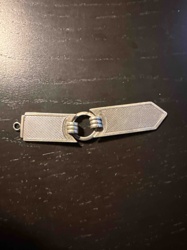
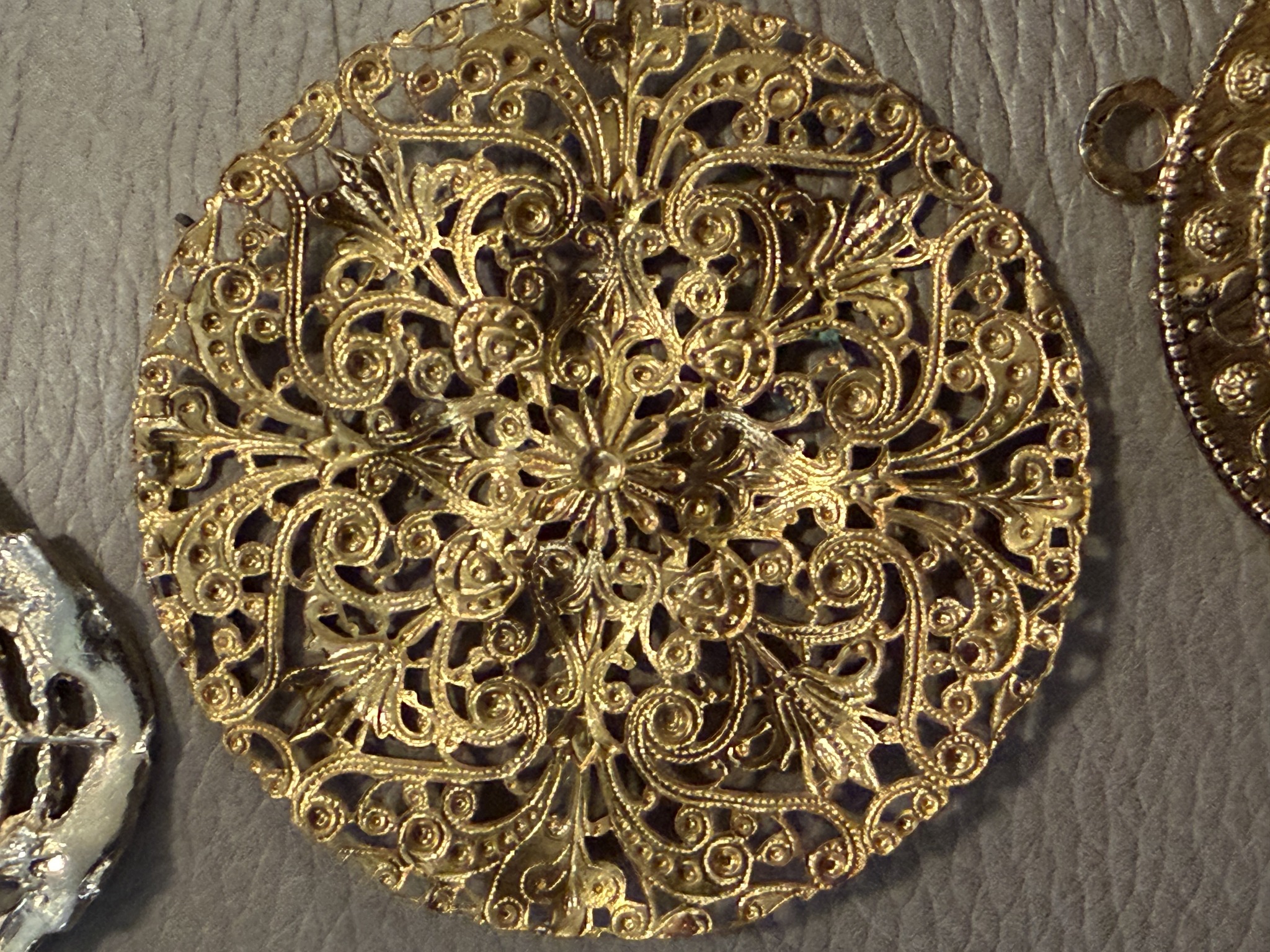
Gold Gilt Filigree Openwork Medallion

Antique Jewelry Components / Decorative Arts

AI Estimated Value

·Not an official valuation·Verify before acting

$45.00 - $75.00

As of June 12, 2026

AI Item Analysis

·AI can make mistakes·Verify before acting
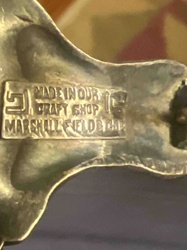
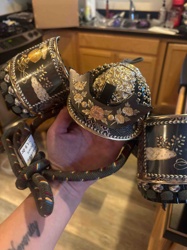
This item is a circular, openwork medallion featuring intricate filigree and cannetille-style scrollwork. The object is likely constructed from a base metal, such as brass or silver, which has been gold-plated or gilded, evidenced by the rich yellow-gold tone against the textured gray background. The design is symmetrically radiating from a central floral or star-shaped motif, transitioning into complex foliate scrolls, acanthus leaf patterns, and granular bead-like accents known as granulation. The construction appears to be machine-stamped or cast to mimic high-end handcrafted filigree, common in late 19th-century Victorian or early 20th-century jewelry and decorative trimmings. The diameter appears to be roughly 1.5 to 2 inches. Regarding condition, there is visible oxidation and darkening in deep recessed areas, particularly a small spot of green verdigris near the upper right quadrant, suggesting a copper-alloy base. The edges show slight irregularities, and the overall patina indicates age rather than contemporary mass production. There are no visible maker's marks or hallmarks on the face, which is typical for such components designed for use in millinery, larger jewelry brooches, or as decorative appliques for furniture or boxes. The craftsmanship shows high attention to detail in the interlacing patterns, though the uniformity suggests a mechanical manufacturing process from the Revivalist period.
AI Appraisal Report

·AI can make mistakes·Verify before acting
I have examined the digital representation of this gold gilt filigree openwork medallion, measuring approximately 1.75 inches. The item exhibits the technical characteristics of late 19th-century Victorian or early 20th-century Revivalist decorative components. The presence of verdigris in the recessed areas confirms a copper-based alloy underlying the gilding, consistent with period millinery trimmings or sash pin components rather than fine jewelry. The symmetry suggests a high-quality mechanical stamp-and-chase process common to the 1890s manufacturing boom in Birmingham or Rhode Island. The condition is fair to good, though the oxidation and loss of gilding on high points slightly diminish its aesthetic value. Market demand for isolated jewelry components is stable but niche, primarily driven by historical restorers and collectors of 'Grand Period' Victorian costume accessories. Comparables for non-hallmarked gilt brass medallions of this size typically hammer at $30 to $60 in specialized antique auctions. Factors limiting value include the lack of a primary brooch assembly and the absence of a signature. Because this assessment is based on photographic evidence, I cannot definitively confirm the weight or the presence of microscopic hallmarks. To provide a certified authentication, an in-person acid test of the base metal, a density measurement, and a physical inspection under 20x magnification to distinguish between hand-twisted filigree and cast imitation would be required. Any future discovery of provenance linking this to a specific fashion house or firm like W.B. Durgin could significantly increase the valuation.

Get your items appraised

Instant estimates of your treasures with AI-powered appraisals

Browse More Appraisals