White Embossed Porcelain Coffee or Chocolate Cup
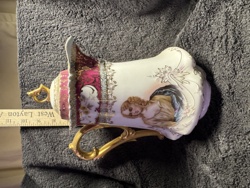
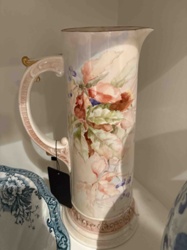
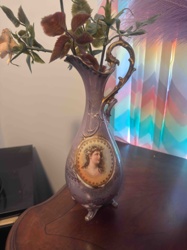
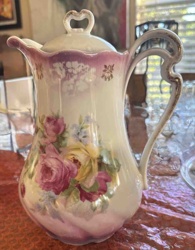
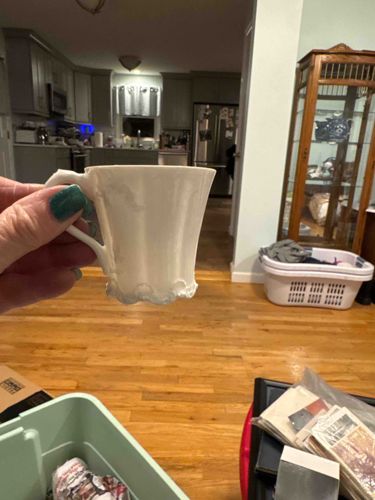
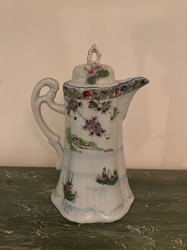
This item is a small, elegant vessel crafted from fine white porcelain or bone china, likely a coffee cup or a demitasse cup used for hot chocolate. The cup features a distinct waisted silhouette that flares outward at the rim and tapers toward the base. It is finished with a glossy white glaze that highlights its delicate embossed floral and foliate motifs crawling up the sides. The base is notably decorative, featuring a scalloped, ruffled foot that adds a Victorian or Rococo Revival aesthetic. The handle is an angular, 'broken' loop style with a thumb rest, which is typical of late 19th-century to early 20th-century European porcelain design, particularly from German or Austrian manufacturers like RS Prussia or Meissen. The material appears translucent and thin, indicative of higher-quality craftsmanship. While no maker's mark is visible from this angle, the intricate molding suggests it was produced by a reputable factory between 1890 and 1920. The condition appears to be excellent for its age, showing no visible chips, cracks, or heavy crazing, although the glaze possesses a bright luster that may indicate careful preservation or minimal use. The lack of gold gilt suggests a more understated, monochrome formal style.
AI-Generated Appraisal Disclaimer
Estimated Value
$45-75
Basic Information
Category
Antique Ceramics and Porcelain
Appraised On
December 31, 2025
Estimated Value
$45-75
Item Description
This item is a small, elegant vessel crafted from fine white porcelain or bone china, likely a coffee cup or a demitasse cup used for hot chocolate. The cup features a distinct waisted silhouette that flares outward at the rim and tapers toward the base. It is finished with a glossy white glaze that highlights its delicate embossed floral and foliate motifs crawling up the sides. The base is notably decorative, featuring a scalloped, ruffled foot that adds a Victorian or Rococo Revival aesthetic. The handle is an angular, 'broken' loop style with a thumb rest, which is typical of late 19th-century to early 20th-century European porcelain design, particularly from German or Austrian manufacturers like RS Prussia or Meissen. The material appears translucent and thin, indicative of higher-quality craftsmanship. While no maker's mark is visible from this angle, the intricate molding suggests it was produced by a reputable factory between 1890 and 1920. The condition appears to be excellent for its age, showing no visible chips, cracks, or heavy crazing, although the glaze possesses a bright luster that may indicate careful preservation or minimal use. The lack of gold gilt suggests a more understated, monochrome formal style.
Get Your Items Appraised
Instant estimates of your treasures with AI-powered instant appraisals