Prehistoric Petrified Wood Celt
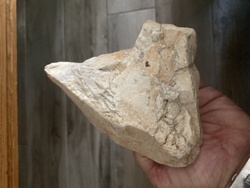
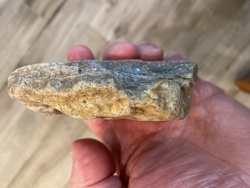
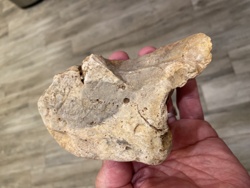
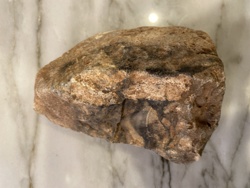
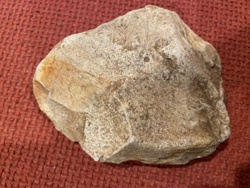
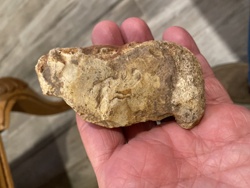
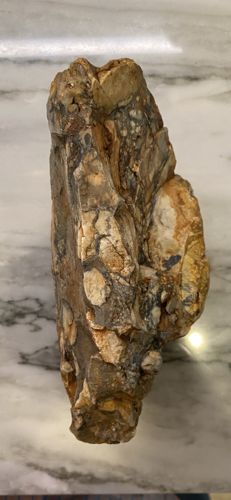
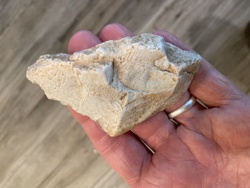
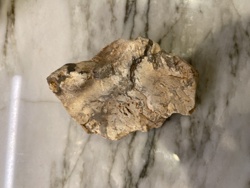
This prehistoric stone tool, identified as a celt, measures approximately 8 inches in length and 4 inches in width. It is fashioned from petrified wood, a material noted for its durability and distinctive aesthetics. The object exhibits a multi-tonal color palette ranging from earthy browns and ochre to cream and muted grey, reflecting the mineral replacement process of the original organic material. The surface displays heavy percussion flaking and bifacial reduction, creating an irregular, textured grip area and a tapered bit. The construction suggests a transition from a raw nodule to a utilitarian hand axe or adze head. Notable features include visible wood grain structures preserved in stone and a heavy mineralized patina consistent with long-term environmental exposure. The condition is characteristic of an archaeological find, with weathered edges, some prehistoric step fractures, and embedded soil remains. There are no modern maker's marks, as is typical for artifacts of this age, which likely dates to several thousand years old. The craftsmanship shows a high degree of skill in knapping a relatively brittle and difficult material like petrified wood into a functional tool shape.
AI-Generated Appraisal Disclaimer
Estimated Value
$450 - $650
Basic Information
Category
Archaeological Artifacts & Prehistoric Stone Tools
Appraised On
February 17, 2026
Estimated Value
$450 - $650
Additional Details Provided By Owner
User Provided Information
This prehistoric petrified wood celt was found in Guthrie, OK. Its measures 8" x 4"
Item Description
This prehistoric stone tool, identified as a celt, measures approximately 8 inches in length and 4 inches in width. It is fashioned from petrified wood, a material noted for its durability and distinctive aesthetics. The object exhibits a multi-tonal color palette ranging from earthy browns and ochre to cream and muted grey, reflecting the mineral replacement process of the original organic material. The surface displays heavy percussion flaking and bifacial reduction, creating an irregular, textured grip area and a tapered bit. The construction suggests a transition from a raw nodule to a utilitarian hand axe or adze head. Notable features include visible wood grain structures preserved in stone and a heavy mineralized patina consistent with long-term environmental exposure. The condition is characteristic of an archaeological find, with weathered edges, some prehistoric step fractures, and embedded soil remains. There are no modern maker's marks, as is typical for artifacts of this age, which likely dates to several thousand years old. The craftsmanship shows a high degree of skill in knapping a relatively brittle and difficult material like petrified wood into a functional tool shape.
Get Your Items Appraised
Instant estimates of your treasures with AI-powered instant appraisals