Agate-Infilled Septarian Nodule (Turtle Back Agate)
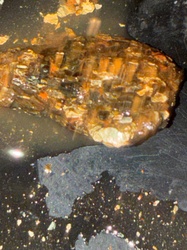
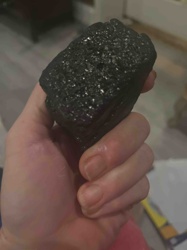
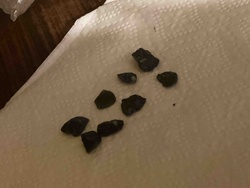
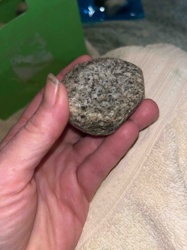
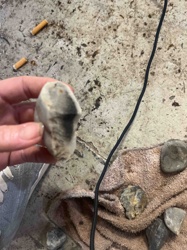
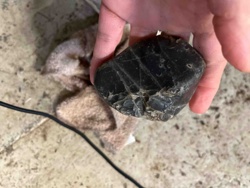
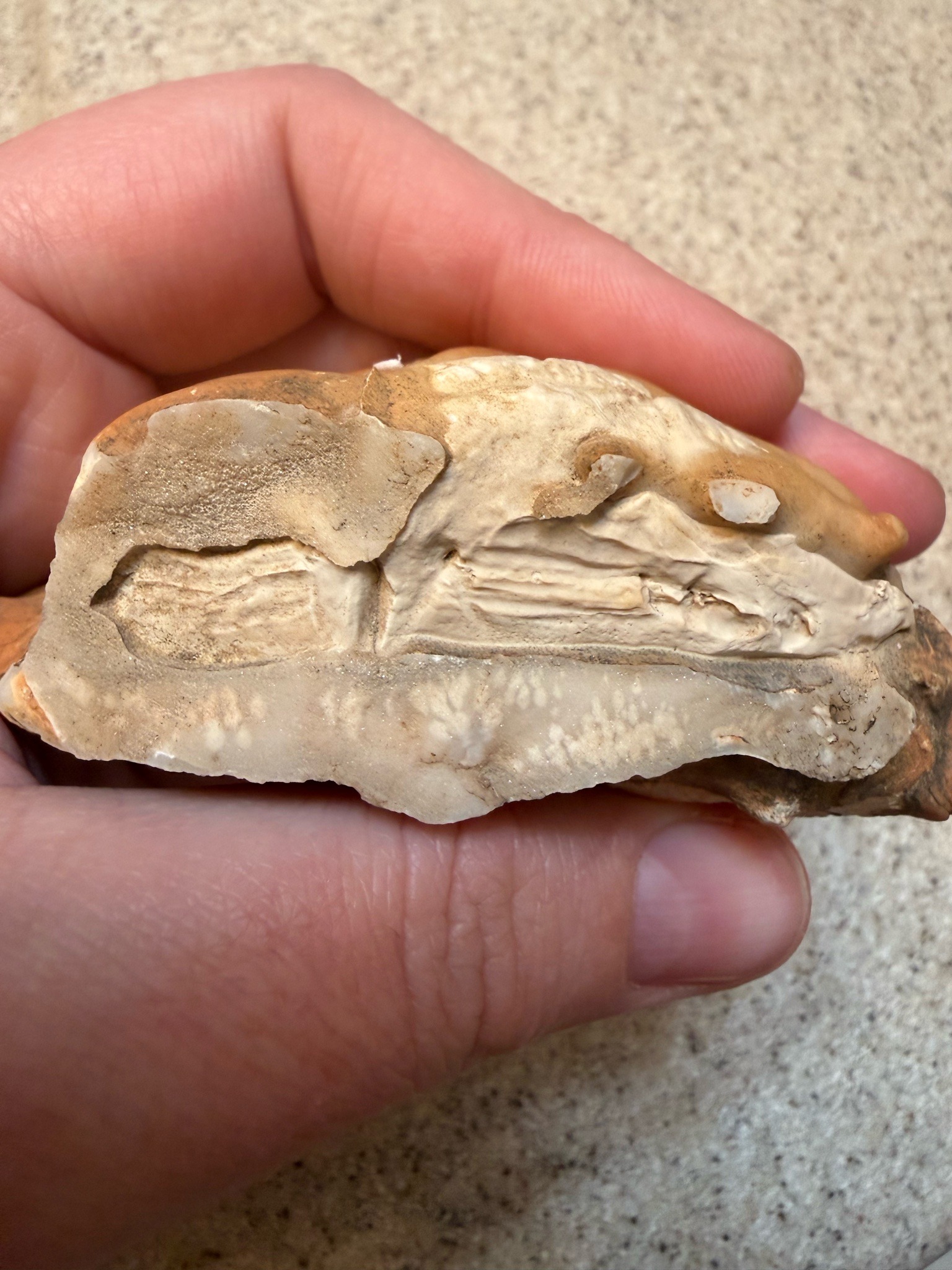
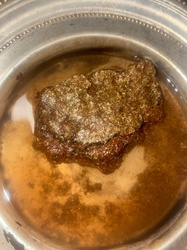
This specimen is a natural mineral formation known colloquially as a 'turtle back' agate or septarian nodule fragment. It measures approximately 3 to 4 inches in length, sized to fit within a human palm. The outer layer (the 'cortex') consists of a smooth, rounded tan and orange-toned sedimentary material, which gives it the characteristic dome shape of a turtle shell. The cross-section reveals internal voids and cavities filled with chalcedony and microcrystalline quartz (agate). The interior exhibits a complex layered structure featuring tan-to-cream colored banding and a translucent, grayish-white agate base with subtle botryoidal or feathery plumes visible near the bottom edge. Such formations occur when mineral-rich water fills shrinkage cracks in mudstone. The piece shows a rough, natural break on the lower side, exposing the internal geode-like structure. There are no signs of artificial polishing or mechanical intervention; the surface exhibits natural weathering and river-worn smoothness. The absence of maker's marks or signatures is consistent with a raw geological find rather than a manufactured object. Its unique structural appearance makes it a desirable sample for geological study or mineral collecting.
AI-Generated Appraisal Disclaimer
Estimated Value
$45.00 - $65.00
Basic Information
Category
Geological Specimens / Minerals
Appraised On
May 12, 2026
Estimated Value
$45.00 - $65.00
Additional Details Provided By Owner
User Provided Information
Agate turtle body
Item Description
This specimen is a natural mineral formation known colloquially as a 'turtle back' agate or septarian nodule fragment. It measures approximately 3 to 4 inches in length, sized to fit within a human palm. The outer layer (the 'cortex') consists of a smooth, rounded tan and orange-toned sedimentary material, which gives it the characteristic dome shape of a turtle shell. The cross-section reveals internal voids and cavities filled with chalcedony and microcrystalline quartz (agate). The interior exhibits a complex layered structure featuring tan-to-cream colored banding and a translucent, grayish-white agate base with subtle botryoidal or feathery plumes visible near the bottom edge. Such formations occur when mineral-rich water fills shrinkage cracks in mudstone. The piece shows a rough, natural break on the lower side, exposing the internal geode-like structure. There are no signs of artificial polishing or mechanical intervention; the surface exhibits natural weathering and river-worn smoothness. The absence of maker's marks or signatures is consistent with a raw geological find rather than a manufactured object. Its unique structural appearance makes it a desirable sample for geological study or mineral collecting.
Related Tags
Get Your Items Appraised
Instant estimates of your treasures with AI-powered instant appraisals