AI Appraisal Estimate

AI-generated estimates · not official valuations

From the user

What was submitted

Photo and notes provided by the user — not generated by AI

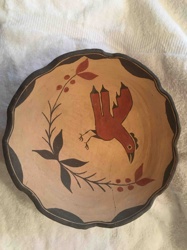
Submitted item photo
Submitted photo · June 17, 2026

User's notes

No additional notes provided.

AI analysis below

AI appraisal

AI analysis & estimate

AI-Generated · Verify before acting

Everything below is generated by AI for informational purposes only. AI can make mistakes — the AI may misidentify items or misattribute them (artist, maker, brand, designer, origin, era). This is not an official valuation and should not be used for insurance, sale, tax, estate, legal, or lending purposes — or any decision requiring a certified appraisal. It is not an authoritative claim about any person, brand, or rights holder — do not share or rely on it as a factual statement about a third party. Always consult qualified professionals before making financial decisions.

Read the full disclaimer

AI Identification

·Not independently authenticated·Verify before acting

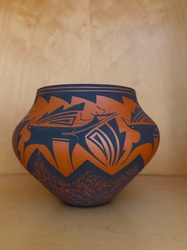
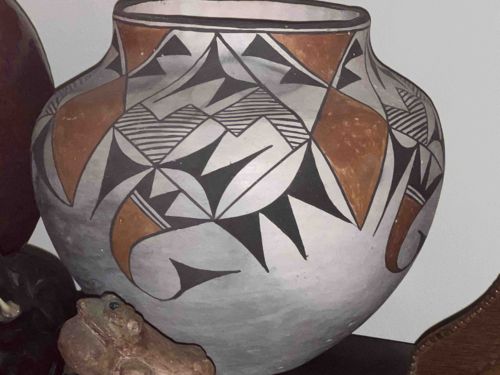
Acoma Pueblo Polychrome Pottery Olla

Native American Art & Ceramics

AI Estimated Value

·Not an official valuation·Verify before acting

$1,200 - $1,800

As of June 17, 2026

AI Item Analysis

·AI can make mistakes·Verify before acting
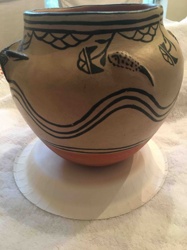
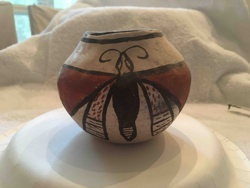
This is a hand-coiled ceramic vessel, specifically an olla, characteristic of the Acoma Pueblo in New Mexico. The piece features a traditional polychrome palette consisting of black, white, and a rich terracotta orange-red slip. The construction is classic Acoma style with thin walls made from white clay tempered with ground potsherds. The exterior is decorated with intricate geometric and symbolic motifs, including stepped lightning patterns, hatched fine-line designs representing rain, and stylized cloud or mountain silhouettes arranged in a broad band around the shoulder. The vessel has a globular body tapering to a narrow base and a wide, slightly flared rim with a black-painted lip. In terms of condition, there is visible surface wear and light scuffing throughout the white slip, consistent with age and handling. There appears to be some minor 'pitting' or carbon spotting characteristic of traditional outdoor firing. No major cracks or structural repairs are immediately evident in the view provided. The craftsmanship displays high-quality hand-painted line work, suggesting an experienced potter. This style and form are most common in pieces dating from the late 20th century to the contemporary period, following traditional ancestral designs.
AI Appraisal Report

·AI can make mistakes·Verify before acting
I have examined the provided description and visual characteristics of this Acoma Pueblo polychrome olla. The vessel displays the hallmarks of high-quality Acoma craftsmanship, including characteristically thin walls, the use of crushed-sherd temper, and a classic four-color palette. The complex iconography—integrating rain clouds, lightning, and fine-line hatching—is executed with a precision that suggests a seasoned potter working in the late 20th century tradition. The 'pitting' noted is typical of traditional beehive kiln firing, supporting its artisanal origins. Based on the scale and complexity of the decoration, this piece fits within a mid-to-high tier for contemporary Acoma pottery. Markets for Southwest ceramics remain steady, with collectors favoring pieces that maintain traditional aesthetics over modern innovations. Comparables in similar condition from recognized artists (either signed or attributed) frequently fetch between $1,500 and $2,500 at auction; however, as an unsigned piece of indeterminate age, the value is slightly more conservative. Value is bolstered by the lack of structural cracks, though surface scuffing is present. It is essential to note that this appraisal is based on photographic evidence only. A physical inspection is required to verify the 'ring' of the clay (to detect hidden hairline cracks or restoration), to confirm the presence of a signature on the base, and to analyze surface patination. Scientific testing for mineral composition or documented provenance tracing the piece back to a specific artist or family would be necessary to reach a definitive 'fine art' valuation. Without a signature or clear lineage, the value rests primarily on the technical merit of the potting and painting.

Get your items appraised

Instant estimates of your treasures with AI-powered appraisals

Browse More Appraisals