Polished River Stone or Gastrolith
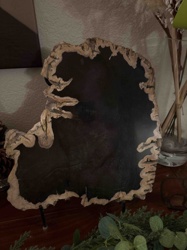
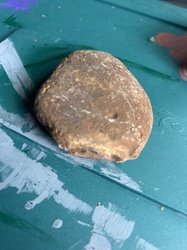
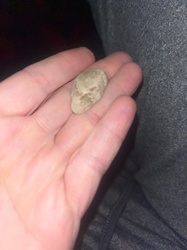
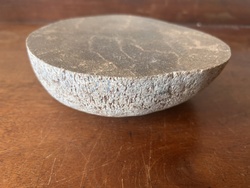
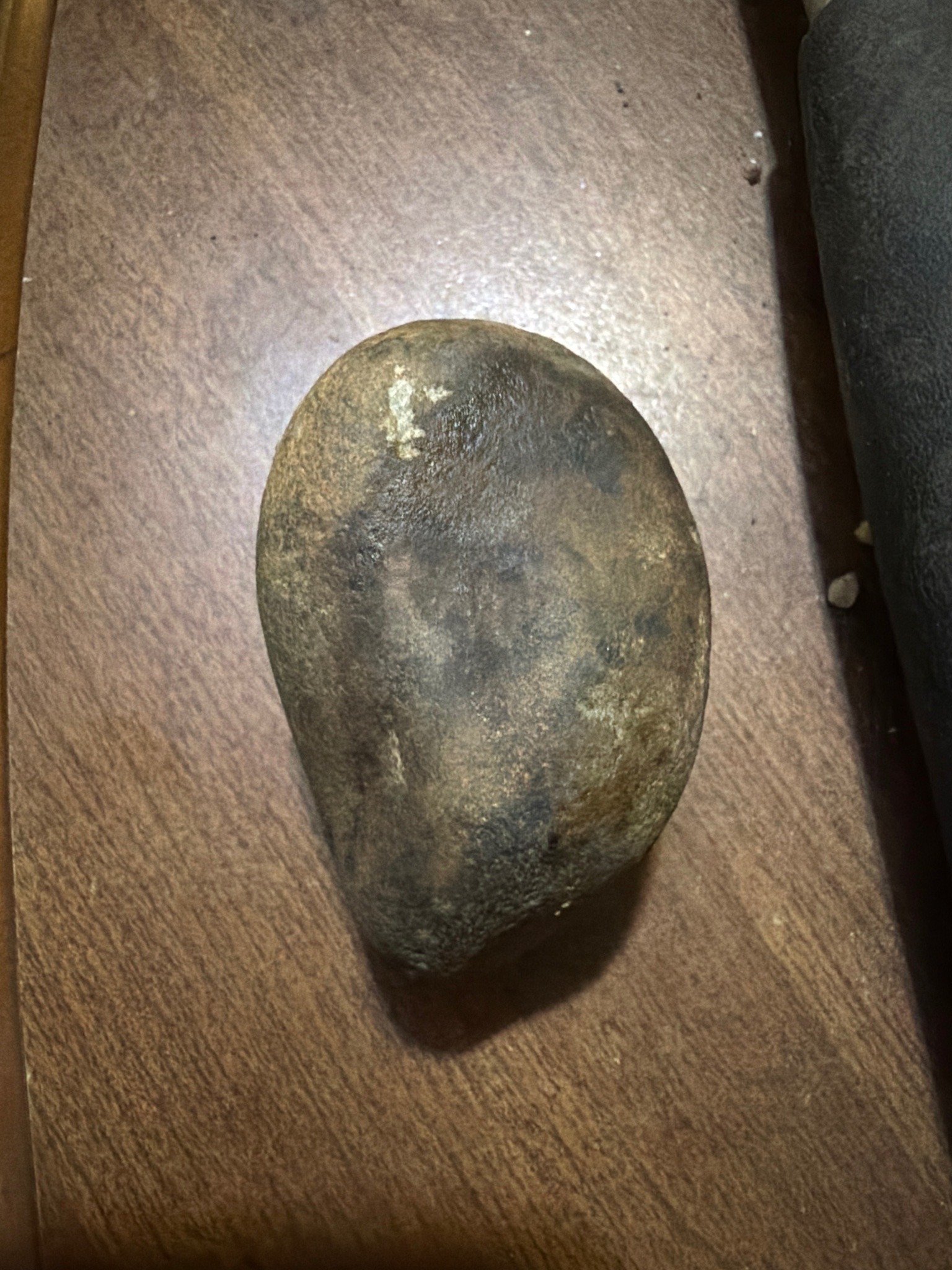
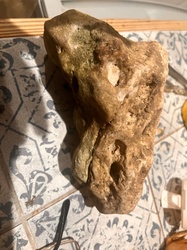
This specimen is a smooth, ovate-shaped stone characterized by its rounded, water-worn contours and dark, varied earth tones. The surface is primarily a deep charcoal grey to brownish hue, featuring a subtle semi-glossy patina that suggests long-term exposure to alluvial friction or biological processes. Physically, the stone exhibits a dense, heavy composition likely consisting of basalt, chert, or a similarly hard sedimentary rock. Its finish is remarkably smooth across the central body, though it displays minute pitting and surface irregularities near the tapered end, typical of natural weathering. There are notable white and tan mineral inclusions visible at the top, along with dark, almost carbonized-looking patches that could indicate iron staining or organic residue. There are no man-made markings, signatures, or stamps, indicating this is a natural formation. The item appears to be in an unaltered natural condition with no visible structural cracks, though edge scuffing is present. Determining a specific age is difficult without geological testing, but such formations are the result of thousands of years of environmental shaping. Its symmetry and tactile quality suggest it could potentially be an ancient gastrolith (gizzard stone) used by prehistoric fauna, or simply a exceptionally well-preserved river cobble.
AI-Generated Appraisal Disclaimer
Estimated Value
$45 - $125
Basic Information
Category
Geological Specimens / Natural History
Appraised On
May 5, 2026
Estimated Value
$45 - $125
Item Description
This specimen is a smooth, ovate-shaped stone characterized by its rounded, water-worn contours and dark, varied earth tones. The surface is primarily a deep charcoal grey to brownish hue, featuring a subtle semi-glossy patina that suggests long-term exposure to alluvial friction or biological processes. Physically, the stone exhibits a dense, heavy composition likely consisting of basalt, chert, or a similarly hard sedimentary rock. Its finish is remarkably smooth across the central body, though it displays minute pitting and surface irregularities near the tapered end, typical of natural weathering. There are notable white and tan mineral inclusions visible at the top, along with dark, almost carbonized-looking patches that could indicate iron staining or organic residue. There are no man-made markings, signatures, or stamps, indicating this is a natural formation. The item appears to be in an unaltered natural condition with no visible structural cracks, though edge scuffing is present. Determining a specific age is difficult without geological testing, but such formations are the result of thousands of years of environmental shaping. Its symmetry and tactile quality suggest it could potentially be an ancient gastrolith (gizzard stone) used by prehistoric fauna, or simply a exceptionally well-preserved river cobble.
Get Your Items Appraised
Instant estimates of your treasures with AI-powered instant appraisals