Lower Paleolithic Chert Scraper Multi-Tool
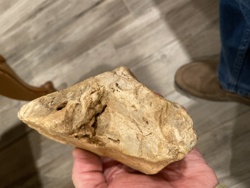
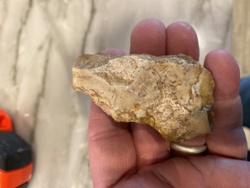
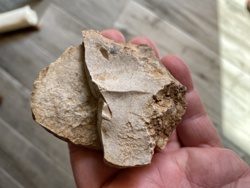
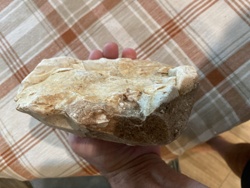
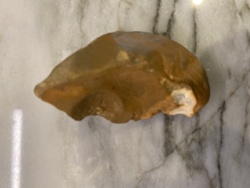
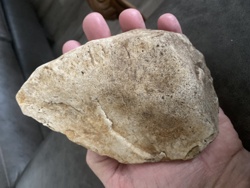
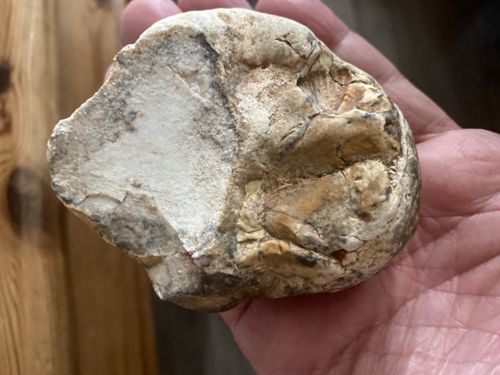
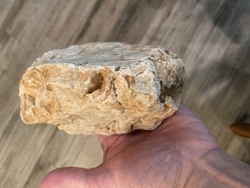
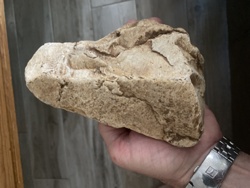
A lithic artifact measuring approximately 3 inches by 2.5 inches, identified as a multi-functional scraper recovered from Guthrie, Oklahoma. The piece is crafted from Chert, displaying a variegated color palette of creamy whites, ochre yellows, and dark smoky grays. The object features a rounded, bulbous cortical surface on one end, which would have provided an ergonomic grip for the palm during use. The working edge shows evidence of intentional unifacial flaking and retouching to create a sharp scraping surface. Notable physical characteristics include conchoidal fracture patterns typical of silica-rich stones and a thick, weathered patina indicative of significant age and long-term environmental exposure. The surface displays various micro-fractures, mineral staining, and a dull luster consistent with a Lower Paleolithic context (though identifying specific cultural periods in North America for such undifferentiated tools requires cautious stratigraphy). No modern maker's marks are present, as this is a prehistoric hand-knapped tool. While the piece shows heavy use-wear and some edge blunting, the structural integrity remains solid, showcasing the primitive yet effective craftsmanship of early human tool production where utility and durability were paramount. The unique combination of natural cobble cortex and deliberate flaking makes it a distinct archaeological specimen.
AI-Generated Appraisal Disclaimer
Estimated Value
$45.00 - $85.00
Basic Information
Category
Prehistoric Artifacts / Lithic Tools
Appraised On
February 19, 2026
Estimated Value
$45.00 - $85.00
Additional Details Provided By Owner
User Provided Information
Lower Paleolithic chert scraper multi tool found in Guthrie OK measuring 3" x 2.5"
Item Description
A lithic artifact measuring approximately 3 inches by 2.5 inches, identified as a multi-functional scraper recovered from Guthrie, Oklahoma. The piece is crafted from Chert, displaying a variegated color palette of creamy whites, ochre yellows, and dark smoky grays. The object features a rounded, bulbous cortical surface on one end, which would have provided an ergonomic grip for the palm during use. The working edge shows evidence of intentional unifacial flaking and retouching to create a sharp scraping surface. Notable physical characteristics include conchoidal fracture patterns typical of silica-rich stones and a thick, weathered patina indicative of significant age and long-term environmental exposure. The surface displays various micro-fractures, mineral staining, and a dull luster consistent with a Lower Paleolithic context (though identifying specific cultural periods in North America for such undifferentiated tools requires cautious stratigraphy). No modern maker's marks are present, as this is a prehistoric hand-knapped tool. While the piece shows heavy use-wear and some edge blunting, the structural integrity remains solid, showcasing the primitive yet effective craftsmanship of early human tool production where utility and durability were paramount. The unique combination of natural cobble cortex and deliberate flaking makes it a distinct archaeological specimen.
Get Your Items Appraised
Instant estimates of your treasures with AI-powered instant appraisals