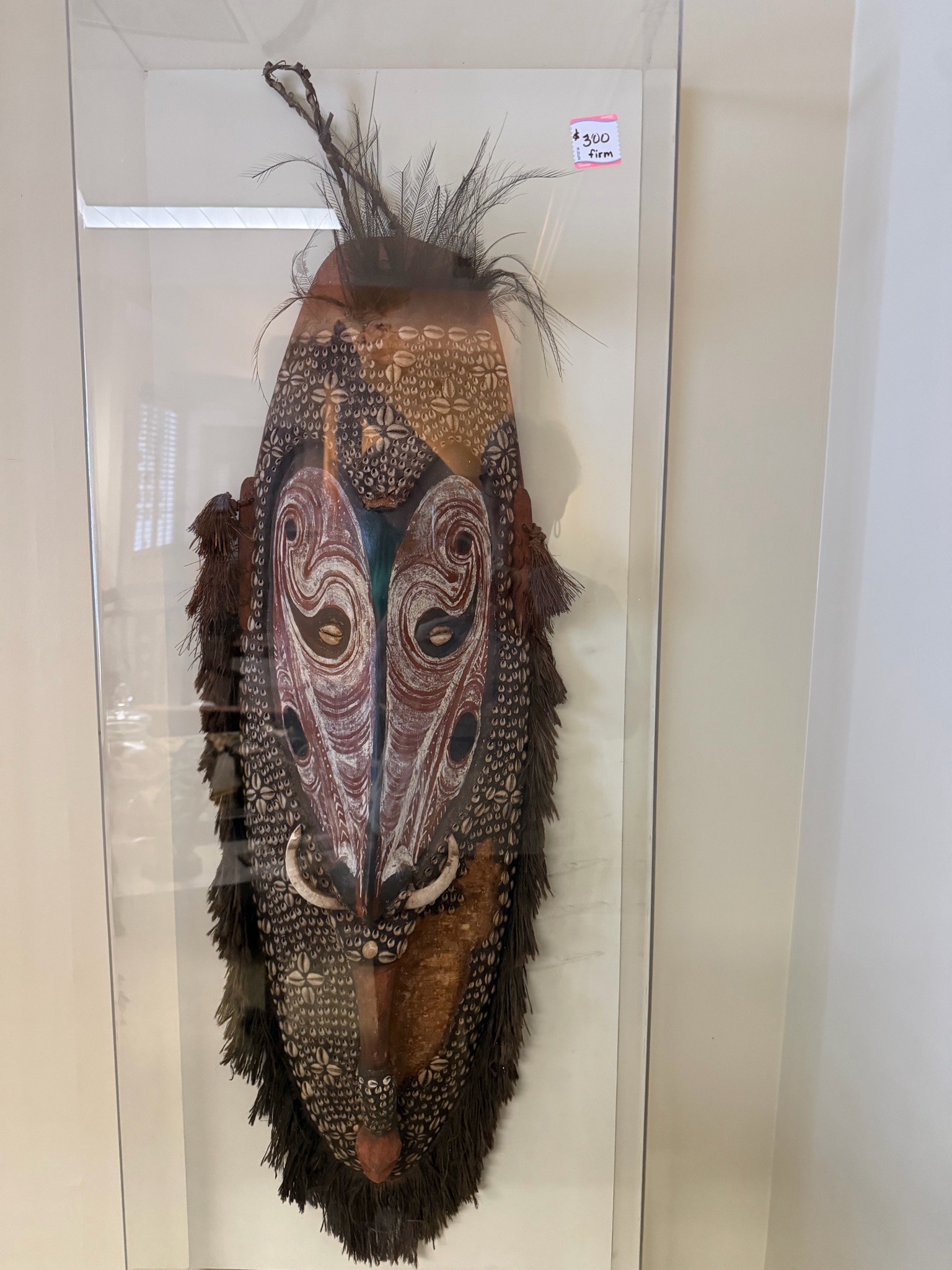
Papua New Guinea Sepik River Ancestor Mask
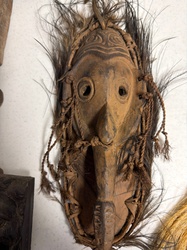
This is a large, elongated ceremonial ancestor mask originating from the Sepik River region of Papua New Guinea. The piece features a central carved wooden face known for its distinctive 'beaked' nose, which extends downward into a pointed form. The wooden surface is decorated with traditional pigments including white lime, red ochre, and black charcoal, arranged in intricate swirling patterns and concentric circles around the eyes. The eye sockets themselves are inset with small cowrie shells, a traditional symbol of wealth and status. A defining characteristic of this mask is the extensive use of natural materials; the outer border is meticulously encrusted with hundreds of small cowrie shells embedded into a clay or resin-like substrate. Two larger white tusks, likely boar tusks, emerge from the sides of the nose area, curving upward. The perimeter is fringed with dark brown dried fibers, possibly raffia or sago palm, while the top is adorned with delicate black bird feathers and a woven fiber loop for hanging. The overall construction displays significant craftsmanship, merging organic textures with rhythmic geometric painting. The condition appears stable for an ethnographic object, showing expected age-related patination, slight fading of the pigments, and some minor loss to the fibrous fringe and surface dust. It is likely a mid-to-late 20th-century piece created for ceremonial use or the high-end ethnographic art market.
AI-Generated Appraisal Disclaimer
Estimated Value
$1,200 - $1,850
Basic Information
Category
Ethnographic Art / Oceanic Artifacts
Appraised On
May 6, 2026
Estimated Value
$1,200 - $1,850
Item Description
This is a large, elongated ceremonial ancestor mask originating from the Sepik River region of Papua New Guinea. The piece features a central carved wooden face known for its distinctive 'beaked' nose, which extends downward into a pointed form. The wooden surface is decorated with traditional pigments including white lime, red ochre, and black charcoal, arranged in intricate swirling patterns and concentric circles around the eyes. The eye sockets themselves are inset with small cowrie shells, a traditional symbol of wealth and status. A defining characteristic of this mask is the extensive use of natural materials; the outer border is meticulously encrusted with hundreds of small cowrie shells embedded into a clay or resin-like substrate. Two larger white tusks, likely boar tusks, emerge from the sides of the nose area, curving upward. The perimeter is fringed with dark brown dried fibers, possibly raffia or sago palm, while the top is adorned with delicate black bird feathers and a woven fiber loop for hanging. The overall construction displays significant craftsmanship, merging organic textures with rhythmic geometric painting. The condition appears stable for an ethnographic object, showing expected age-related patination, slight fading of the pigments, and some minor loss to the fibrous fringe and surface dust. It is likely a mid-to-late 20th-century piece created for ceremonial use or the high-end ethnographic art market.
Get Your Items Appraised
Instant estimates of your treasures with AI-powered instant appraisals