Lower Paleolithic Style Chert Hand Axe/Scraper
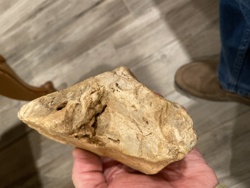
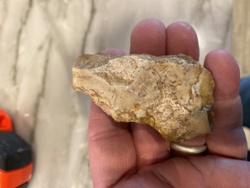
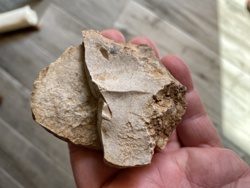
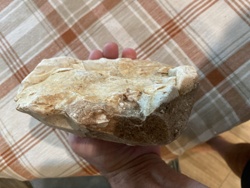
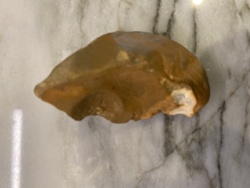
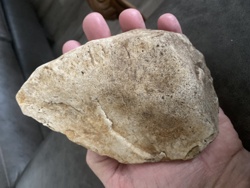
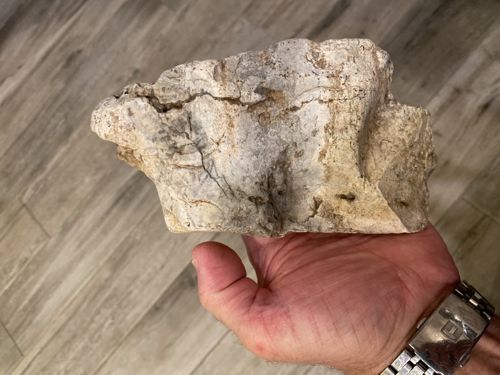
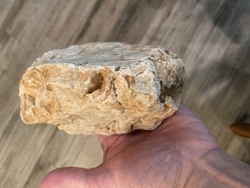
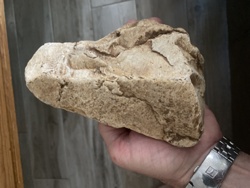
This large, lithic specimen measures approximately 7 inches by 3.75 inches and is identified as a chert hand axe or scraper tool, reportedly sourced from Guthrie, Oklahoma. The item is composed of a dense, microcrystalline chert, displaying a varied palette of earthy tones including creamy off-whites, greys, and tan infusions with visible iron-oxide staining across several planes. Physically, the object features a robust, bifacial-like construction with significant percussion flaking along the margins to create utilitarian edges. One side presents a relatively flat, planoconvex profile, characteristic of large scraper tools, while the opposing side shows more varied topographic relief. The surface exhibits a substantial natural patina and weathering, consistent with long-term environmental exposure. Notable features include wide flake scars and a thick, unworked butt or 'bulb' area that allows for a steady grip in the hand. Condition issues appear limited to natural geological fractures and minor edge crushing that may be the result of either prehistoric use or post-depositional taphonomic processes. The overall craftsmanship suggests a purposeful, expedient tool design typical of early lithic industries, where the focus was on functional edge creation rather than refined aesthetic symmetry.
AI-Generated Appraisal Disclaimer
Estimated Value
$45 - $85
Basic Information
Category
Prehistoric Artifacts / Lithic Tools
Appraised On
February 19, 2026
Estimated Value
$45 - $85
Additional Details Provided By Owner
User Provided Information
Lower Paleolithic large chert hand axe scraper tool found in Guthrie OK measuring 7" x 3.75
Item Description
This large, lithic specimen measures approximately 7 inches by 3.75 inches and is identified as a chert hand axe or scraper tool, reportedly sourced from Guthrie, Oklahoma. The item is composed of a dense, microcrystalline chert, displaying a varied palette of earthy tones including creamy off-whites, greys, and tan infusions with visible iron-oxide staining across several planes. Physically, the object features a robust, bifacial-like construction with significant percussion flaking along the margins to create utilitarian edges. One side presents a relatively flat, planoconvex profile, characteristic of large scraper tools, while the opposing side shows more varied topographic relief. The surface exhibits a substantial natural patina and weathering, consistent with long-term environmental exposure. Notable features include wide flake scars and a thick, unworked butt or 'bulb' area that allows for a steady grip in the hand. Condition issues appear limited to natural geological fractures and minor edge crushing that may be the result of either prehistoric use or post-depositional taphonomic processes. The overall craftsmanship suggests a purposeful, expedient tool design typical of early lithic industries, where the focus was on functional edge creation rather than refined aesthetic symmetry.
Get Your Items Appraised
Instant estimates of your treasures with AI-powered instant appraisals