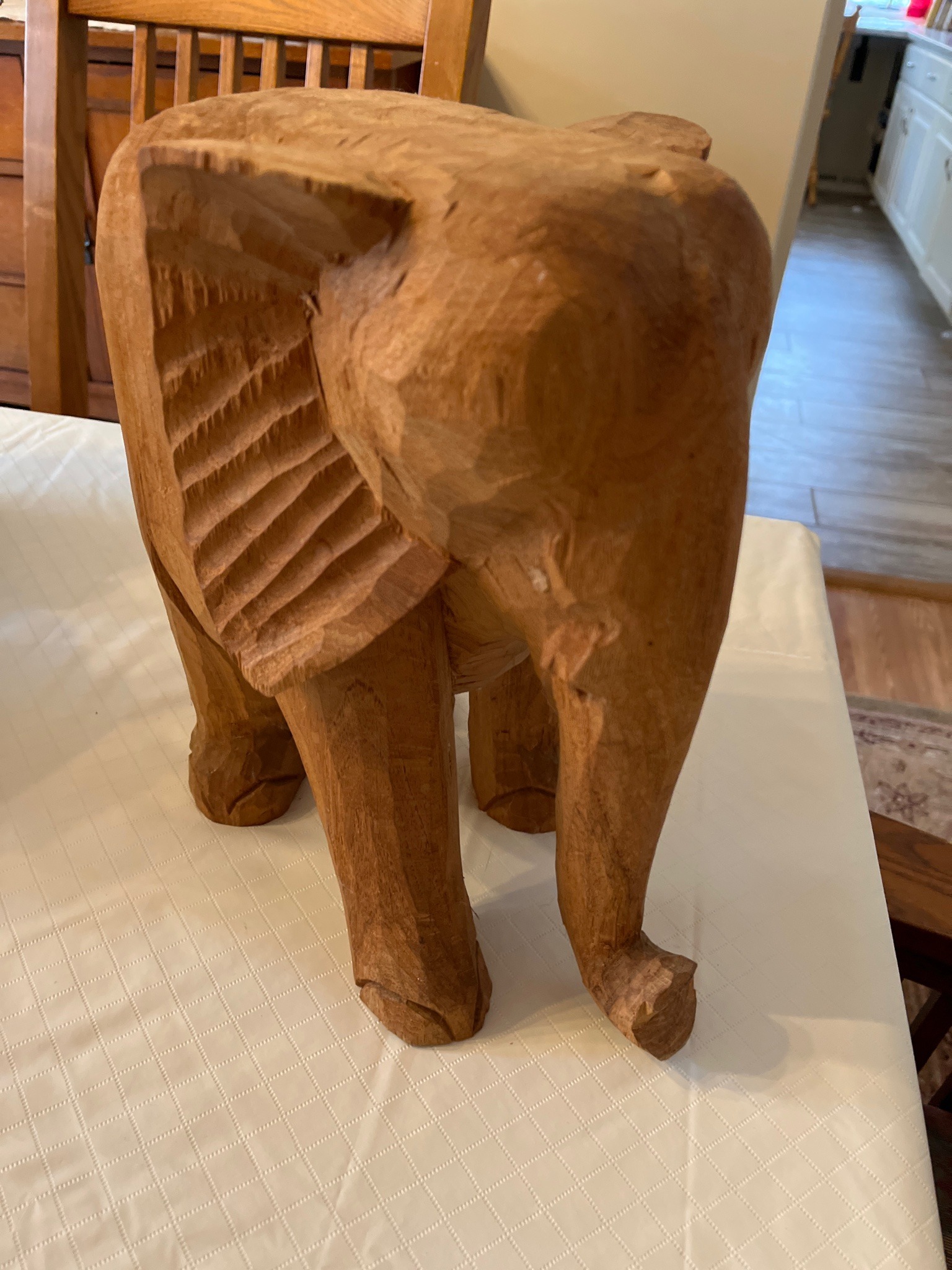
Hand-Carved Wooden Elephant Sculpture
This is a medium-sized decorative sculpture of an elephant, uniquely hand-carved from a single block of solid wood. The piece is characterized by a rustic, folk-art aesthetic with prominent, visible chisel marks and a faceted texture throughout the body, emphasizing its handcrafted origin rather than a smooth, polished finish. The wood appears to be a medium-toned tropical hardwood, possibly monkey pod or acacia, displaying a warm golden-brown hue with a natural matte finish. The elephant is depicted in a standing position with a lowered trunk, featuring stylized ribbed ears and thick, sturdy legs. Notably, the sculpture lacks tusks—either by design or because they were separate inserts that are now missing. The craftsmanship suggests it was produced in a workshop specializing in African or Southeast Asian export art, likely dating from the late 20th century. Condition-wise, the wood exhibits some natural seasoning cracks (checking), particularly visible near the trunk and head, which are typical for solid wood carvings of this density. There are minor scuffs on the feet and edges, but no signs of major structural repair. The back of the elephant features a flattened surface, suggesting it may have been intended as a small pedestal or stool, which is a common dual-purpose design for such carvings.
AI-Generated Appraisal Disclaimer
Estimated Value
$50 - $100
Basic Information
Category
Decorative Arts & Folk Art
Appraised On
April 27, 2026
Estimated Value
$50 - $100
Item Description
This is a medium-sized decorative sculpture of an elephant, uniquely hand-carved from a single block of solid wood. The piece is characterized by a rustic, folk-art aesthetic with prominent, visible chisel marks and a faceted texture throughout the body, emphasizing its handcrafted origin rather than a smooth, polished finish. The wood appears to be a medium-toned tropical hardwood, possibly monkey pod or acacia, displaying a warm golden-brown hue with a natural matte finish. The elephant is depicted in a standing position with a lowered trunk, featuring stylized ribbed ears and thick, sturdy legs. Notably, the sculpture lacks tusks—either by design or because they were separate inserts that are now missing. The craftsmanship suggests it was produced in a workshop specializing in African or Southeast Asian export art, likely dating from the late 20th century. Condition-wise, the wood exhibits some natural seasoning cracks (checking), particularly visible near the trunk and head, which are typical for solid wood carvings of this density. There are minor scuffs on the feet and edges, but no signs of major structural repair. The back of the elephant features a flattened surface, suggesting it may have been intended as a small pedestal or stool, which is a common dual-purpose design for such carvings.
Get Your Items Appraised
Instant estimates of your treasures with AI-powered instant appraisals