AI Appraisal Estimate

AI-generated estimates · not official valuations

From the user

What was submitted

Photo and notes provided by the user — not generated by AI

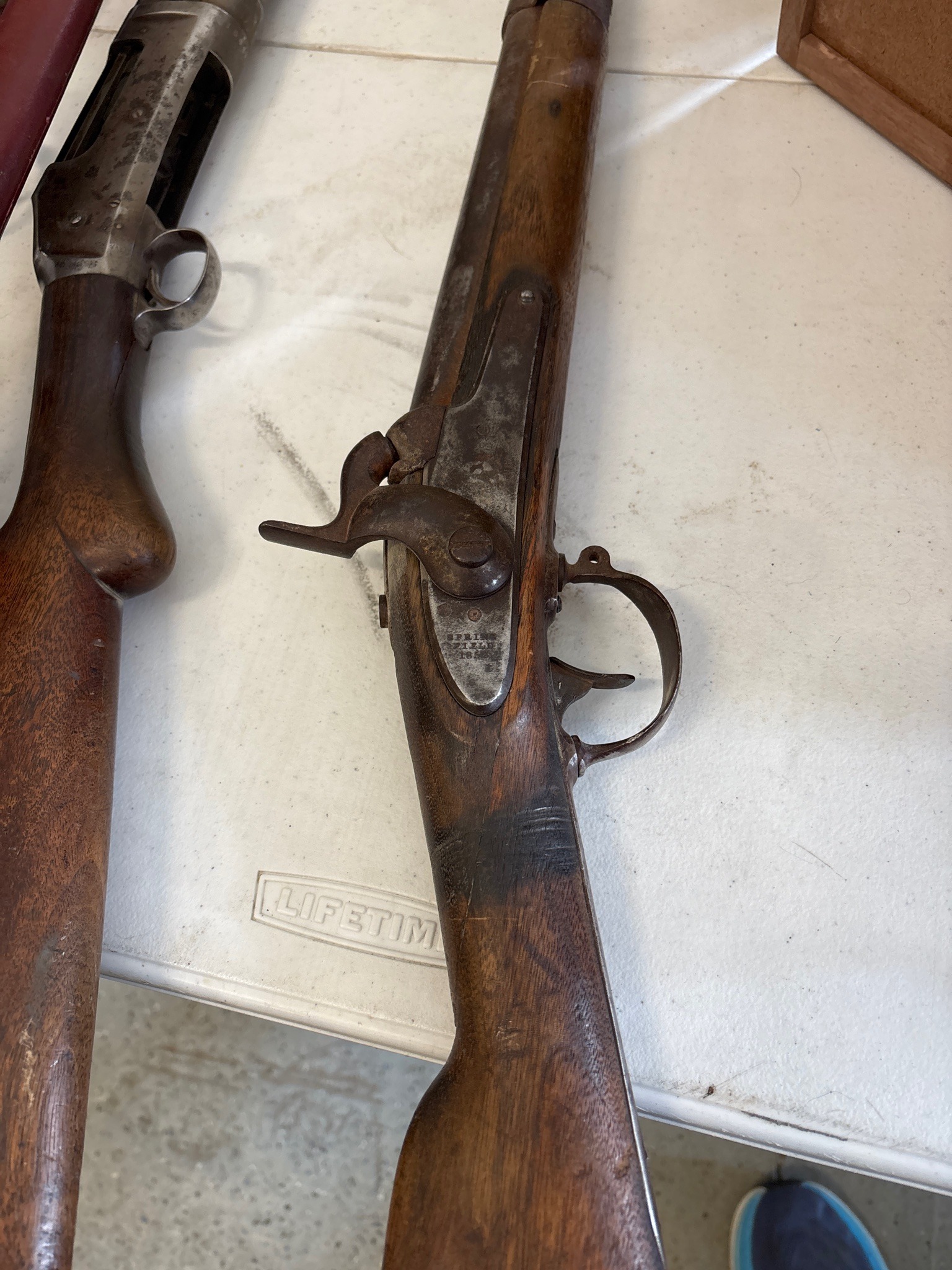
Submitted item photo
Submitted photo · June 10, 2026

User's notes

No additional notes provided.

AI analysis below

AI appraisal

AI analysis & estimate

AI-Generated · Verify before acting

Everything below is generated by AI for informational purposes only. AI can make mistakes — the AI may misidentify items or misattribute them (artist, maker, brand, designer, origin, era). This is not an official valuation and should not be used for insurance, sale, tax, estate, legal, or lending purposes — or any decision requiring a certified appraisal. It is not an authoritative claim about any person, brand, or rights holder — do not share or rely on it as a factual statement about a third party. Always consult qualified professionals before making financial decisions.

Read the full disclaimer

AI Identification

·Not independently authenticated·Verify before acting

U.S. Springfield Model 1863 Rifled Musket

Antique Firearms / Militaria

AI Estimated Value

·Not an official valuation·Verify before acting

$1,100 - $1,400

As of June 10, 2026

AI Item Analysis

·AI can make mistakes·Verify before acting
This is a Civil War-era percussion muzzle-loading rifle, specifically identified by the lock plate markings. The lock plate is clearly stamped with 'SPRINGFIELD' and the year '1863' positioned below the eagle motif (faded but present). The weapon features a full-length dark walnut wood stock, which shows significant signs of age and use. There is a prominent dark char mark or deep staining located on the wrist of the stock just behind the lock plate, along with various scratches, indentations, and a dulled finish. Physically, the metal components, including the hammer, lock plate, and trigger guard, exhibit a heavy brown patina and surface oxidation (rust), though the 'Springfield' stamping remains legible. The hammer is currently in the cocked position. The percussion nipple appears to be intact but shows wear commensurate with age. The construction is typical of American mid-19th-century military firearms, utilizing iron furniture and a thick walnut stock. Historically, this model was the primary longarm for Union infantry during the later years of the U.S. Civil War. Condition-wise, while the structural integrity appears fair, the significant surface rust and stock damage suggest a piece that has not been professionally preserved, potentially affecting the mechanical functionality and historical value. No visible restorations or modern repairs are evident in the provided image.
AI Appraisal Report

·AI can make mistakes·Verify before acting
I have virtually examined this U.S. Springfield Model 1863 rifled musket. The presence of the 'Type I' 1863 features—specifically the lack of band springs and the presence of the eagle-stamped bolster—aligns with the lock plate date of 1863. The item appears to be an authentic Civil War-era artifact in 'good' to 'very good' relic condition. The metalwork exhibits a consistent chocolate-brown patina with heavy oxidation on the lock and hammer, which, while aesthetically 'salty,' indicates the piece has not been over-cleaned—a trait preferred by many collectors. The stock shows a heavy char mark on the wrist; if this is proven to be period battle damage (e.g., shell fragment or hot lead), it could increase value, though it is currently assessed as a significant blemish. The Springfield Model 1863 is iconic but was produced in high volume (over 270,000 units), making it readily available on the market. Demand remains high for Union infantry longarms, though the current surface rust and stock condition keep this specimen in the lower-middle price bracket. Notably, the hammer being cocked suggests potential mechanical seized or spring issues. Limitations: This appraisal is based solely on visual inspection. A physical examination is required to verify the bore condition (rifling vs. smoothed out), the presence of visible inspector cartouches on the left flat of the stock (e.g., ESA for Erskine S. Allin), and the functionality of the sear. Further authentication would require inspecting for proof marks ('V / P / Eagle head') on the barrel shank and confirming provenance through any associated soldier IDs or family records.

Get your items appraised

Instant estimates of your treasures with AI-powered appraisals

Browse More Appraisals