AI Appraisal Estimate

AI-generated estimates · not official valuations

From the user

What was submitted

Photo and notes provided by the user — not generated by AI

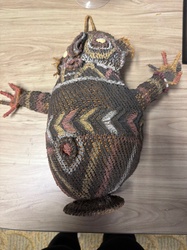
Submitted item photo
Submitted photo · June 6, 2026

User's notes

No additional notes provided.

AI analysis below

AI appraisal

AI analysis & estimate

AI-Generated · Verify before acting

Everything below is generated by AI for informational purposes only. AI can make mistakes — the AI may misidentify items or misattribute them (artist, maker, brand, designer, origin, era). This is not an official valuation and should not be used for insurance, sale, tax, estate, legal, or lending purposes — or any decision requiring a certified appraisal. It is not an authoritative claim about any person, brand, or rights holder — do not share or rely on it as a factual statement about a third party. Always consult qualified professionals before making financial decisions.

Read the full disclaimer

AI Identification

·Not independently authenticated·Verify before acting

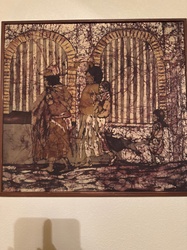
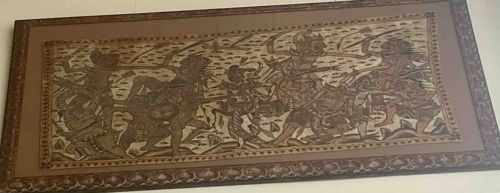
Balinese Kamasan-style Narrative Painting

Fine Art / Ethnographic Textiles

AI Estimated Value

·Not an official valuation·Verify before acting

$1,200 - $1,850

As of June 6, 2026

AI Item Analysis

·AI can make mistakes·Verify before acting
This is a horizontal narrative painting executed in the traditional Kamasan style of Bali, Indonesia. The piece appears to be rendered on a hand-woven cotton cloth (blacu), characteristic of classical Balinese art. It depicts a complex battlefield scene, likely from a Hindu epic such as the Ramayana or Mahabharata, featuring multiple figures in dynamic poses with traditional shadow-puppet (Wayang Kulit) aesthetic profiles. The color palette is dominated by earthy, natural pigments including ochre, burnt sienna, and black soot for fine line work. Construction involves a central canvas mounted within a wide decorative border and a dark, possibly carved, wooden frame. The composition is densely packed with intricate patterns and stylized figures representing warriors, gods, or demons engaged in combat. Notable features include the flat, two-dimensional perspective and the use of 'mountain' or flame-like motifs to fill negative space, typical of the Kamasan tradition. Regarding condition, there is visible fading of the pigments, particularly the lighter browns, and potential undulation or slight sagging of the textile substrate behind the glass. Some foxing or moisture spotting may be present on the matting surrounding the art. The piece appears to date from the mid-20th century, serving as a high-quality example of sacred or narrative folk art intended for local temple display or high-end export.
AI Appraisal Report

·AI can make mistakes·Verify before acting
I have examined the digital representation of this mid-20th-century Balinese Kamasan narrative painting on 'blacu' cloth. Physically, the work demonstrates the classic 'Wayang' aesthetic, with figures rendered in a two-dimensional profile characteristic of the Klungkung school. The use of natural earth pigments—specifically the ochre and soot-based blacks—appears consistent with traditional production methods prior to the mass adoption of acrylics. The scene likely depicts a 'Bharatayuddha' episode from the Mahabharata, a subject highly sought after by collectors of Indonesian ethnographic art. The condition shows age-appropriate oxidation and pigment fading, which, while detracting from visual vibrancy, reinforces the piece's vintage. However, the visible undulation of the textile and potential foxing on the matting suggest environmental stress that may require professional conservation. Markets for mid-century Balinese art remain stable, with high-quality specimens from the 1940s-60s fetching premiums over contemporary souvenir pieces. The value is bolstered by the complexity of the composition and the integrity of the line work. Please note that this valuation is based on visual patterns and cannot definitively confirm the age of the substrate or the chemical composition of the pigments. A physical inspection is required to check for structural integrity behind the frame and to identify any hidden repairs or insect damage common in tropical textiles. Provenance documentation or a signature from a known master (though rare in this anonymous tradition) would significantly increase the market premium. Full authentication would necessitate microscopic fiber analysis and UV-fluorescence testing to confirm the absence of modern synthetic binders.

Get your items appraised

Instant estimates of your treasures with AI-powered appraisals

Browse More Appraisals