Teal Culinary or Decorative Cullet Glass
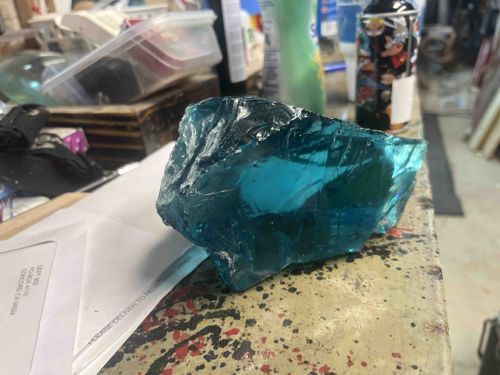
This item is a large, irregularly shaped chunk of translucent cullet glass, also known as slag glass. It exhibits a vibrant teal or aquamarine hue throughout its body. The physical structure is characterized by conchoidal fracturing, which is typical of glass, resulting in sharp, curved edges and shell-like surface ridges. The piece is approximately 4 to 6 inches in length, featuring a high gloss where the light hits the smooth, fractured planes. Internal characteristics include small trapped air bubbles (seeds) and subtle flow lines that are visible beneath the surface. The condition is raw and unrefined; it shows numerous jagged edges and micro-chipping along the ridges due to its nature as a factory byproduct. There are no maker's marks or signatures, as this material is typically molten waste from a glass manufacturing furnace that has been cooled and broken into manageable sizes. It is likely modern in origin, mid-to-late 20th century or early 21st century, often used for landscape decoration, aquarium rock, or as raw material for glassblowing and casting. The color saturation is consistent, suggesting a high quality of chemical pigmenting during the original batch melt.
AI-Generated Appraisal Disclaimer
Estimated Value
$10 - $25
Basic Information
Category
Raw Glass / Decorative Materials
Appraised On
March 24, 2026
Estimated Value
$10 - $25
Item Description
This item is a large, irregularly shaped chunk of translucent cullet glass, also known as slag glass. It exhibits a vibrant teal or aquamarine hue throughout its body. The physical structure is characterized by conchoidal fracturing, which is typical of glass, resulting in sharp, curved edges and shell-like surface ridges. The piece is approximately 4 to 6 inches in length, featuring a high gloss where the light hits the smooth, fractured planes. Internal characteristics include small trapped air bubbles (seeds) and subtle flow lines that are visible beneath the surface. The condition is raw and unrefined; it shows numerous jagged edges and micro-chipping along the ridges due to its nature as a factory byproduct. There are no maker's marks or signatures, as this material is typically molten waste from a glass manufacturing furnace that has been cooled and broken into manageable sizes. It is likely modern in origin, mid-to-late 20th century or early 21st century, often used for landscape decoration, aquarium rock, or as raw material for glassblowing and casting. The color saturation is consistent, suggesting a high quality of chemical pigmenting during the original batch melt.
Related Tags
Get Your Items Appraised
Instant estimates of your treasures with AI-powered instant appraisals