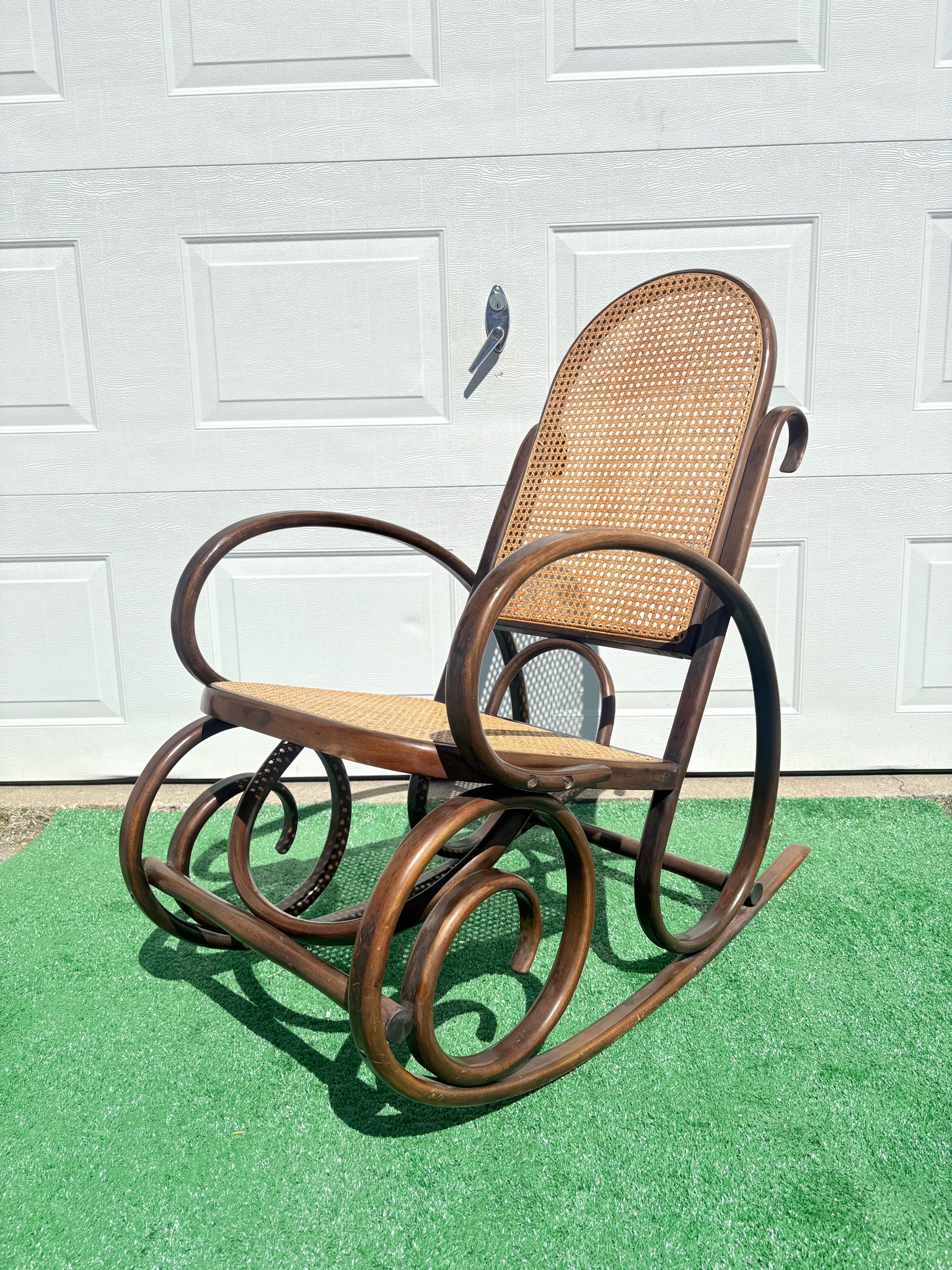
Bentwood Rocking Chair in the Style of Michael Thonet
Antique Furniture

Bentwood Rocking Chair in the Style of Michael Thonet

This is a classic bentwood rocking chair, characterized by the iconic steam-bent wood techniques pioneered by Michael Thonet in the mid-19th century. The chair features an elaborate walnut-stained frame with distinctive volute scrolls forming the base and structural supports. The seat and backrest are fitted with hand-woven natural cane inserts in a traditional octagonal mesh pattern. The overall construction highlights high-quality craftsmanship, with fluid, circular armrests that sweep down into the rocking rails. Architecturally, it displays the Art Nouveau influence common in late 19th to early 20th-century European furniture design. The condition appears well-preserved with a warm, aged patina across the wooden surfaces. Minor abrasions and finish wear are visible on the contact points of the rockers and armrests, which is consistent with age and use. There is no visible sagging or breakage in the caning, suggesting either careful maintenance or professional recaning at some point in its history. While no maker's mark is visible in the photograph, the design follows the 'No. 1' or 'No. 3' patterns frequently produced by Gebrūder Thonet or competitors like Kohn or Mundus.
Estimated Value

$450 - $650

Basic Information

Category

Antique Furniture

Appraised On

April 28, 2026

Estimated Value

$450 - $650

Item Description

This is a classic bentwood rocking chair, characterized by the iconic steam-bent wood techniques pioneered by Michael Thonet in the mid-19th century. The chair features an elaborate walnut-stained frame with distinctive volute scrolls forming the base and structural supports. The seat and backrest are fitted with hand-woven natural cane inserts in a traditional octagonal mesh pattern. The overall construction highlights high-quality craftsmanship, with fluid, circular armrests that sweep down into the rocking rails. Architecturally, it displays the Art Nouveau influence common in late 19th to early 20th-century European furniture design. The condition appears well-preserved with a warm, aged patina across the wooden surfaces. Minor abrasions and finish wear are visible on the contact points of the rockers and armrests, which is consistent with age and use. There is no visible sagging or breakage in the caning, suggesting either careful maintenance or professional recaning at some point in its history. While no maker's mark is visible in the photograph, the design follows the 'No. 1' or 'No. 3' patterns frequently produced by Gebrūder Thonet or competitors like Kohn or Mundus.
Get Your Items Appraised

Instant estimates of your treasures with AI-powered instant appraisals

Browse More Appraisals