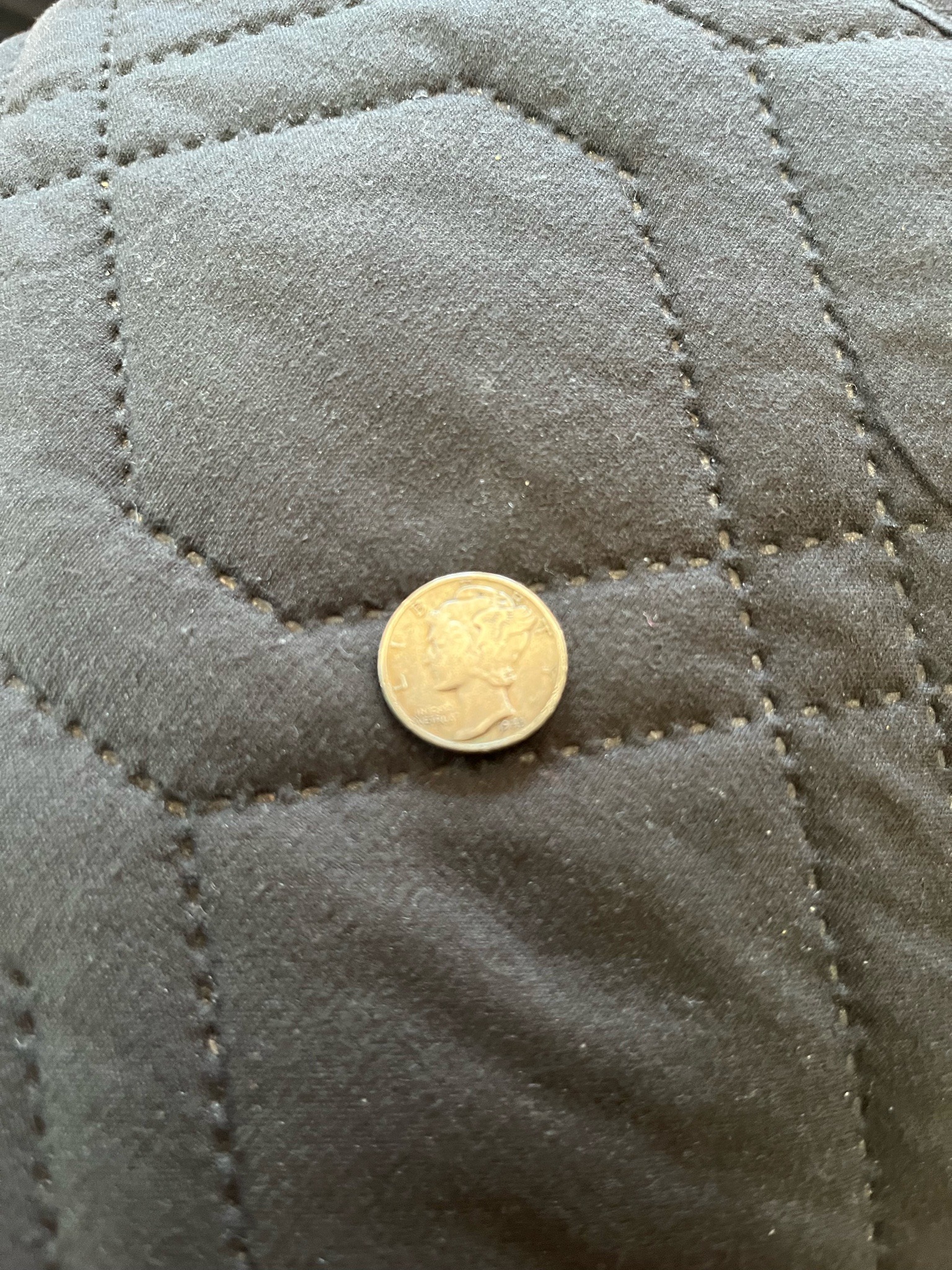
1941 Mercury Dime
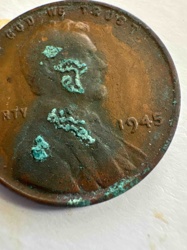
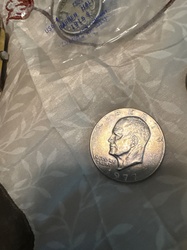
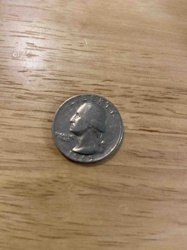
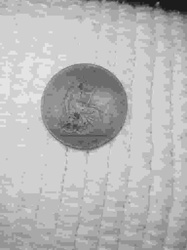
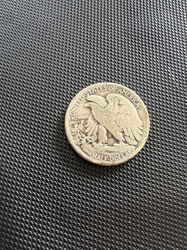
This is a United States ten-cent coin, commonly known as a Winged Liberty Head or 'Mercury' dime, dated 1941. Composed of 90% silver and 10% copper, it features the profile of Liberty wearing a Phrygian cap with wings, which was intended to symbolize freedom of thought but led to the popular misidentification as the Roman god Mercury. The coin measures 17.9 millimeters in diameter with a reeded edge. This specific specimen exhibits signs of moderate circulation wear; the fine details in Liberty's hair and the feathers of the wing show smoothing, though the date '1941' and the word 'LIBERTY' remain clearly legible. The motto 'IN GOD WE TRUST' is visible but faint. The silver surface displays a light grey patina consistent with age. Designed by Adolph A. Weinman, these coins are highly collected for their Art Deco aesthetic and silver content. No mint mark is visible on the obverse (they are located on the reverse), suggesting it was likely struck at the Philadelphia Mint if none is present on the back. The coin appears to be in 'Very Fine' to 'Extra Fine' condition, lacking major gouges or scratches, but showing expected high-point friction from decades of use in commerce.
AI-Generated Appraisal Disclaimer
Estimated Value
$4.50 - $6.50
Basic Information
Category
Numismatics / US Coins
Appraised On
May 11, 2026
Estimated Value
$4.50 - $6.50
Item Description
This is a United States ten-cent coin, commonly known as a Winged Liberty Head or 'Mercury' dime, dated 1941. Composed of 90% silver and 10% copper, it features the profile of Liberty wearing a Phrygian cap with wings, which was intended to symbolize freedom of thought but led to the popular misidentification as the Roman god Mercury. The coin measures 17.9 millimeters in diameter with a reeded edge. This specific specimen exhibits signs of moderate circulation wear; the fine details in Liberty's hair and the feathers of the wing show smoothing, though the date '1941' and the word 'LIBERTY' remain clearly legible. The motto 'IN GOD WE TRUST' is visible but faint. The silver surface displays a light grey patina consistent with age. Designed by Adolph A. Weinman, these coins are highly collected for their Art Deco aesthetic and silver content. No mint mark is visible on the obverse (they are located on the reverse), suggesting it was likely struck at the Philadelphia Mint if none is present on the back. The coin appears to be in 'Very Fine' to 'Extra Fine' condition, lacking major gouges or scratches, but showing expected high-point friction from decades of use in commerce.
Related Tags
Get Your Items Appraised
Instant estimates of your treasures with AI-powered instant appraisals