AI estimate as of September 29, 2025 · verify with a professional before acting
AI-Generated · Verify before acting
Everything on this page is generated by AI for informational purposes only. AI can make mistakes — the AI may misidentify items or misattribute them (artist, maker, brand, designer, origin, era). This is not an official valuation and should not be used for insurance, sale, tax, estate, legal, or lending purposes — or any decision requiring a certified appraisal. It is not an authoritative claim about any person, brand, or rights holder — do not share or rely on it as a factual statement about a third party. Always consult qualified professionals before making financial decisions.
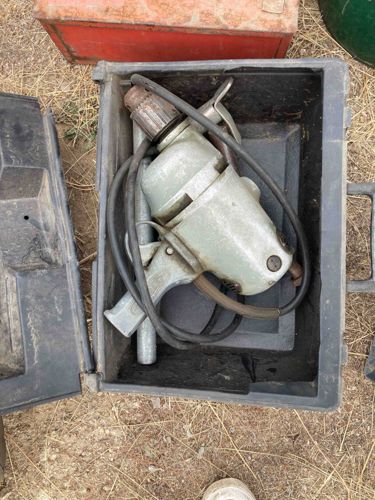
This item is a vintage electric drill, likely manufactured during the mid-20th century, presented within a dark gray or black hard plastic carrying case. The drill itself features a robust metal housing, predominantly appearing to be cast aluminum or a similar lightweight alloy, with a pale green-grey painted finish that shows significant wear, including scuffs, scratches, and areas where the bare metal is exposed. The chuck, located at the front, is a classic key-type design with visible knurling and some surface rust or heavy patina, suggesting prolonged exposure to moisture or simply age. The main handle is integrated into the body, featuring a trigger mechanism. An auxiliary side handle, constructed from a lighter-colored metal, possibly steel, is attached towards the front of the drill, providing additional grip and control during operation. A thick, black electrical cord is wrapped around the drill, also showing signs of age and use, with some scuffing and potential hardening of the insulation. The overall condition of the drill suggests it has been heavily used over the years, with cosmetic wear indicative of a working tool rather than a display piece. No specific manufacturer's marks or model numbers are discernible from the provided image. The hard-plastic case is utilitarian in design, with internal molded sections presumably designed to secure the drill and its components during transport. It exhibits typical wear for a tool case, including scuffs and dust, but appears structurally sound. The general aesthetic points to a robust, industrial-grade tool from an era when power tools were built for durability and longevity.
AI Appraisal Report
This vintage electric drill, housed in its original hard plastic case, presents as a robust, utilitarian tool from the mid-20th century. Authenticity is strongly suggested by its period-appropriate construction, including the metal housing, key-type chuck, integrated handle, and side handle attachment. The pale green-grey paint, extensive wear, scuffs, exposed metal, and surface rust on the chuck all indicate genuine age and heavy use, consistent with an authentic vintage tool rather than a modern reproduction. The accompanying case, while showing typical wear, reinforces its original pairing.
Condition is fair to good for its age and type, reflecting a working tool rather than a collector's pristine example. The significant cosmetic wear, particularly the paint loss and potential rust on the chuck, detracts from its aesthetic appeal but confirms its active use. The electrical cord's condition, with scuffing and possible hardening, would require in-person inspection to assess safety and functionality. Functionality is unconfirmed without physical testing; a non-working condition would significantly lower its value.
In terms of market conditions, vintage power tools, especially those without prominent manufacturer branding or unique design features, typically appeal to a niche market of collectors, restorers, or individuals seeking period-correct shop decor. Demand for these common, unbranded types is moderate. While robust construction is a positive, the lack of discernible manufacturer’s marks or model numbers limits its specific collector appeal and rarity. Comparable sales for similar unbranded or lesser-known vintage drills in working condition typically range from $30-$80, with the case adding a small premium.
Factors impacting value include its unconfirmed working status (significant detractor if non-functional), the lack of clear branding (reduces collector interest), and the overall cosmetic wear. If it were a recognizable brand like Black & Decker, Craftsman, or particularly Stanley, and in demonstrable working order, the value would be higher.
Limitations: Without physical examination, I cannot confirm the internal mechanical condition, electrical safety, or whether it is in working order. Full verification of authenticity as a specific model or manufacturer would require examining any hidden markings, internal components, and possibly consulting period catalogs, none of which is possible from images alone. An in-person inspection would also allow for direct assessment of the cord's flexibility and insulation integrity.