Dogon Carved Wooden Door Lock and Figure
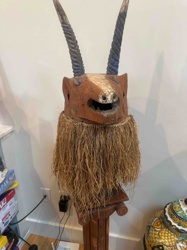
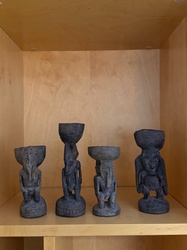
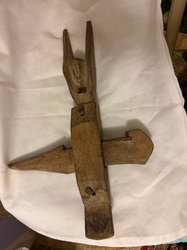
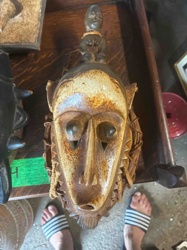
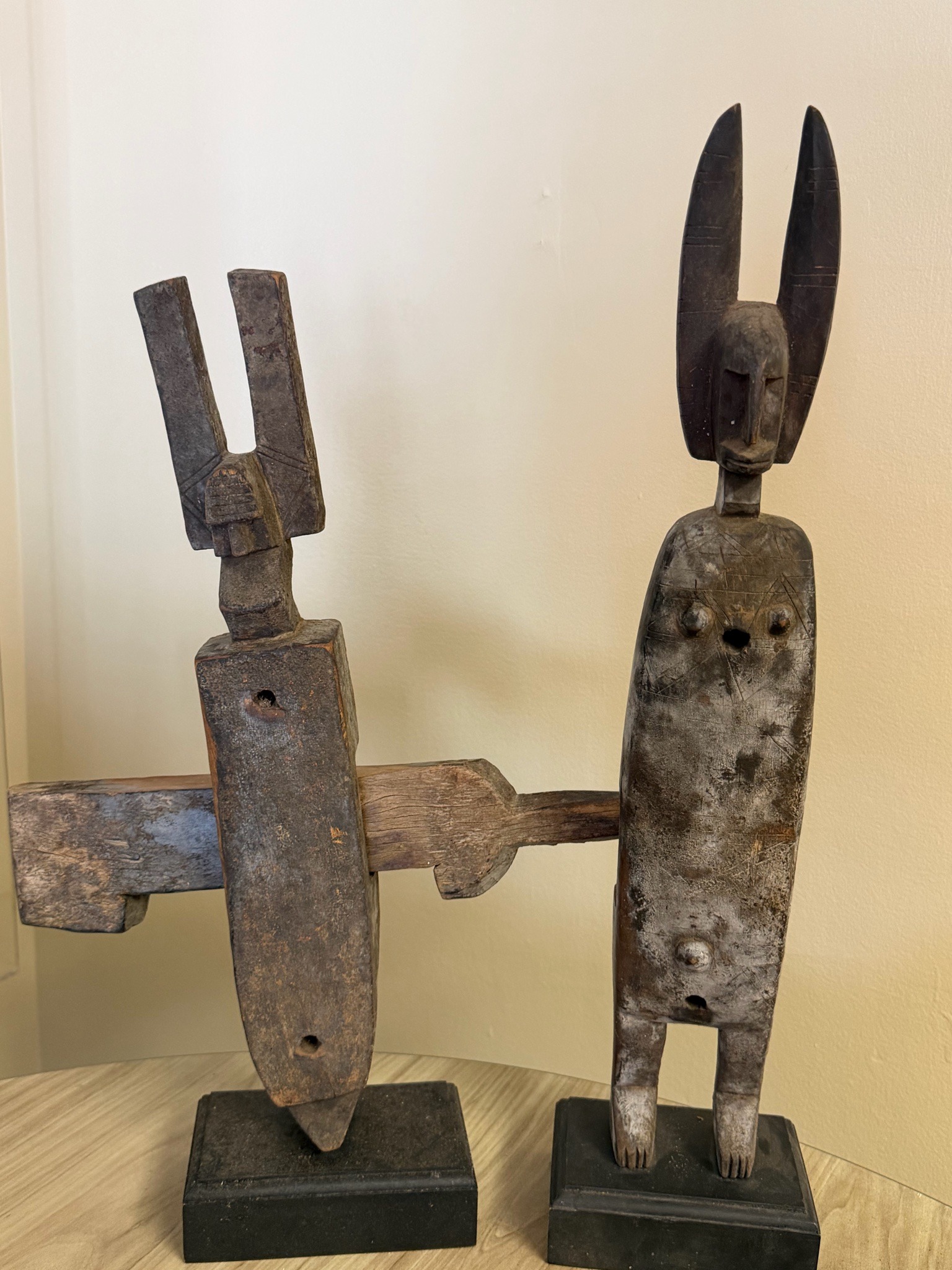
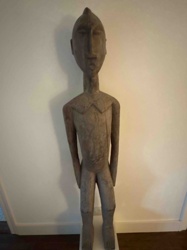
This pair of artifacts consists of a traditional Dogon door lock (Ta Kor) and an accompanying anthropomorphic figure, likely from Mali, West Africa. The door lock on the left features a vertical housing body with a crossbar bolt, topped by a stylized head with two large, vertical projections representing ears or horns, typical of Dogon celestial or ancestral iconography. The figure on the right is a vertical female representation with elongated proportions, large pointed ears/headdress, and prominent breasts. Both pieces are hand-carved from a dense hardwood, displaying a weathered, encrusted patina with remains of kaolin or ash surface treatments. The surfaces show significant signs of age and use, including wood grain erosion, small cracks (desiccated wood), and losses particularly on the crossbar and base edges. The aesthetic is characteristic of Sudanese style, emphasizing geometric abstraction and symbolic form over naturalism. These items appear to be mid-20th century or older, intended for functional domestic use before becoming ethnographic collectables. They are currently mounted on custom black museum-style display bases to facilitate upright exhibition.
AI-Generated Appraisal Disclaimer
Estimated Value
$1,200 - $1,800
Basic Information
Category
African Ethnographic Tribal Art
Appraised On
May 6, 2026
Estimated Value
$1,200 - $1,800
Item Description
This pair of artifacts consists of a traditional Dogon door lock (Ta Kor) and an accompanying anthropomorphic figure, likely from Mali, West Africa. The door lock on the left features a vertical housing body with a crossbar bolt, topped by a stylized head with two large, vertical projections representing ears or horns, typical of Dogon celestial or ancestral iconography. The figure on the right is a vertical female representation with elongated proportions, large pointed ears/headdress, and prominent breasts. Both pieces are hand-carved from a dense hardwood, displaying a weathered, encrusted patina with remains of kaolin or ash surface treatments. The surfaces show significant signs of age and use, including wood grain erosion, small cracks (desiccated wood), and losses particularly on the crossbar and base edges. The aesthetic is characteristic of Sudanese style, emphasizing geometric abstraction and symbolic form over naturalism. These items appear to be mid-20th century or older, intended for functional domestic use before becoming ethnographic collectables. They are currently mounted on custom black museum-style display bases to facilitate upright exhibition.
Get Your Items Appraised
Instant estimates of your treasures with AI-powered instant appraisals