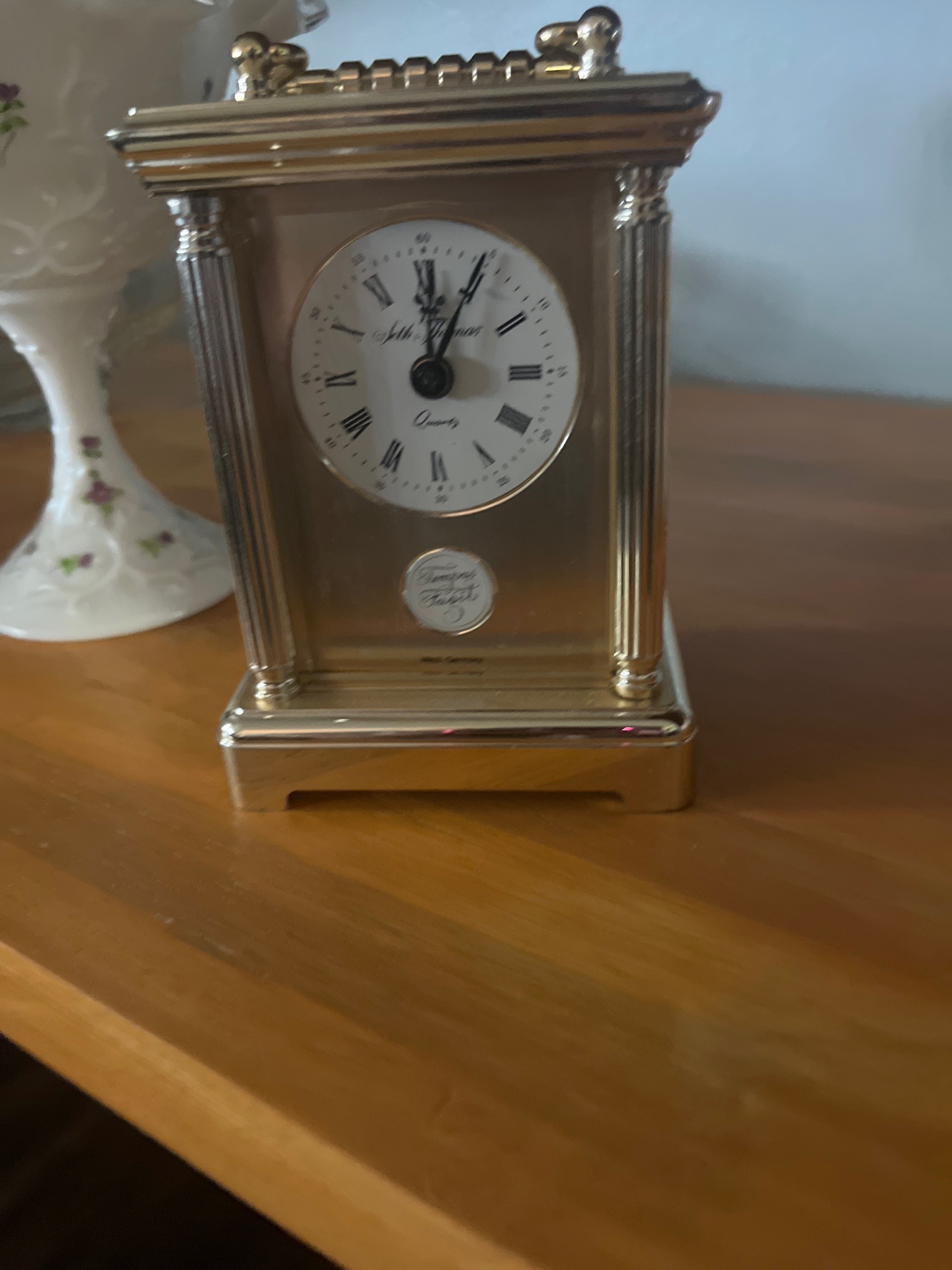
Seth Thomas Tempus Fugit Quartz Carriage Clock
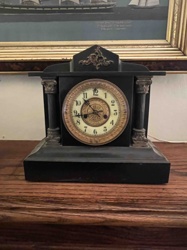
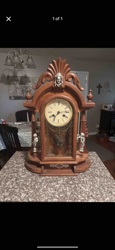
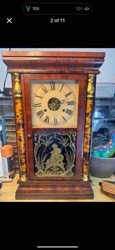
This is a vintage Seth Thomas carriage-style shelf clock, likely dating from the late 20th century. The case is constructed from brass-toned metal, potentially gold-plated or polished brass, featuring a classic architectural design with fluted columns on the front corners and a tiered pedestal base. The top is adorned with a decorative rail and a traditional swinging handle. The white circular dial features elegant black Roman numerals, slender spade hands, and is marked with the 'Seth Thomas' brand name and 'Quartz' movement indicator. Below the dial, a circular medallion bears the Latin phrase 'Tempus Fugit' (Time Flies). Fine printing at the bottom of the face indicates it was made in West Germany, a significant indicator of its manufacturing era between 1949 and 1990. The clock appears to be in good aesthetic condition with a bright, reflective finish, though minor surface scratches and light oxidation consistent with age are visible on the metal surfaces. It represents a transition period where traditional mechanical clock designs were fitted with modern, reliable battery-operated quartz movements for lower maintenance and greater accuracy.
AI-Generated Appraisal Disclaimer
Estimated Value
$65.00 - $95.00
Basic Information
Category
Horology / Clocks
Appraised On
May 2, 2026
Estimated Value
$65.00 - $95.00
Item Description
This is a vintage Seth Thomas carriage-style shelf clock, likely dating from the late 20th century. The case is constructed from brass-toned metal, potentially gold-plated or polished brass, featuring a classic architectural design with fluted columns on the front corners and a tiered pedestal base. The top is adorned with a decorative rail and a traditional swinging handle. The white circular dial features elegant black Roman numerals, slender spade hands, and is marked with the 'Seth Thomas' brand name and 'Quartz' movement indicator. Below the dial, a circular medallion bears the Latin phrase 'Tempus Fugit' (Time Flies). Fine printing at the bottom of the face indicates it was made in West Germany, a significant indicator of its manufacturing era between 1949 and 1990. The clock appears to be in good aesthetic condition with a bright, reflective finish, though minor surface scratches and light oxidation consistent with age are visible on the metal surfaces. It represents a transition period where traditional mechanical clock designs were fitted with modern, reliable battery-operated quartz movements for lower maintenance and greater accuracy.
Related Tags
Get Your Items Appraised
Instant estimates of your treasures with AI-powered instant appraisals