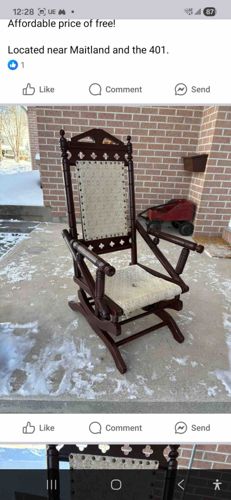
Victorian Era Eastlake Style Platform Rocker
This item is a late 19th-century Victorian platform rocker, specifically exhibiting characteristics of the Eastlake style. The chair features a high back with a distinctive pediment top, adorned with turned finials and geometric pierced fretwork in a clover or trefoil pattern. The frame is constructed from a dark-stained hardwood, likely cherry, walnut, or mahogany, featuring extensive spool-turned or faux-bamboo elements on the uprights and limb supports. The seat and backrest are upholstered in a cream-colored textile secured with decorative upholstery tacks around the perimeter. The platform base uses a spring mechanism to provide motion, which was a popular innovation of the era to prevent the creep associated with traditional curved rockers. Regarding condition, there is visible wear consistent with age, including a noticeable sunken portion or structural failure in the center of the seat upholstery. The finish shows minor surface abrasions and a characteristic aged patina. This style of furniture was prevalent between 1870 and 1890, focusing on clean diagonal lines and modest ornamentation compared to earlier Rococo Revival styles.
AI-Generated Appraisal Disclaimer
Estimated Value
$150 - $250
Basic Information
Category
Antique Furniture
Appraised On
December 23, 2025
Estimated Value
$150 - $250
Additional Details Provided By Owner
User Provided Information
Porcelain by Steve Mcghie
Item Description
This item is a late 19th-century Victorian platform rocker, specifically exhibiting characteristics of the Eastlake style. The chair features a high back with a distinctive pediment top, adorned with turned finials and geometric pierced fretwork in a clover or trefoil pattern. The frame is constructed from a dark-stained hardwood, likely cherry, walnut, or mahogany, featuring extensive spool-turned or faux-bamboo elements on the uprights and limb supports. The seat and backrest are upholstered in a cream-colored textile secured with decorative upholstery tacks around the perimeter. The platform base uses a spring mechanism to provide motion, which was a popular innovation of the era to prevent the creep associated with traditional curved rockers. Regarding condition, there is visible wear consistent with age, including a noticeable sunken portion or structural failure in the center of the seat upholstery. The finish shows minor surface abrasions and a characteristic aged patina. This style of furniture was prevalent between 1870 and 1890, focusing on clean diagonal lines and modest ornamentation compared to earlier Rococo Revival styles.
Get Your Items Appraised
Instant estimates of your treasures with AI-powered instant appraisals