Early 20th Century Convex Glass Crayon Enlargement Portrait
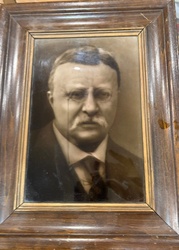
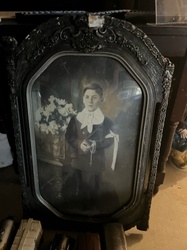
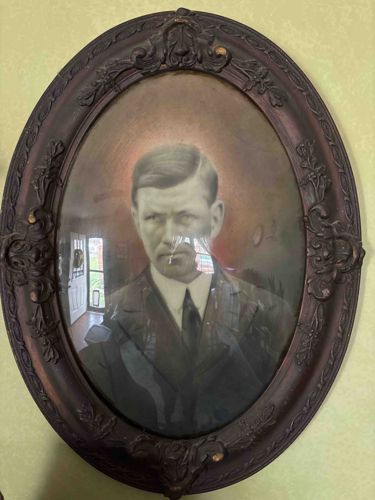
This is a representative example of a Crayon Enlargement portrait, a popular photographic medium from the late 19th to early 20th centuries (circa 1890-1920). The portrait features a male subject in formal attire—a dark suit, collared shirt, and tie—rendered through a process that combined a faint photographic base with hand-applied charcoal, pastel, or crayon. It is housed in its original oval or 'bubble glass' frame, which features a deep convex (domed) glass covering. The frame is characteristic of the Late Victorian or Edwardian era, likely made of wood or gesso-molded plaster over wood, finished in a dark faux-mahogany or bronze tone with ornate floral and foliate carvings at the cardinal points and scrolling motifs along the borders. Physically, the item shows signs of age-related wear typical of its 100+ years. There are visible chips in the gesso/plaster molding of the frame, exposing the lighter base material beneath. The portrait itself exhibits some foxing and fading, particularly visible in the sepia or hand-colored background tones. The craftsmanship reflects the mass-market personalized art of the era, where companies like the Chicago Portrait Company would enlarge snapshots and finish them with artistic flourishes to resemble expensive paintings. The convex glass remains intact, which is a significant factor in preservation, though there are distracting reflections from the room environment visible in the documentation image.
AI-Generated Appraisal Disclaimer
Estimated Value
$100 - $175
Basic Information
Category
Antique Portraits and Photography
Appraised On
March 12, 2026
Estimated Value
$100 - $175
Item Description
This is a representative example of a Crayon Enlargement portrait, a popular photographic medium from the late 19th to early 20th centuries (circa 1890-1920). The portrait features a male subject in formal attire—a dark suit, collared shirt, and tie—rendered through a process that combined a faint photographic base with hand-applied charcoal, pastel, or crayon. It is housed in its original oval or 'bubble glass' frame, which features a deep convex (domed) glass covering. The frame is characteristic of the Late Victorian or Edwardian era, likely made of wood or gesso-molded plaster over wood, finished in a dark faux-mahogany or bronze tone with ornate floral and foliate carvings at the cardinal points and scrolling motifs along the borders. Physically, the item shows signs of age-related wear typical of its 100+ years. There are visible chips in the gesso/plaster molding of the frame, exposing the lighter base material beneath. The portrait itself exhibits some foxing and fading, particularly visible in the sepia or hand-colored background tones. The craftsmanship reflects the mass-market personalized art of the era, where companies like the Chicago Portrait Company would enlarge snapshots and finish them with artistic flourishes to resemble expensive paintings. The convex glass remains intact, which is a significant factor in preservation, though there are distracting reflections from the room environment visible in the documentation image.
Related Tags
Explore similar items and categories:
Get Your Items Appraised
Instant estimates of your treasures with AI-powered instant appraisals