Hand-Carved Antique Damchiya (Indian Dowry Chest)
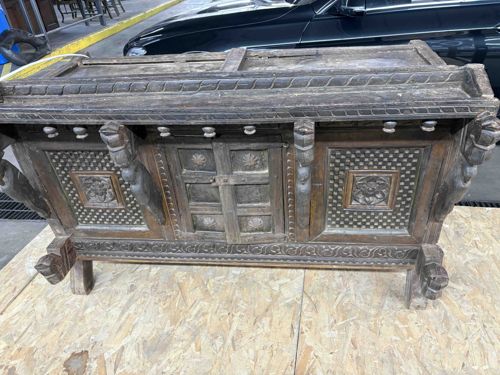
This is a heavily hand-carved antique Damchiya, commonly known as an Indian dowry chest, likely originating from Northern India or Gujarat, dating from the late 19th to early 20th century. The piece is constructed from a dense tropical hardwood, possibly teak or rosewood, following traditional joinery methods. It features elaborate architectural carvings throughout, including four prominent vertical corbels or brackets that act as structural and decorative supports. The facade displays three main panels: a central double-door compartment flanked by two recessed panels featuring intricate lattice or 'jaali' style carvings and central floral medallions. The upper frieze and lower base are decorated with continuous geometric and chip-carved rope-motif borders. The item rests on thick, integrated block feet. Regarding condition, the chest shows significant signs of age and exposure, including structural wood shrinkage, surface abrasions, and a natural dark weathered patina. There is visible wear on the carved edges, missing or loose joinery sections in the top surface panels, and some accumulation of dust and debris in the deep recesses of the carvings. The primitive hand-hewn quality is a signature of village craftsmanship, where such chests were used to store a bride's valuables as she moved to her husband's home.
AI-Generated Appraisal Disclaimer
Estimated Value
$1,800 - $2,500
Basic Information
Category
Antique Cultural Furniture
Appraised On
January 10, 2026
Estimated Value
$1,800 - $2,500
Item Description
This is a heavily hand-carved antique Damchiya, commonly known as an Indian dowry chest, likely originating from Northern India or Gujarat, dating from the late 19th to early 20th century. The piece is constructed from a dense tropical hardwood, possibly teak or rosewood, following traditional joinery methods. It features elaborate architectural carvings throughout, including four prominent vertical corbels or brackets that act as structural and decorative supports. The facade displays three main panels: a central double-door compartment flanked by two recessed panels featuring intricate lattice or 'jaali' style carvings and central floral medallions. The upper frieze and lower base are decorated with continuous geometric and chip-carved rope-motif borders. The item rests on thick, integrated block feet. Regarding condition, the chest shows significant signs of age and exposure, including structural wood shrinkage, surface abrasions, and a natural dark weathered patina. There is visible wear on the carved edges, missing or loose joinery sections in the top surface panels, and some accumulation of dust and debris in the deep recesses of the carvings. The primitive hand-hewn quality is a signature of village craftsmanship, where such chests were used to store a bride's valuables as she moved to her husband's home.
Get Your Items Appraised
Instant estimates of your treasures with AI-powered instant appraisals