AI Appraisal Estimate

AI-generated estimates · not official valuations

From the user

What was submitted

Photo and notes provided by the user — not generated by AI

Submitted item photo
Submitted photo · June 19, 2026

User's notes

No additional notes provided.

AI analysis below

AI appraisal

AI analysis & estimate

AI-Generated · Verify before acting

Everything below is generated by AI for informational purposes only. AI can make mistakes — the AI may misidentify items or misattribute them (artist, maker, brand, designer, origin, era). This is not an official valuation and should not be used for insurance, sale, tax, estate, legal, or lending purposes — or any decision requiring a certified appraisal. It is not an authoritative claim about any person, brand, or rights holder — do not share or rely on it as a factual statement about a third party. Always consult qualified professionals before making financial decisions.

Read the full disclaimer

AI Identification

·Not independently authenticated·Verify before acting

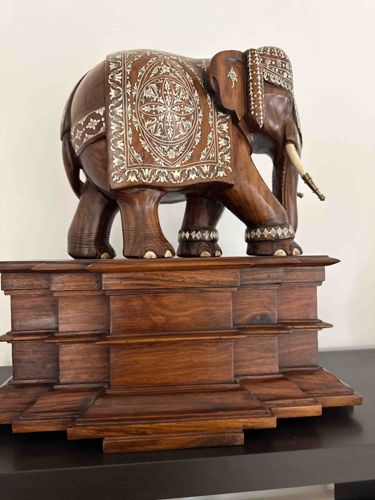
Anglo-Indian Rosewood and Bone Inlay Processional Elephant on Pedestal

Antique Decorative Arts / Asian Carvings

AI Estimated Value

·Not an official valuation·Verify before acting

$1,200 - $1,800 USD

As of June 19, 2026

AI Item Analysis

·AI can make mistakes·Verify before acting
This is a highly ornate decorative sculpture featuring a processional elephant, likely crafted in the Anglo-Indian Hoshiarpur style. The elephant is hand-carved from a dense, dark-toned wood, appearing to be rosewood or sheesham, and is mounted on a substantial, tiered wooden plinth. The carving depicts the elephant in a walking stance, adorned with elaborate ceremonial trappings. These include a large saddlecloth (jhul) with intricate floral and foliate bone or mother-of-pearl inlay work, featuring a central medallion and scrollwork borders. The elephant also wears a decorative headpiece (caparison) with matching inlay, ankle bands, and is fitted with cream-colored tusks tipped with brass-colored metal caps. The craftsmanship suggests a high level of skill, typical of late 19th-century to mid-20th-century Indian decorative arts intended for export or the colonial market. The wood exhibits a rich, warm patina with a polished finish. In terms of condition, the piece appears well-maintained, though close inspection might reveal minor shrinkage cracks typical of aged wood or small losses to the delicate inlay pieces. The pedestal is constructed with a complex architectural, stepped design that provides a dramatic base, though it may be a later addition or separate component designed to complement the figure.

AI Appraisal Report

·AI can make mistakes·Verify before acting
Based on my visual examination of this Anglo-Indian processional elephant, I identify it as a high-quality example of Hoshiarpur-style furniture and carving, likely dating from the late 19th to early 20th century. The dense, dark grain indicates hand-carved rosewood, and the quality of the foliate bone inlay is consistent with colonial-era craftsmanship intended for the high-end export market. The patina appears authentic, showing appropriate depth and luster from decades of polishing. The tiered pedestal adds significant presence and contributes to its value as a complete decorative statement. In the current market, Anglo-Indian decorative arts remain stable, with collectors prioritizing pieces that retain their original architectural integrity and complex inlay. While smaller elephant figurines are common, this larger, pedestal-mounted example is more rare. The main factors impacting value are the completeness of the delicate inlay and the condition of the wood, which is prone to shrinkage cracks in dry climates. This appraisal assumes the inlay is genuine bone rather than celluloid or plastic. Limitations of this digital assessment include the inability to verify the exact wood species through grain density or to inspect for hidden repairs under UV light. For absolute authentication and insurance purposes, an in-person examination is required to confirm the material composition of the tusks and inlay. Documentation of provenance or an original bill of sale from the British Raj era would further increase the valuation at auction.

Get your items appraised

Instant estimates of your treasures with AI-powered appraisals

Browse More Appraisals