AI Appraisal Estimate

AI-generated estimates · not official valuations

From the user

What was submitted

Photo and notes provided by the user — not generated by AI

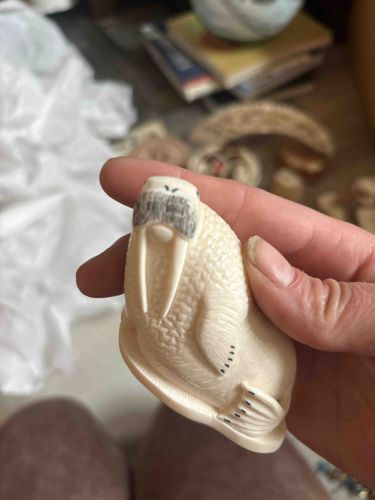
Submitted item photo
Submitted photo · May 27, 2026

User's notes

hand carved ivory Alaskan native art Walter slwooko 1979

AI analysis below

AI appraisal

AI analysis & estimate

AI-Generated · Verify before acting

Everything below is generated by AI for informational purposes only. AI can make mistakes — the AI may misidentify items or misattribute them (artist, maker, brand, designer, origin, era). This is not an official valuation and should not be used for insurance, sale, tax, estate, legal, or lending purposes — or any decision requiring a certified appraisal. It is not an authoritative claim about any person, brand, or rights holder — do not share or rely on it as a factual statement about a third party. Always consult qualified professionals before making financial decisions.

Note

This analysis also relies on unverified notes provided by the user, which may be incomplete or inaccurate and could affect the result.

Read the full disclaimer

AI Identification

·Not independently authenticated·Verify before acting

Hand-Carved Alaskan Native Walrus Sculpture by Walter Slwooko

Sculpture

AI Estimated Value

·Not an official valuation·Verify before acting

$600 - $900

As of May 27, 2026

AI Item Analysis

·AI can make mistakes·Verify before acting
This is a hand-carved ivory sculpture depicting a walrus, created by Alaskan Native artist Walter Slwooko in 1979. The piece is relatively small, fitting comfortably in the palm of a hand, suggesting it's likely a decorative carving or a cabinet piece. It is crafted from a single piece of ivory, exhibiting a creamy white to very light yellowish hue, characteristic of aged ivory. The surface of the walrus's body is intricately textured with numerous small, raised nodules, mimicking the rough appearance of a walrus's skin. The head features carved eyes and a prominent, broad muzzle area with incised lines and a darker pigmentation, possibly charcoal or ink, to represent the coarse bristles or whiskers. Two distinct, elongated tusks curve downwards from the snout. The flippers are well-defined, with incised lines and similar darker pigmentation to indicate digits or claws. The overall form is smooth and rounded at the base, allowing it to stand upright stably. The carving demonstrates excellent craftsmanship, with careful attention to detail in the anatomical features and surface texture, indicating the artist's skill and intimate knowledge of the subject matter. The ivory appears to be in good condition, with a natural patina consistent with its age. There are no immediately visible signs of cracks, chips, or significant repairs, which speaks to its quality and preservation. The inscription of the artist's name and date (Walter Slwooko 1979) is a crucial identifying mark, providing provenance and confirming its creation period.
AI Appraisal Report

·AI can make mistakes·Verify before acting
Upon examination of the provided images and details, this hand-carved walrus sculpture by Walter Slwooko, dated 1979, presents as a fine example of Alaskan Native art. The piece appears to be in excellent condition, consistent with its age. The ivory exhibits a natural, creamy patina with no visible cracks, chips, or repairs. The detailed texturing of the skin and the incised, pigmented details on the whiskers and flippers are hallmarks of skilled craftsmanship and are consistent with known works by Slwooko. The signature and date are crucial for attribution. The market for authentic, legally-sourced Alaskan Native ivory carvings remains strong, particularly for recognized artists like Walter Slwooko. Demand is driven by collectors of Inuit and Native American art. Smaller, well-executed pieces like this are highly accessible to a broad range of collectors. While prices for larger or more complex works by Slwooko can reach several thousand dollars, smaller cabinet-sized sculptures typically trade in the high hundreds to low thousands. A significant factor impacting its value is the material—ivory. Its sale and transport are subject to strict regulations (e.g., CITES, Marine Mammal Protection Act), which can affect marketability. The value provided assumes the ivory is pre-act marine mammal ivory (walrus) and can be legally sold within the United States. However, this appraisal is limited by the inability to physically inspect the piece. A full authentication would require in-person examination to confirm the material is genuine walrus ivory and not a substitute like bone or synthetic material. I would also need to verify the signature against known examples and review any provenance documentation, such as original receipts or certificates of authenticity, to definitively confirm its origin and legality.

Get your items appraised

Instant estimates of your treasures with AI-powered appraisals

Browse More Appraisals