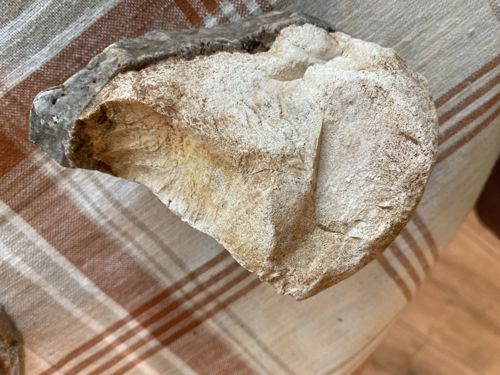
Prehistoric Lithic Hand Scraper / Chopper Tool
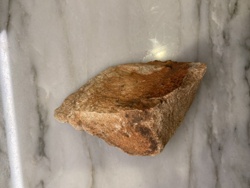
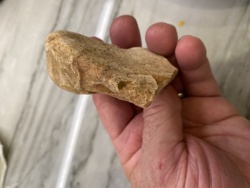
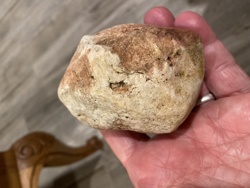
This is a prehistoric lithic artifact, specifically a hand axe or large side-scraper tool, originating from Guthrie, Oklahoma. Measuring approximately 4.25 by 3.5 inches, the object is fashioned from a dense, crypto-crystalline silicide stone, likely a variety of local chert or flint with significant cortical development. The tool exhibits a distinct bicolor appearance: a dark, weathered grey-brown outer cortex remains along the upper edge, providing a comfortable, non-slip grip area for the hand. The main body of the tool has been bifacially or unifacially knapped to reveal a lighter, cream-to-tan interior color. Notable features include prominent percussion flaking scars and a clear 'bulb of percussion' on the dorsal surface, indicating intentional human modification rather than natural fracturing. The working edge shows evidence of secondary retouching to create a sharp, durable blade for scraping hides or processing organic materials. The condition is consistent with an archaeological find, displaying a heavy mineralized patina, soil staining in the deeper crevices, and minor edge nibbling or 'use-wear' along the primary cutting surface. There are no modern maker’s marks or signatures, which is appropriate for a tool of this age. This artifact represents Paleo-Indian or Archaic period craftsmanship, characterized by its ergonomic design and the efficient use of raw stone material to create a multi-functional handheld implement.
AI-Generated Appraisal Disclaimer
Estimated Value
$65 - $110
Basic Information
Category
Prehistoric Stone Artifacts / Native American Archaeological Tools
Appraised On
February 17, 2026
Estimated Value
$65 - $110
Additional Details Provided By Owner
User Provided Information
Prehistoric stone hand axe scraper tool found in Guthrie, OK measuring 4.25 x 3.5"
Item Description
This is a prehistoric lithic artifact, specifically a hand axe or large side-scraper tool, originating from Guthrie, Oklahoma. Measuring approximately 4.25 by 3.5 inches, the object is fashioned from a dense, crypto-crystalline silicide stone, likely a variety of local chert or flint with significant cortical development. The tool exhibits a distinct bicolor appearance: a dark, weathered grey-brown outer cortex remains along the upper edge, providing a comfortable, non-slip grip area for the hand. The main body of the tool has been bifacially or unifacially knapped to reveal a lighter, cream-to-tan interior color. Notable features include prominent percussion flaking scars and a clear 'bulb of percussion' on the dorsal surface, indicating intentional human modification rather than natural fracturing. The working edge shows evidence of secondary retouching to create a sharp, durable blade for scraping hides or processing organic materials. The condition is consistent with an archaeological find, displaying a heavy mineralized patina, soil staining in the deeper crevices, and minor edge nibbling or 'use-wear' along the primary cutting surface. There are no modern maker’s marks or signatures, which is appropriate for a tool of this age. This artifact represents Paleo-Indian or Archaic period craftsmanship, characterized by its ergonomic design and the efficient use of raw stone material to create a multi-functional handheld implement.
Related Tags
Explore similar items and categories:
Get Your Items Appraised
Instant estimates of your treasures with AI-powered instant appraisals