Polished Neolithic Ground Stone Axe Fragment
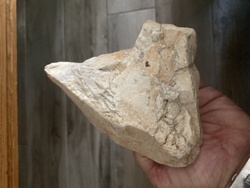
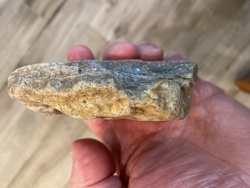
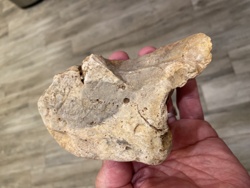
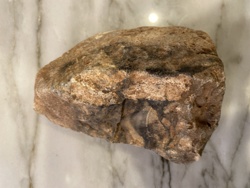
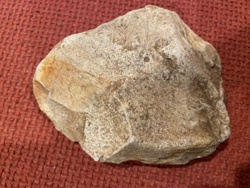
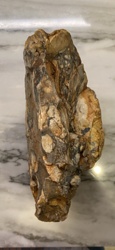
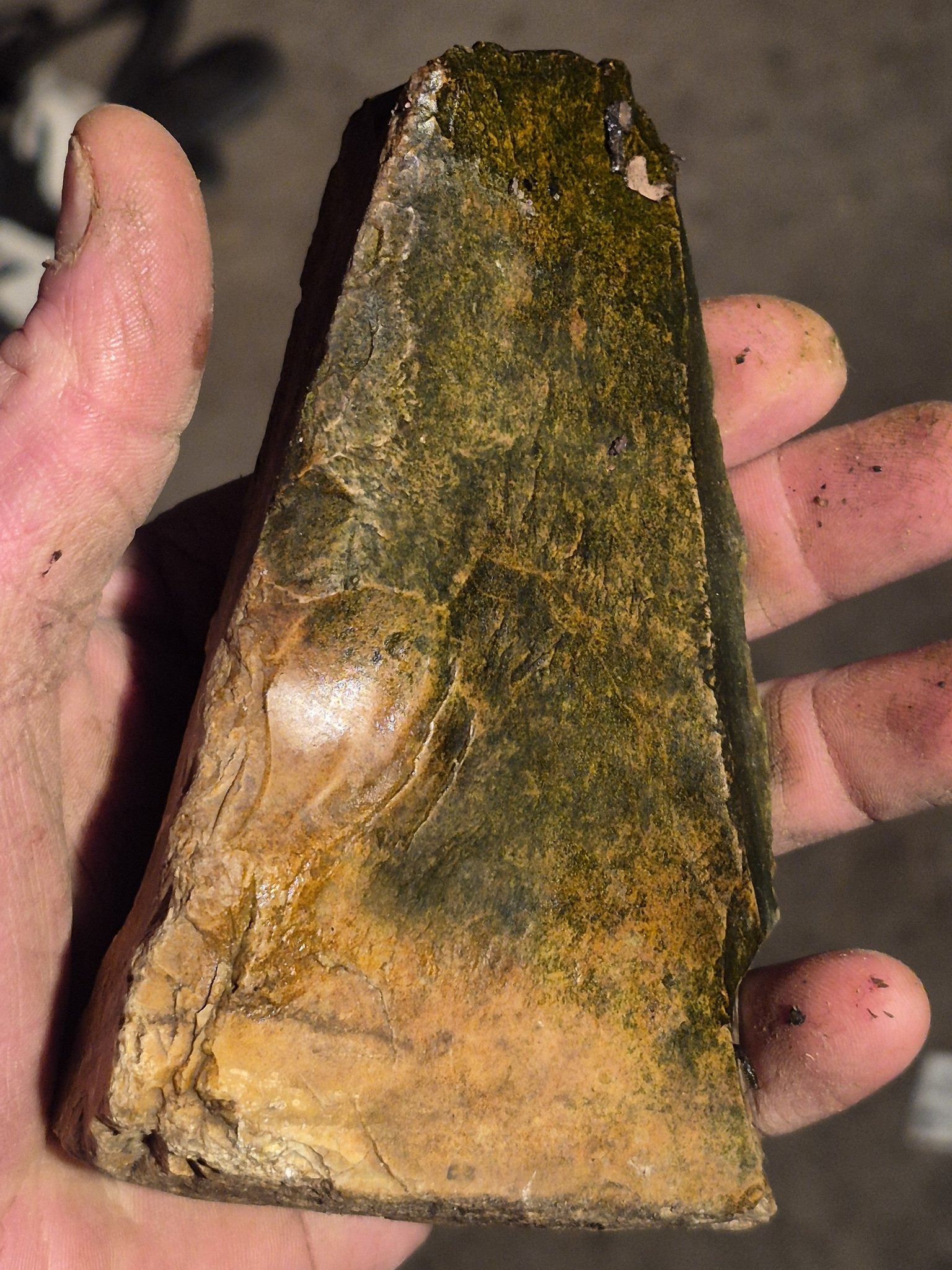
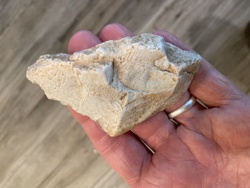
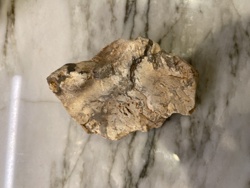
This specimen is a significant fragment of a ground stone axe or 'celt,' likely originating from the Neolithic period. The item possesses a distinct subtriangular or trapezoidal silhouette, tapering towards what would have been the butt end. It is crafted from a dense, fine-grained lithic material, possibly greenstone, basalt, or a similar hardstone capable of taking a high polish. The surface exhibits a complex coloration ranging from deep mossy greens and dark greys to earthy ochre and tan hues, largely due to mineral staining and prehistoric patination. A notable feature is the smooth, polished face that transitions into more rugged, pecked surfaces, indicating the intensive grinding manufacturing process. There are visible bulbous percussion features and deliberate flaking scars along the lateral edges, suggesting either original shaping or subsequent reuse. Regarding condition, the piece shows ancient fracturing at the base and significant edge wear consistent with heavy utility or burial taphonomy. The lack of modern manufacturer marks confirms its ancient, handcrafted origin. The craftsmanship reflects a high degree of lithic technology, with symmetrical grinding and careful surface prep that highlights the quality of the raw stone selected by the maker.
AI-Generated Appraisal Disclaimer
Estimated Value
$450 - $650
Basic Information
Category
Archaeological Artifacts / Prehistoric Stone Tools
Appraised On
May 11, 2026
Estimated Value
$450 - $650
Item Description
This specimen is a significant fragment of a ground stone axe or 'celt,' likely originating from the Neolithic period. The item possesses a distinct subtriangular or trapezoidal silhouette, tapering towards what would have been the butt end. It is crafted from a dense, fine-grained lithic material, possibly greenstone, basalt, or a similar hardstone capable of taking a high polish. The surface exhibits a complex coloration ranging from deep mossy greens and dark greys to earthy ochre and tan hues, largely due to mineral staining and prehistoric patination. A notable feature is the smooth, polished face that transitions into more rugged, pecked surfaces, indicating the intensive grinding manufacturing process. There are visible bulbous percussion features and deliberate flaking scars along the lateral edges, suggesting either original shaping or subsequent reuse. Regarding condition, the piece shows ancient fracturing at the base and significant edge wear consistent with heavy utility or burial taphonomy. The lack of modern manufacturer marks confirms its ancient, handcrafted origin. The craftsmanship reflects a high degree of lithic technology, with symmetrical grinding and careful surface prep that highlights the quality of the raw stone selected by the maker.
Get Your Items Appraised
Instant estimates of your treasures with AI-powered instant appraisals